Do People Really Wear Invisalign 22 Hours a Day? Honest Compliance
TL;DR: Do People Really Wear Invisalign 22 Hours a Day?
Only about 36% of Invisalign patients consistently meet the full 22-hour daily wear recommendation. The other 64% land between 18 and 21 hours, which still produces results but extends the treatment timeline by weeks or months.
Real compliance rate: 36% of patients hit 22+ hours every day. Most patients average 18 to 21 hours.
The clinical evidence base: 112,000+ patient outcomes support the 20-22 hour daily wear recommendation.
Below 20 hours: Treatment outcomes get delayed by weeks or months, and refinement trays become more likely.
The 2-hour buffer: Built specifically for meals, brushing, and special occasions. Use it intentionally, not casually.
Below 18 hours: Teeth do not move as planned. Treatment plan often needs to be redone.
The honest answer: Aim for 22, accept that 20-21 is realistic, and track it so you can be honest with your dentist when adjustments are needed.
The honest reality of Invisalign compliance
When patients ask us "do people really wear Invisalign 22 hours a day?" the truthful answer is: yes, some do, but most don't. The 22-hour rule is the clinical recommendation backed by clinical evidence from over 112,000 patient outcomes, but real-world data shows only about 1 in 3 patients hits it consistently. That is not a reason to skip Invisalign. It is a reason to be realistic with yourself before you start. Patients across Smyrna, Marietta, and Sandy Springs come in to our consultation worried they will not be perfect at this. Here is exactly what compliance actually looks like, what happens at different wear levels, and how our certified Invisalign team helps patients land in the high-success group instead of the slow-progress group.

What the data actually shows about real compliance
Per research summarized by clinical Invisalign providers, only about 36% of Invisalign patients consistently meet the full 22-hour daily compliance threshold. The other 64% land somewhere between 18 and 21 hours of daily wear. That gap matters because clinical evidence from over 112,000 patient cases shows the 20-22 hour window is where the planned tooth movement actually happens predictably. Going below that window does not stop progress, but it slows it and increases the likelihood of needing refinement trays at the end.
What happens at each wear level (the honest version)
Per clinical compliance guidance, here is what to expect at each wear level: at 22+ hours daily, you complete treatment on the original timeline. At 20-21 hours daily, you complete treatment with potentially 1 to 2 sets of refinement trays at the end. At 18-19 hours daily, your treatment timeline extends by 4 to 8 weeks and refinement is almost guaranteed. Below 18 hours, the planned tooth movement does not happen as designed, and we typically need to scan you again and rebuild the treatment plan, which adds significant time and possible cost.
The patterns we see in patients who hit 22 hours consistently
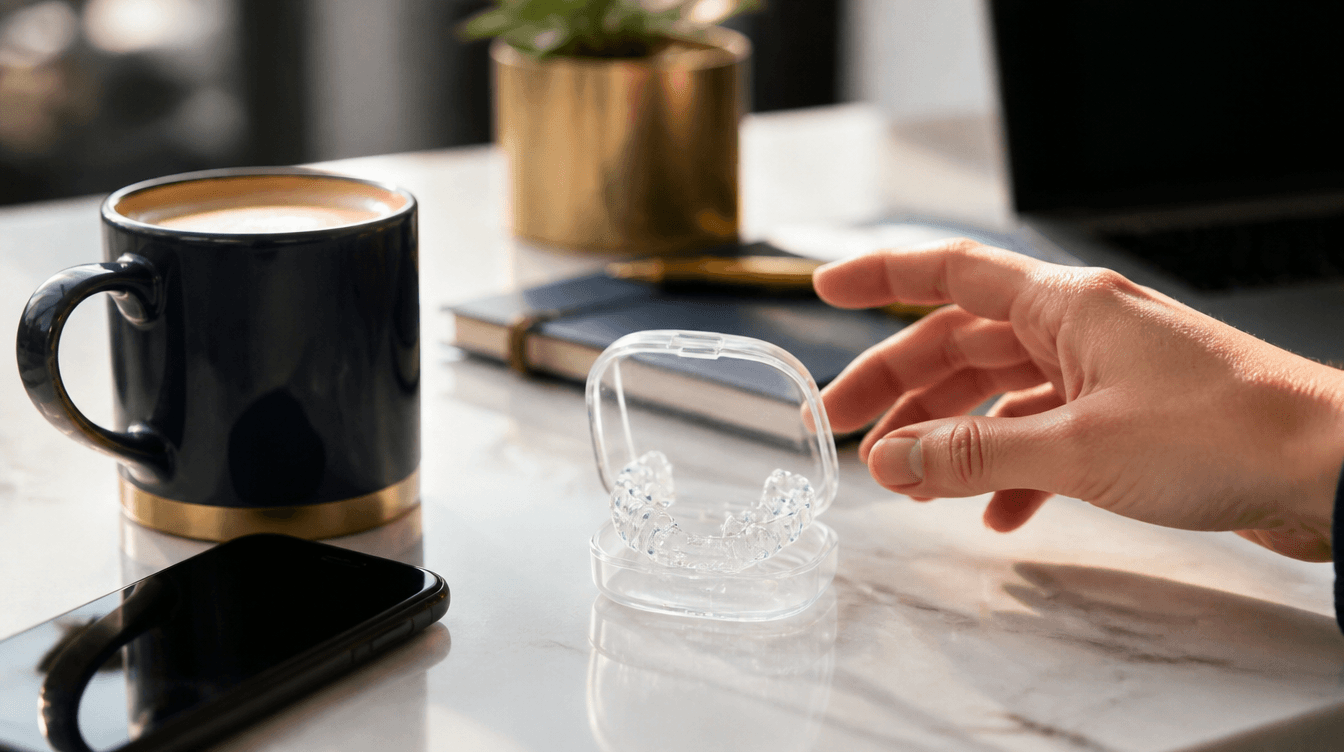
The 36% of patients who consistently meet 22 hours all share the same patterns: they put the aligners back in IMMEDIATELY after meals (no "I'll do it in a minute"), they keep the carrying case visible on their desk or in their bag at all times, they avoid grazing or snacking outside of meal windows, and they treat the 22-hour rule as the floor not the ceiling. The patients we see slipping into the 18-19 hour range are usually the ones who take their aligners out for coffee, leave them out during a long lunch meeting, or forget them on the bathroom counter for hours. Habit visibility solves most of this.
How we help patients hit the 22-hour mark in Smyrna
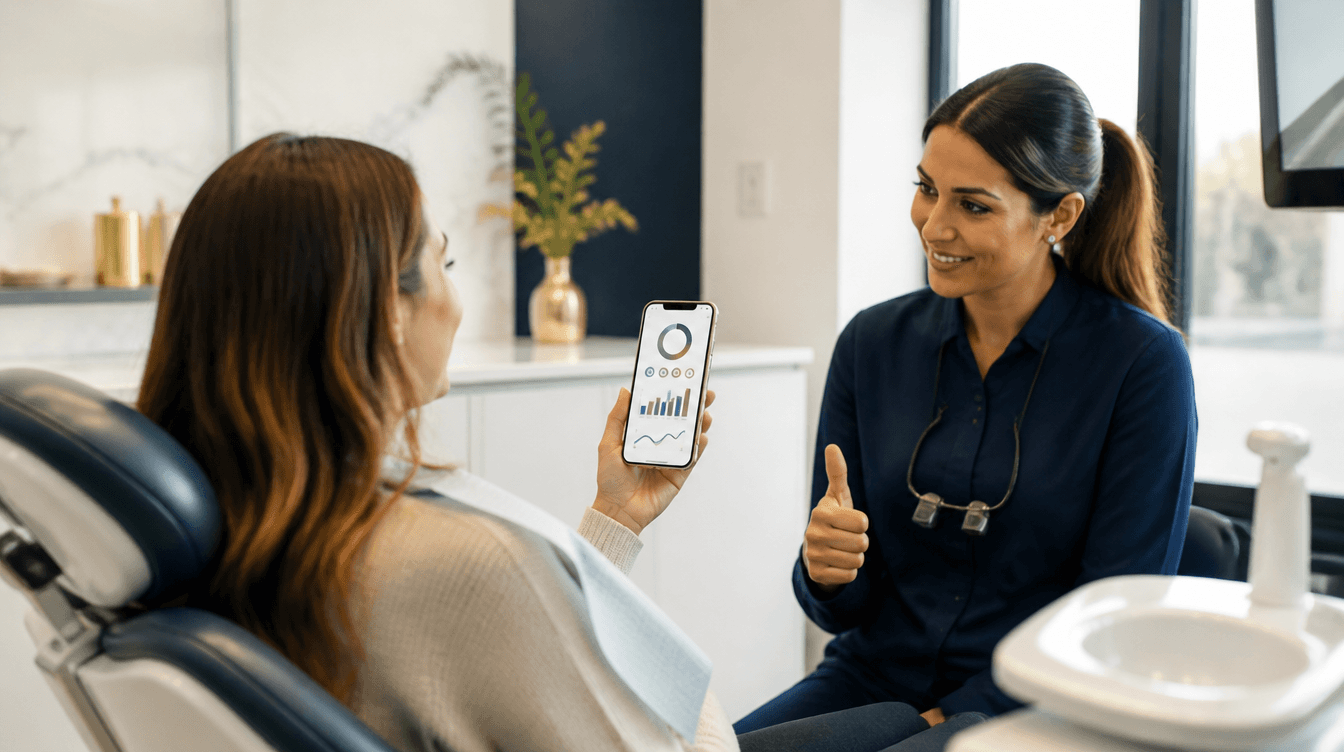
Per compliance support practices, several behavioral tools have been shown to improve compliance: a phone-based wear-time tracking app, a 30-minute meal cap to keep aligner-out time bounded, a designated home location for the case so you never lose track of it, and 14-day check-ins where the dentist can spot early non-compliance and intervene. Our team at Smyrna Dental Studio runs a check-in protocol every two weeks for the first 8 weeks of treatment specifically to catch slippage early. Our Invisalign treatment page walks through the full compliance support system we use.



Frequently Asked Questions
Will my dentist know if I'm not wearing them enough?
Yes, almost always. The aligners themselves tell the story. If you've been wearing them properly, they fit each new tray cleanly. If you've been compliance-light, the next tray feels too tight or won't seat fully. We can usually tell within 30 seconds of trying the next aligner whether the previous one was worn enough. Honesty is faster than masking it; we'd rather adjust the plan than scan again.
What's the absolute minimum I can get away with?
Honestly, about 18 hours is the floor for treatment to make any progress at all. Below that, the teeth tend to drift back during the off-time more than they move during the on-time, which means you make zero net progress. If you cannot commit to 18 hours minimum, traditional braces (which are on 24/7 by design) may be the better fit for your lifestyle.
Can I make up missed wear time later?
Partially. Wearing aligners 24 hours one day to compensate for 16 hours the day before does help, but the math doesn't fully cancel out. Tooth movement is a slow biological process, and consistent daily pressure works better than burst-and-rest cycles. We coach patients to aim for consistency over compensation.
How long do I need to wear them per day in the retainer phase?
Initially 22 hours daily for the first 3 to 6 months after treatment, then transitioning to overnight-only for life. Most patients are surprised that retainers are forever. Without lifelong overnight retainer wear, teeth drift back to their original position within 5 years, which means the entire $5,000 you spent on Invisalign is at risk.
Will being a few hours short on busy days ruin my treatment?
No. The 22-hour rule has 2 hours of built-in buffer for exactly this. A meal that runs longer than expected, a special occasion, an unusually busy day, those are normal and the buffer absorbs them. The patients who run into trouble are the ones who consistently land at 18-19 hours every day for weeks at a time, not the ones with occasional busy days.
Should I use a tracking app?
Yes, especially for the first 4 to 8 weeks. Once you build the habit, awareness alone keeps most patients on track. Apps like TrayMinder or even a simple notes-app log can dramatically improve compliance because the act of tracking creates accountability. We have patients who improved from 18 to 22 hours just by adding tracking.
The bottom line for Smyrna patients
Yes, some people really do wear Invisalign 22 hours a day, but the majority don't, and that is okay as long as you stay above 18 hours and stay honest with your provider. The patients we see complete treatment on time and avoid refinement trays are not the ones with willpower of steel. They are the ones who built habit visibility (carrying case in sight, app tracking, immediate reinsertion after meals) and let our team catch slippage early at the 14-day check-ins. Smyrna Dental Studio is an ADA member practice and a certified Invisalign provider, and we maintain a 4.9-star rating across 200-plus verified patient reviews because our compliance support system is built around what actually works for real human schedules.
Want to know if Invisalign fits your real life?
Skip the guilt about whether you'll be perfect at this. Whether you are in Smyrna, Marietta, or Sandy Springs, the team at Smyrna Dental Studio evaluates your case AND your realistic compliance pattern at the consultation, then builds a treatment plan that matches your actual schedule. Schedule your consultation today or call (470) 801-9986.
Written by Blake Hundley.