Holistic Dentistry Smyrna GA - Mercury-Free & Biocompatible Dental Care
TLDR (Too Long; Didn't Read)
Holistic dentistry focuses on treating teeth and gums while considering your overall health and using biocompatible materials. Mercury-free fillings replace old amalgam fillings. Biocompatible materials reduce the risk of allergic reactions and sensitivities. Holistic dentistry isn't anti-science, it's evidence-based care that prioritizes your whole-body health. Holistic fillings cost slightly more than amalgam but last longer and don't contain mercury. If you prioritize natural, biocompatible dental care, Smyrna Dental Studio offers holistic options. Very few local dentists specialize in this approach.
Ready to start? Schedule your consultation today for a personalized smile design.
Holistic Dentistry in Smyrna: Taking Your Oral Health Beyond Just Teeth
You've heard about holistic dentistry but you're not entirely sure what it means. You've also heard conflicting information. Some people swear by it. Others dismiss it as pseudoscience. The truth, as always, is somewhere in between. Holistic dentistry is evidence-based, scientifically sound dental care that considers how your mouth affects your overall health and uses biocompatible materials whenever possible.
Traditional dentistry treats your teeth and gums in isolation. A cavity needs filling, so the dentist fills it and moves on. Holistic dentistry takes a different approach. It recognizes that your mouth is connected to the rest of your body. Infections in your mouth affect your immune system. Materials you put in your mouth can trigger sensitivities or allergic reactions. The health of your teeth and gums affects your overall health and longevity.
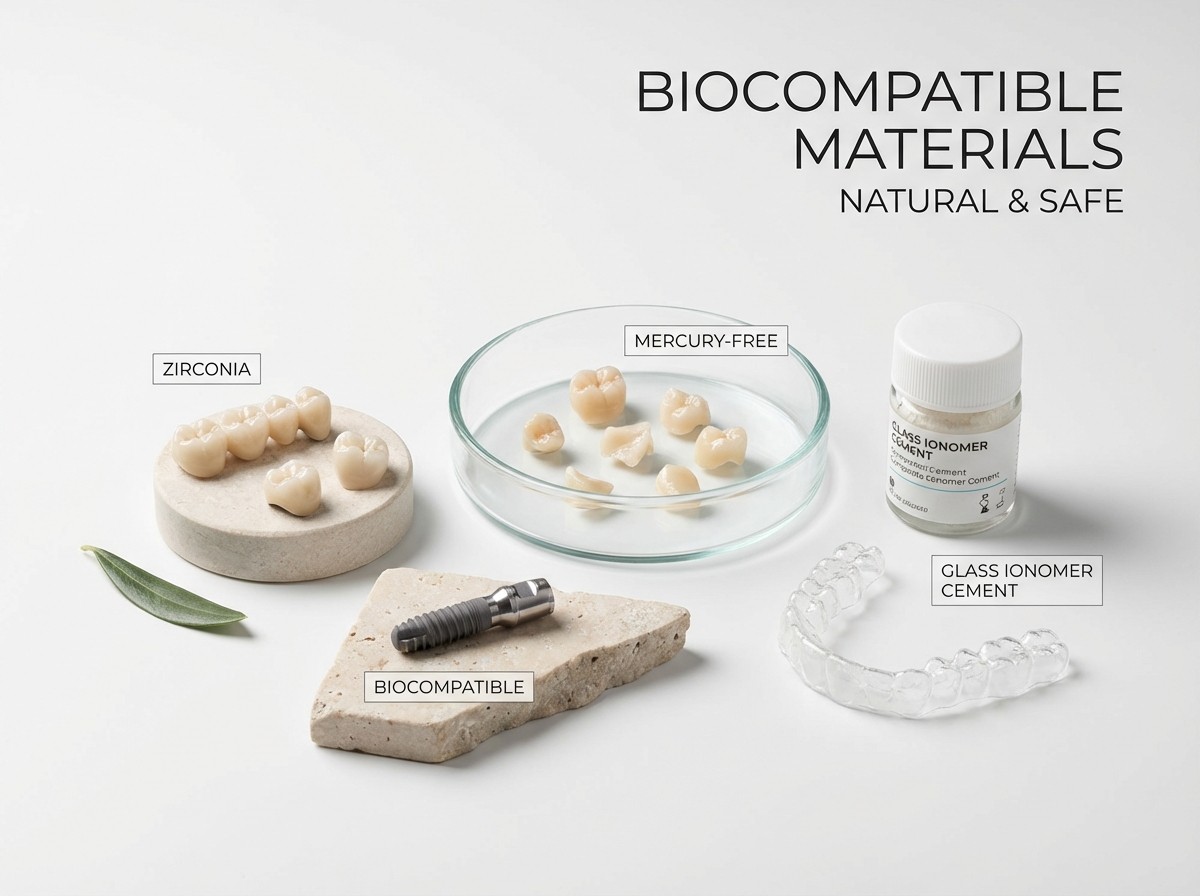
Additionally, holistic dentistry prioritizes using materials that are compatible with your body. Mercury-free fillings instead of amalgam. Ceramic implants alongside titanium. Biocompatible crown materials that don't trigger reactions. It's not about avoiding modern dentistry. It's about choosing materials and approaches that support your overall health.
At Smyrna Dental Studio, Dr. Kanchwala, Dr. Thobhani, and Dr. Patrick embrace a holistic approach to dental care. They use biocompatible materials whenever possible. They consider how dental treatment affects your overall health. They're transparent about material choices and help you understand the implications of different options. If you're looking for holistic, mercury-free dental care in Smyrna, you've found it. Schedule a holistic dentistry consultation with our team.

Understanding Holistic Dentistry
What Is Holistic Dentistry?
Holistic dentistry is an approach to dental care that views your mouth as part of your integrated health system. It emphasizes using biocompatible materials, minimizing toxic exposures, and considering how dental treatment affects your overall health. Holistic dentists use evidence-based science but make material choices that support both local oral health and systemic health.
Holistic dentistry is sometimes confused with alternative dentistry, but they're different. Alternative dentistry ignores modern science and relies on unproven methods. Holistic dentistry is grounded in modern dental science but extends it to consider material biocompatibility and whole-body health implications.
Mercury-Free Dentistry
The most visible aspect of holistic dentistry is mercury-free fillings. Traditional amalgam fillings contain approximately 50% mercury, along with silver, tin, and copper. Mercury is a known neurotoxin. While the dental establishment has long maintained that amalgam fillings are safe because the mercury is bound to other metals and doesn't leach significantly, holistic dentists question this assumption. Even if the mercury leakage is minimal, holistic practitioners argue that it's unnecessary to use mercury at all when alternative filling materials exist.
Mercury-free fillings (usually composite resin or glass ionomer) replace amalgam without the mercury concern. These fillings bond chemically to your tooth structure, require less tooth removal during placement, and are more esthetic because they match your tooth color. They also cost slightly more than amalgam but last just as long or longer.
Biocompatible Materials
Beyond mercury-free fillings, holistic dentistry emphasizes biocompatible materials throughout. This includes crown materials that don't trigger sensitivities, implant materials that integrate well with your body, and materials used in other restorations that are chosen for compatibility with your immune system.
Some patients have sensitivities or allergic reactions to common dental materials. Metal-based crowns can cause reactions in sensitive patients. Certain implant materials might not integrate well in some bodies. Holistic dentists are knowledgeable about material options and can recommend alternatives for patients with known sensitivities.
Focus on Prevention and Overall Health
Holistic dentistry places heavy emphasis on prevention. Instead of waiting for problems to develop, holistic dentists work proactively to prevent disease through excellent oral hygiene instruction, dietary counseling, and regular monitoring. They also consider how your overall health affects your dental health.
For example, a patient with uncontrolled diabetes is at higher risk for gum disease. A holistic dentist doesn't just treat the gum disease. They work with your doctor to address the underlying diabetes. A patient under severe stress might be clenching or grinding their teeth. A holistic dentist addresses the stress management alongside the teeth grinding problem. This integrated approach prevents problems from recurring.
Mercury-Free Fillings vs. Amalgam
Why Mercury-Free Fillings Are Better
Mercury-free composite fillings bond directly to your tooth structure, which means your tooth is stronger after restoration. Amalgam fillings are held in place mechanically, which means your dentist has to remove more healthy tooth structure to make room for the filling. With composite, less healthy tooth is sacrificed.
Composite fillings match your tooth color, which is esthetically superior. Amalgam fillings are silver and obvious. If you have a filling on your front tooth, composites look natural while amalgam looks like metal.
Composite fillings are better for the environment. Mercury isn't good for the ecosystem. Using biocompatible alternatives reduces environmental contamination.
Most importantly for holistic-minded patients, composite fillings don't contain mercury, so there's no concern about mercury exposure in your mouth or potential mercury toxicity.
Cost Comparison
Composite fillings cost $150-$300 per filling. Amalgam fillings cost $100-$200 per filling. The difference is modest, and composite fillings often last longer, so the long-term cost difference is negligible or even favors composite.
Biocompatible Implants and Crown Materials
Ceramic vs. Titanium Implants
Most dental implants are made from titanium, a metal that has an excellent track record of biocompatibility and osseointegration. Titanium implants work beautifully and have decades of research backing them. But some patients want non-metal implants for philosophical reasons or due to metal sensitivities.
Ceramic (zirconia) implants are an alternative. Zirconia is a white ceramic material that some patients perceive as more natural or biocompatible. Zirconia implants are newer than titanium, so long-term data is less extensive. They also cost more than titanium implants. Whether zirconia offers real clinical advantages over titanium is debated in dental literature, but for patients who want a non-metal implant, zirconia is a viable option.
Dr. Patrick can discuss both titanium and ceramic implant options during your consultation.
Crown Materials
Similarly, crowns can be made from different materials. Metal-based crowns (porcelain-fused-to-metal) are durable but contain metal, which can trigger reactions in sensitive patients. All-ceramic or zirconia crowns avoid metal entirely. They're esthetically beautiful and biocompatible. They cost slightly more than metal-based crowns but are worth it for patients with metal sensitivities.
A holistic approach means choosing crown material based on your specific situation: your sensitivities, your esthetic preferences, and what's best for your long-term health.
Holistic Approaches to Gum Disease
Natural Gum Disease Treatment
Gum disease is an infection and inflammatory response. Traditional treatment involves scaling and root planing (deep cleaning) and sometimes antibiotics. Holistic treatment includes these same approaches but also emphasizes natural ways to support gum healing.
This might include dietary changes that reduce inflammation (reducing sugar, increasing vitamins and minerals), natural antimicrobial rinses made from plant extracts, and careful oral hygiene instruction. Some holistic practitioners use ozone therapy or other natural antimicrobial approaches alongside traditional treatment.
The key is that holistic gum disease treatment isn't either/or (natural versus traditional). It's both/and (traditional science-based treatment plus natural supportive approaches).



Common Questions About Holistic Dentistry
Myth: "Holistic dentistry is unproven and not based on science"
The Truth: Holistic dentistry is evidence-based and grounded in dental science. The difference is that holistic dentists also consider biocompatibility, material choices, and whole-body health in addition to traditional dental metrics. Mercury-free fillings are scientifically proven to be safe and effective. Biocompatible materials are chosen based on scientific research about material properties and compatibility. Holistic dentistry extends science-based dentistry to include material biocompatibility and systemic health considerations. It's science-plus, not anti-science.
Question: "Is mercury from amalgam fillings actually harmful?"
The Answer: This is genuinely debated. The dental establishment maintains that mercury in amalgam fillings doesn't leach significantly and poses no health risk. However, research shows that mercury does leach in small amounts, especially when you chew. Some patients with multiple amalgam fillings and sensitivities report health improvements after having them replaced with mercury-free alternatives. The scientific evidence is mixed, but the conservative approach is to avoid mercury exposure entirely when alternatives exist.
Question: "Should I have my old amalgam fillings replaced?"
The Answer: It depends on your situation. If your amalgam filling is intact and not causing problems, many dentists (including holistic practitioners) recommend leaving it alone. Removing intact amalgam requires drilling out healthy tooth structure. The risk of that damage might outweigh the benefit of mercury removal. However, if your amalgam filling is cracked, leaking, or you're experiencing health issues you suspect are related to mercury, replacement is worth discussing with your dentist. Dr. Kanchwala can assess your specific fillings and recommend whether replacement makes sense.
Myth: "Ceramic implants are better than titanium implants"
The Truth: Ceramic implants are a viable alternative, but they're not necessarily "better." Titanium has decades of research and a proven track record. Zirconia/ceramic implants are newer with less long-term data. They might be preferred by patients who want non-metal implants, but clinically, titanium implants have superior documented success rates. The choice should be based on your specific situation, not on the assumption that ceramic is inherently superior.
Question: "Will my insurance cover biocompatible materials?"
The Answer: Insurance coverage varies. Some plans cover mercury-free fillings at the same rate as amalgam. Some require you to pay the difference. Some don't cover composite fillings well. Ask your insurance company specifically about coverage for composite fillings and biocompatible crown materials. Regardless of coverage, many patients are willing to pay out-of-pocket for biocompatible materials because they value the health benefits.
Question: "Are holistic dentists regulated differently than traditional dentists?"
The Answer: No. All dentists are licensed and regulated the same way, regardless of their philosophy. A holistic dentist has a dental license and meets all the same legal requirements as any other dentist. The difference is in philosophy and material choices, not in training or regulation. That said, experience matters. A holistic dentist with 20 years of experience using biocompatible materials is more skilled at material selection and patient outcomes than a dentist new to holistic approaches.
Myth: "Holistic dentistry can cure systemic diseases"
The Truth: Holistic dentistry supports your overall health but doesn't cure systemic diseases. Poor oral health contributes to systemic health problems, so improving oral health supports overall health. But if you have diabetes, hypertension, or other systemic conditions, you need medical treatment, not just dental treatment. A truly holistic approach coordinates dental care with medical care. Dr. Thobhani emphasizes this during consultations: dental health is part of overall health, but it's not a replacement for medical care.
Holistic Dental Care That Supports Your Total Health
If you've been searching for a dentist who takes a holistic approach, who uses mercury-free and biocompatible materials, and who considers how your dental health affects your overall health, you've found the right practice. Smyrna Dental Studio specializes in holistic dentistry that's grounded in science but prioritizes your whole-body health.
Whether you want to replace old amalgam fillings with mercury-free alternatives, choose biocompatible implant materials, or simply work with a dentist who considers your overall health in treatment planning, we can help. Dr. Kanchwala, Dr. Thobhani, and Dr. Patrick bring years of experience in holistic approaches and an understanding of how dental health supports systemic health.
Schedule a holistic dentistry consultation with our team today. During this visit, we'll discuss your health goals, your material preferences, and how we can provide dental care that aligns with your values and supports your overall wellbeing. We're located at 4480 N Cooper Lake Rd SE, Suite 210, Smyrna, GA 30082, and we serve patients throughout Smyrna, Marietta, Vinings, and Cobb County. If you have questions about mercury-free fillings, biocompatible materials, or holistic dental approaches, contact us.
Why Choose Holistic Dentistry from Smyrna Dental Studio?
Very few dental practices in the Smyrna area specialize in holistic dentistry. Dr. Kanchwala brings expertise in material biocompatibility and an understanding of how dental health affects systemic health. Dr. Thobhani believes in educating patients about material choices so you can make informed decisions aligned with your values. Dr. Patrick stays current with the latest in biocompatible materials and implant options. Together, our team offers true holistic dental care grounded in science and focused on your total health. Let's discuss your holistic dental care options.