What Are the Downfalls of Dental Implants? Honest Trade-Offs
TL;DR: The Real Downsides of Dental Implants
The main downsides of dental implants are upfront cost ($3,000 to $6,000 per tooth), the 4 to 9 month healing timeline, surgical risks (under 5% complication rate), and the lifelong maintenance commitment. Implants are still the gold-standard tooth replacement, but every patient should know the honest trade-offs before saying yes.
Upfront cost: $3,000 to $6,000 per tooth in Smyrna
Healing timeline: 4 to 9 months total
Complication rate: Under 5% over 10 years
Maintenance: Twice-yearly hygiene visits required
Peri-implantitis risk: 5 to 10% over 10 years if maintenance lapses
Dental implants have downsides (and they are worth knowing up front)
Patients across Smyrna, Marietta, and Sandy Springs sometimes hear about implants only as the gold-standard tooth replacement, but every dental procedure has trade-offs. Below we walk through the real downsides of implants, what each one actually looks like in practice, and how our Smyrna team works to minimize the impact of each. Implants are still the right choice for most missing-tooth cases, but informed consent means understanding the costs, the timeline, and the rare complications before saying yes.
Downside #1: The upfront cost is significant
A single dental implant with crown in Smyrna typically runs $3,000 to $6,000, with most cases landing around $4,500. That is 2 to 3 times the cost of a traditional bridge ($2,500 to $5,500) and 5 to 10 times the cost of a removable partial denture ($800 to $2,000). According to American Academy of Implant Dentistry data, most insurance plans cover only the crown portion (50%), not the implant fixture itself. The single most common complaint we hear from patients comparing options is the upfront price gap. The honest counterpoint is that implants typically last 20 to 30 years versus 10 to 15 for bridges, often making the cost-per-year comparable.
Downside #2: The 4 to 9 month healing timeline
Implants take time. From extraction or initial consultation to the final crown, most cases run 4 to 9 months. The osseointegration phase (where the titanium fixture fuses with the jawbone) takes 3 to 6 months alone, regardless of how skilled the dentist is. According to a clinical analysis on PubMed, this timeline is biological and cannot be safely accelerated in most cases. We coach Smyrna patients to plan implants like a multi-month project, not a single-day procedure. Patients who came in expecting weeks often felt frustrated; patients who came in expecting months reported smooth experiences.
Downside #3: Surgical risks and rare complications
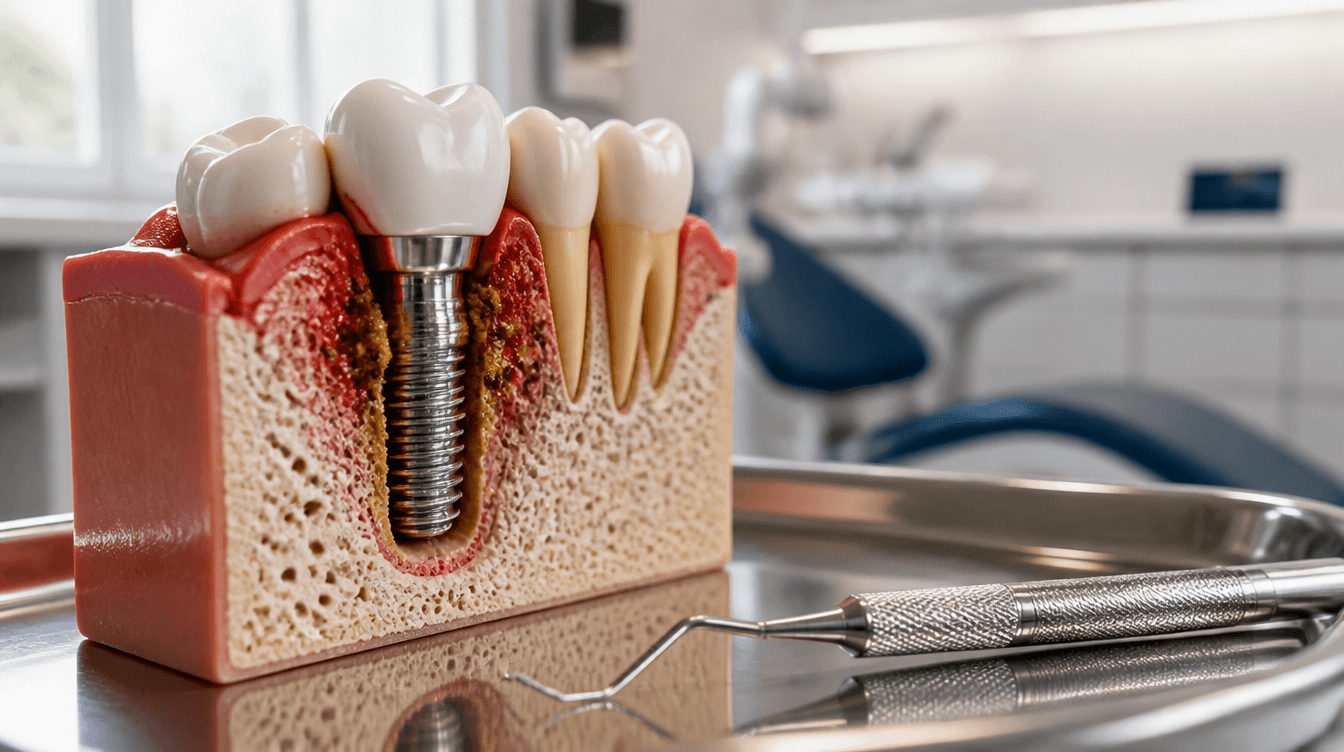
Like any surgical procedure, implant placement carries risks. Infection, damage to other teeth, delayed bone healing, nerve damage, and prolonged bleeding are all possible. According to clinical data, the overall complication rate for modern implants is under 5% over 10 years in well-screened patients. Our implant and reconstruction lead, Dr. Raheel Thobhani, uses 3D CBCT imaging on every case to map nerve and sinus locations before placement, which dramatically reduces complication risk. We also screen aggressively for risk factors (uncontrolled diabetes, smoking, active gum disease) and address them before scheduling surgery.
Downside #4: The lifelong maintenance commitment
Implants require lifelong maintenance, just like natural teeth. Twice-yearly hygiene visits, daily flossing, and a custom night guard if you grind are all critical. Peri-implantitis (inflammation and bone loss around the implant) affects 5 to 10% of implants over 10 years and is the leading cause of long-term implant failure. The patients we see hitting 20+ years with successful implants all share the same trait: they treated implant maintenance as seriously as they treated natural-tooth maintenance. Our implant services page covers the full long-term care protocol.



Frequently Asked Questions
Are dental implants worth the cost despite the downsides?
For most patients with missing teeth, yes. Implants prevent the bone loss that follows extraction, last 20 to 30 years (often longer than alternatives), and restore both function and appearance. The cost-per-year is comparable to or better than bridges and dentures over time.
What is peri-implantitis?
Peri-implantitis is inflammation and bone loss around an implant, similar to periodontal disease around natural teeth. It affects 5 to 10% of implants over 10 years, primarily in patients with poor home care or uncontrolled risk factors. Early detection and treatment usually reverse it.
Can dental implants be removed if I change my mind?
Yes, but it is a surgical procedure that involves removing the titanium fixture from the bone. Removal is done in cases of failure or infection. Patients who simply change their mind about an integrated, healthy implant rarely have it removed because the procedure itself causes more bone loss.
How do I know if the downsides outweigh the benefits for me?
A consultation with 3D CBCT imaging, medical history review, and honest cost-benefit conversation. We walk through the timeline, costs, complication risks, and alternatives at every Smyrna implant consultation so the decision is fully informed.
What are the alternatives if I don't want implants?
Bridges (cement to neighboring teeth, last 10 to 15 years), partial dentures (removable, less functional), or simply leaving the gap (causes bone loss and tooth shift over time). Each has trade-offs, and we discuss all of them at the consultation.
The downsides are real but manageable for most patients
For most Smyrna patients considering implants, the downsides (cost, timeline, surgical risk, maintenance) are real but predictable and manageable. The patients we see who finish implant treatment happiest all knew the trade-offs going in, planned the timeline carefully, and committed to the long-term maintenance. Implants remain the gold-standard tooth replacement for most cases, but informed consent matters.
Want the full implant trade-off conversation?
Whatever's been holding back your implant decision, we can give you the complete picture. Whether you are in Smyrna, Marietta, or Sandy Springs, the team at Smyrna Dental Studio uses 3D CBCT imaging and an honest cost-benefit conversation at every implant consultation. See our implant services, schedule your consultation, or call (470) 801-9986.
Written by Blake Hundley.