What Happens After 20 Years of Having Veneers? Honest Answer
TL;DR: Veneers After 20 Years
About 80% of porcelain veneers need replacement or refurbishment between 15 and 20 years. By year 20, most patients see edge wear, slight color drift, and minor margin staining. The original tooth structure underneath stays healthy in roughly 95% of cases when patients keep up with hygiene visits.
Most common 20 year change: Edge wear and margin staining
Tooth structure underneath: Healthy in ~95% of well-maintained cases
Replacement cost: Similar to original veneers, $1,500 to $2,500 per tooth in Smyrna
Color shift: Surrounding natural teeth darken faster than the porcelain
Smart timeline: Plan a comprehensive review at year 15
Two decades is a long time for a smile to keep its promise
Patients who got veneers 18 to 20 years ago in Smyrna, Marietta, or Sandy Springs are now coming in for honest assessments of where things stand. The short answer is that the porcelain holds up remarkably well, but everything around it (gums, neighboring teeth, bonding cement at the edge) ages on a different timeline than the veneers themselves. Below we walk through what we typically see at the 20 year recheck, what stays beautiful, what needs maintenance, and how we plan replacement when it's time.

What the porcelain itself looks like at 20 years
Porcelain is essentially a glass-ceramic, and on a microscopic level it does not deform, fade, or stain the way natural enamel does. Most 20 year veneers we examine still match the original shade with a magnifier-level inspection. Where they show their age is at the bonded edges, where the resin cement gradually picks up coffee, wine, and tobacco staining over thousands of meals. According to a clinical longevity review on PubMed, well-maintained porcelain veneers retain over 90% of their original surface integrity at the 15 year mark and 80% at the 20 year mark. Our cosmetic lead, Dr. Natasha Kanchwala, evaluates every long-term veneer case using digital photography and scan comparison against the original case records when available, so we can show you exactly what changed and what didn't.
What changes around the veneers (and why it matters more than the porcelain)
The most common 20 year complaint we hear is not about the veneers themselves but about the gums and the neighboring teeth. Gums recede roughly 0.5mm per decade on average for healthy adults, which can expose a thin band of natural tooth root above the veneer edge. Neighboring teeth that were not veneered continue to darken with age, which can make the original veneers look brighter or whiter by comparison. The American Academy of Cosmetic Dentistry notes that uneven aging across the smile zone is the leading reason patients consider replacement at year 18 to 22.
When replacement is the smart call versus refurbishment
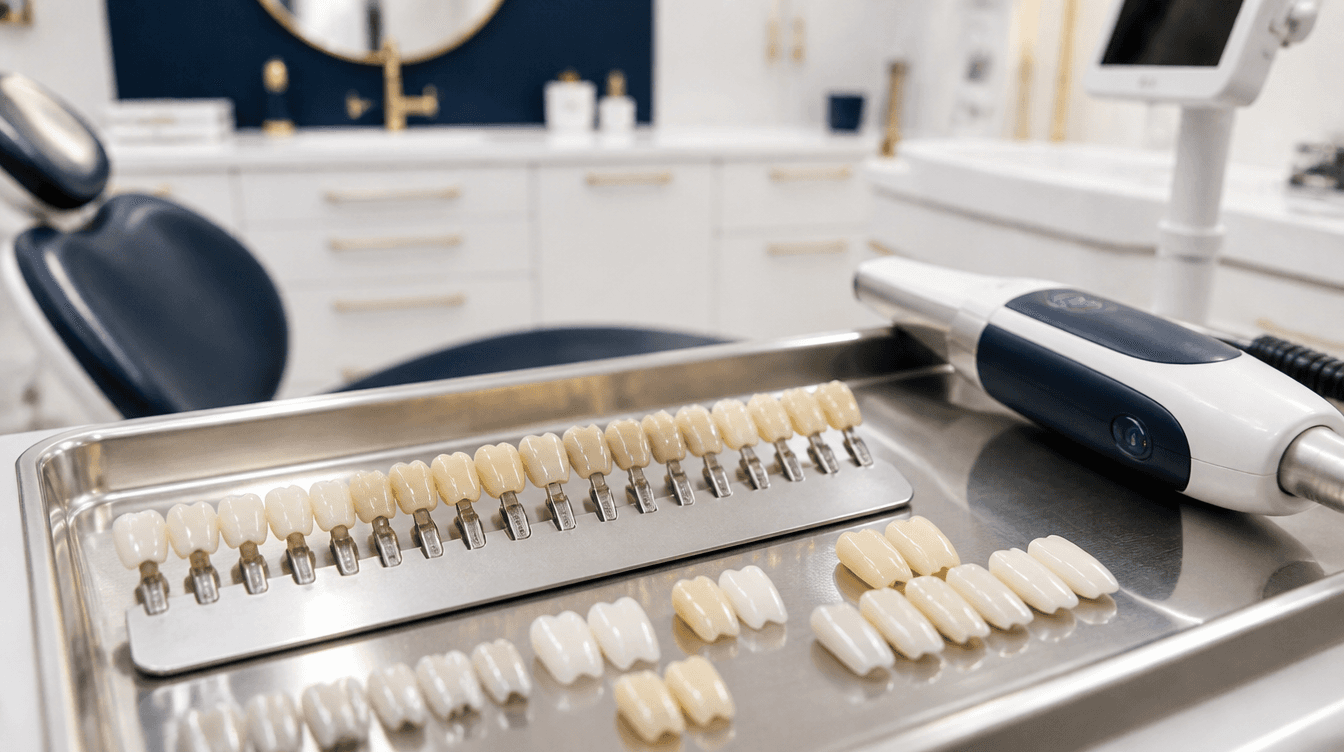
When patients walk in worried that their 20 year veneers "look old," the honest answer is that replacement is sometimes the right call and sometimes refurbishment of the bonded edges is enough. Roughly 60 to 70% of the patients we see at the 20 year recheck end up replacing the veneers within 2 to 3 years. About 30 to 40% can extend the life by another 5 to 8 years with edge polishing, gum-line revisions, and whitening of the surrounding natural teeth to rebalance the color. We make the call based on the structural integrity of the underlying tooth, the condition of the bonded margin, and the patient's aesthetic goals, not on a calendar date.
Cost and process: replacement versus the original case
Replacing veneers at year 20 typically costs the same per tooth as the original case, $1,500 to $2,500 in Smyrna depending on materials and lab choice. The clinical workflow is similar but slightly faster because most of the original tooth preparation is already done. We use the original case records, current intraoral scans, and a digital smile preview so you can see the proposed result before any porcelain is cut. Our veneer page covers materials, timelines, and what to expect during the comprehensive replacement appointment.



Frequently Asked Questions
Will my teeth underneath be ruined after 20 years of veneers?
Almost never. In about 95% of well-maintained cases, the natural tooth structure underneath the veneer is healthy at the 20 year mark. The bonding cement protects the prep surface from decay, and the veneer itself prevents wear on the underlying tooth. Patients who skipped hygiene visits can have decay underneath, which is why six-month cleanings matter even with veneers.
Do all veneers need replacing at 20 years?
No, but most do within 5 years of that mark. Our practice tracks individual veneer cases by year, and roughly 60 to 70% of patients replace between year 15 and year 25. The other 30 to 40% extend further with edge refurbishment, gum line treatment, and surrounding tooth whitening.
Will the new veneers feel different from the originals?
Slightly. Modern lithium disilicate ceramics (E.max) and feldspathic porcelains have improved significantly in the last 20 years. Patients usually report that replacement veneers feel slightly thinner and look more natural under different lighting conditions. The shape and bite are designed from your existing case, so the adaptation is fast.
Should I whiten my natural teeth before replacing my veneers?
Yes, in most cases. Veneers do not whiten with bleaching. If you want a brighter overall smile, we whiten the natural teeth that are not veneered first, then match the new veneers to that brighter shade. Trying to do it the other way around almost always produces a mismatch.
Can a 20 year old veneer be repaired without full replacement?
For small chips at the incisal edge, yes (with composite bonding). For staining at the margin, yes (with polish or replacement of the cement seam). For structural cracks or debonding, no. We assess the integrity of each veneer individually at the 20 year recheck and give you a written plan with all three options priced.
Twenty years later, the smile still works (and so do the basics)
For most Smyrna veneer patients, year 20 is a milestone, not a crisis. The patients we see hitting that mark with original veneers and healthy underlying teeth all share the same four habits: twice-yearly hygiene visits, a custom night guard if they grind, a non-abrasive whitening toothpaste, and a willingness to come in early when something feels off. None of those are dramatic, but together they extend the life of a great smile by years.
Ready for a 20 year veneer recheck?
If your veneers are at or past the 15 year mark, we can help plan what's next. Whether you are in Smyrna, Marietta, or Sandy Springs, the team at Smyrna Dental Studio uses digital photography and scan comparison to give you a complete picture of where your veneers stand. Learn about our cosmetic services, schedule a recheck consultation, or call (470) 801-9986.
Written by Blake Hundley.