
The Complete Guide to Dental Implants in Smyrna, GA
Everything we tell our patients about replacing missing teeth, from a single tooth lost in an accident to a full-mouth restoration. Single implants, multiple implants, implant bridges, snap-on dentures, All-on-4, and how to know which one fits your case.
Book a Free ConsultCall (770) 863-0005What dental implants actually are
A dental implant is a small titanium post we place into your jawbone to replace the root of a missing tooth. Over three to four months, your bone grows around it and locks it in permanently (osseointegration). After that, we attach a custom crown, bridge, or denture on top.
The single most common misconception is that an implant is "just a fake tooth." It isn't. Only an implant actually replaces the root, which is why it's the only tooth-replacement option that stops jawbone loss. Within twelve months of losing a tooth, your jaw can lose up to 25 percent of its bone width in that spot.
The three parts of every implant
Who's a candidate (and who isn't, yet)
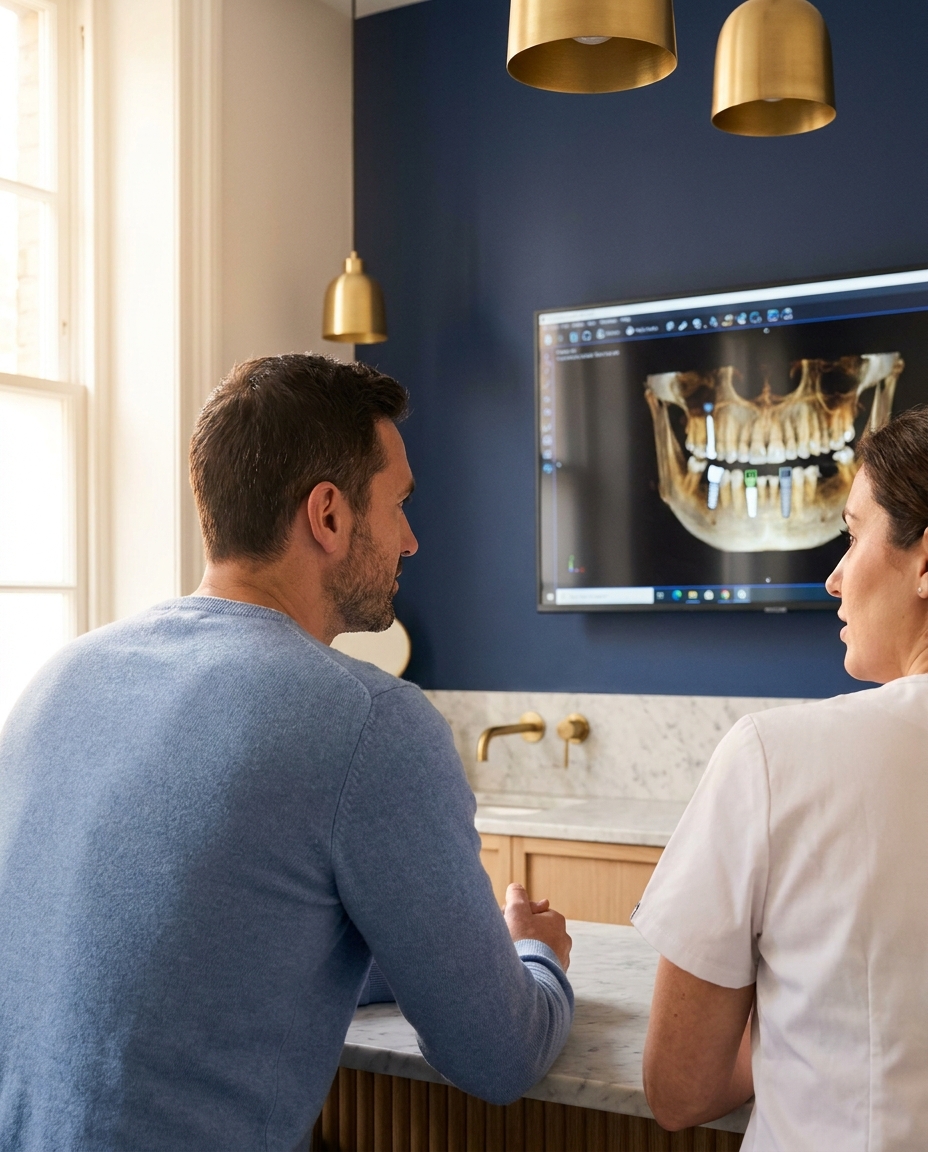
Most adults who have lost or are losing teeth are candidates. Candidacy isn't binary, it's a question of timing, bone density, gum health, and a few medical factors we can almost always work around.
Patients we see every week
Conditions that need a conversation, not a "no"
Pregnancy. We typically wait until after delivery for elective implant surgery. Emergencies handled with extra care. We can do consultation and planning now and schedule placement around your delivery.
Smoking. Smoking roughly doubles implant failure risk. We require stopping for at least one week before surgery and 4-6 weeks after.
Diabetes. Well-controlled diabetes is fine. Uncontrolled (HbA1c above 8) slows healing and increases infection risk.
Bone loss. Years of denture wear or gum disease can leave the jawbone thin. Three answers: bone graft, sinus lift, or All-on-4 angled implants. Our 3D CBCT scan tells us which path fits. Read more about missing teeth solutions.
When you've lost one tooth
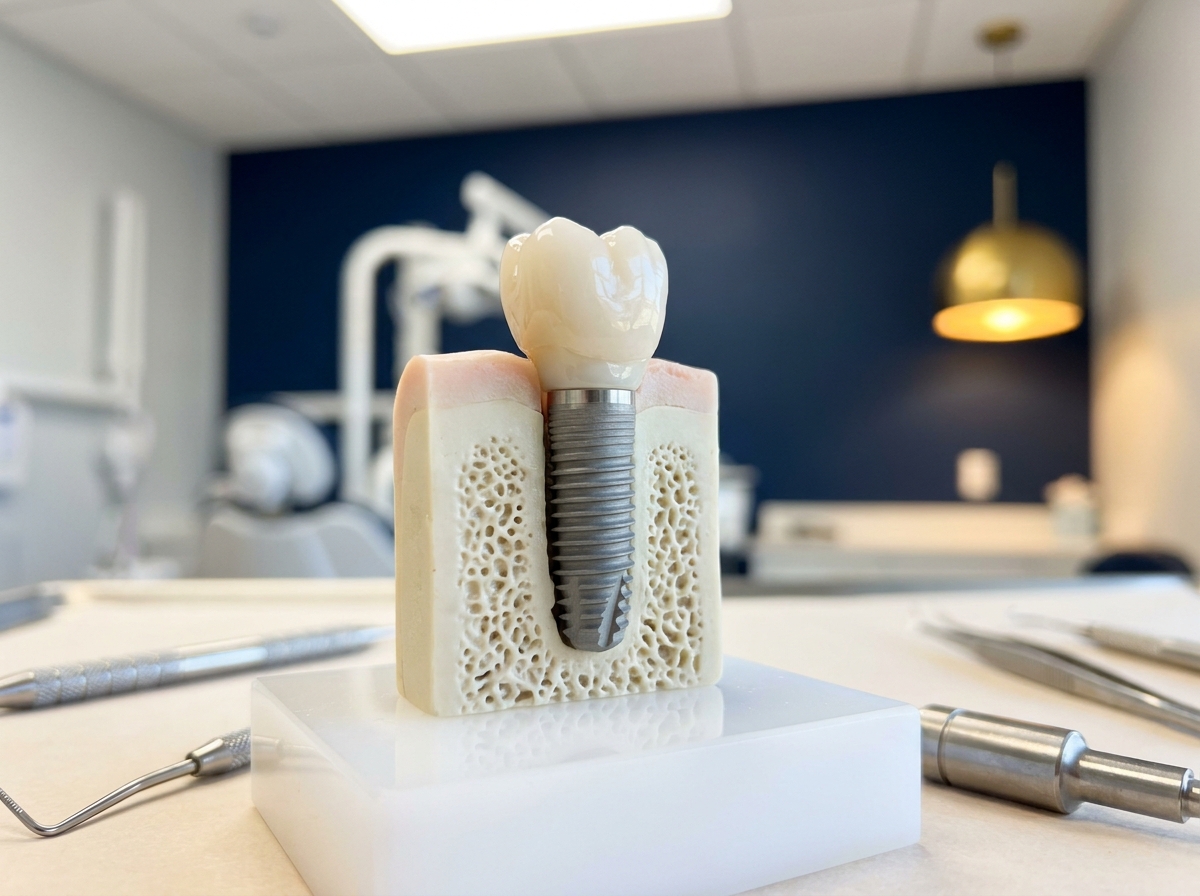
A single tooth implant is the most common case we see and the most predictable. One missing tooth, one implant, one crown. Total time from placement to final crown is typically four to six months.
What patients usually compare it to is a dental bridge. A bridge replaces a missing tooth by grinding down the two healthy teeth on either side. It's faster and cheaper, but it permanently damages two healthy teeth and doesn't preserve bone underneath.
Single implant cost in Smyrna, GA
Our all-in single tooth implant fee runs $3,500 to $6,000 depending on location, bone graft needs, and crown material. We publish our fee schedule openly during the consult.
Front teeth typically cost slightly more because the cosmetic precision required is higher. For a cosmetic-zone implant, our cosmetic lead Dr. Natasha Kanchwala collaborates with Dr. Thobhani on the final crown. See our dental implants in Smyrna page.
Replacing two to four teeth in a row
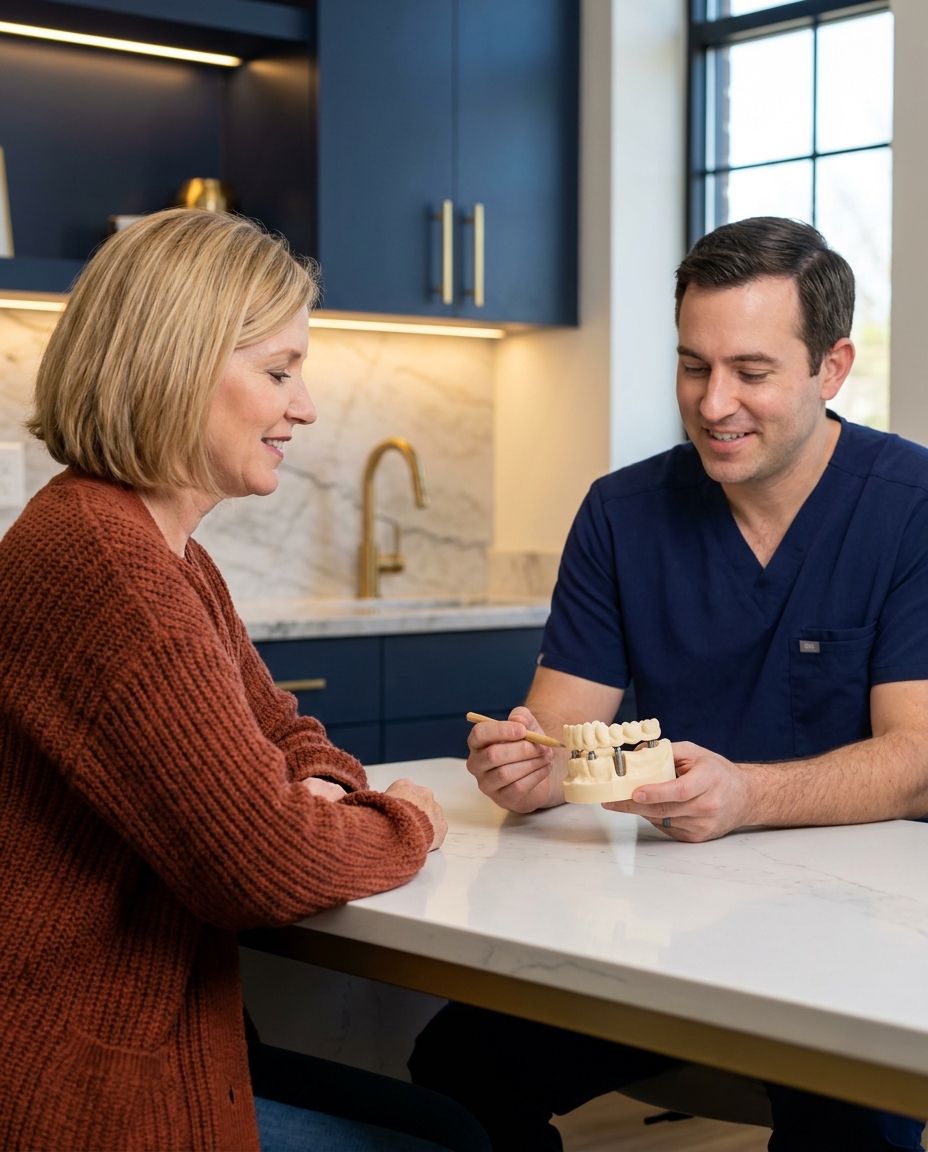
You don't need an implant for every missing tooth. When two, three, or four teeth are missing in a row, we typically use an implant-supported bridge: two implants on either end with the missing teeth spanned between. Faster, less expensive than three or four individual implants, and just as stable.
For five or more missing teeth in the same arch, full-arch options like All-on-4 usually make more sense than a sequence of bridges.
What this looks like
When a bridge is the right call (and when it isn't)
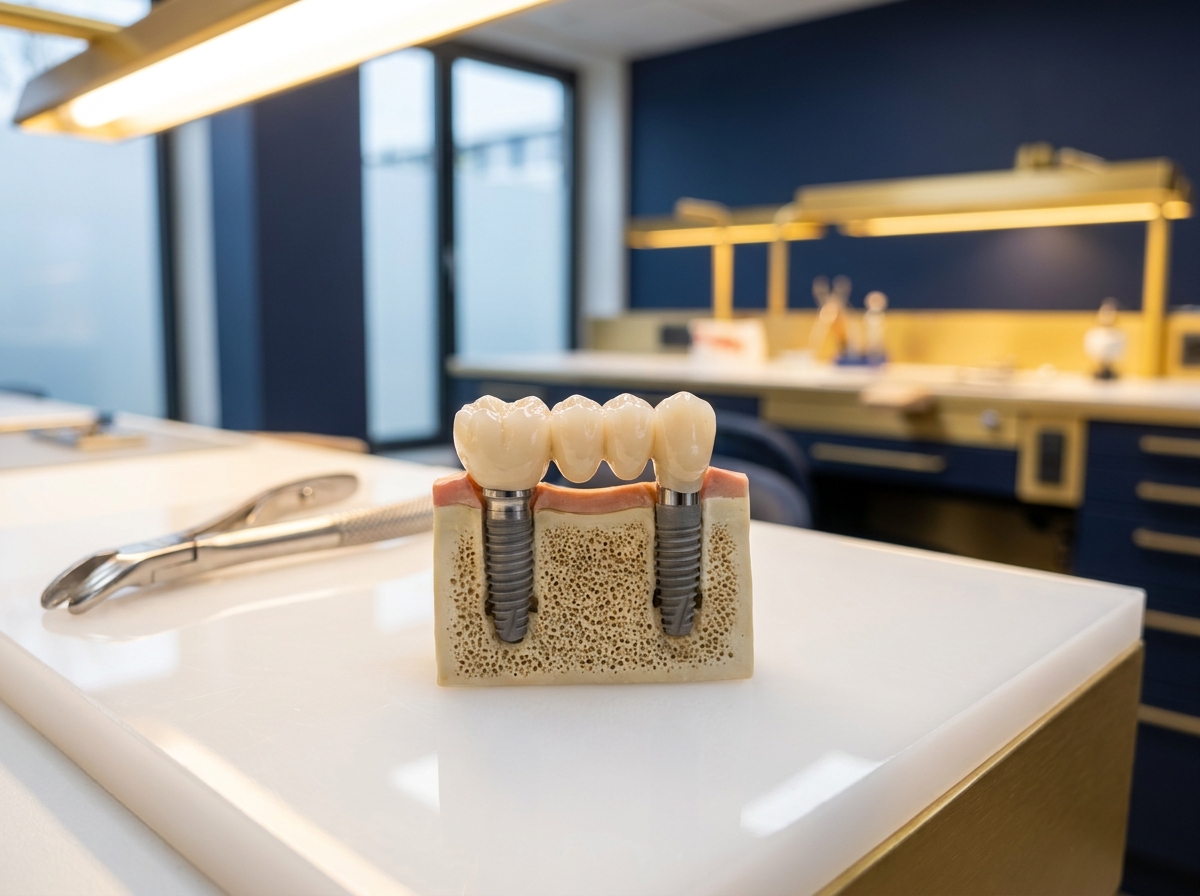
A traditional bridge uses two existing teeth as anchors. An implant-supported bridge uses two implants as anchors. Both span a gap with replacement teeth in the middle.
A traditional bridge requires us to grind down two healthy teeth into pegs. Those teeth lose enamel permanently. An implant-supported bridge leaves your healthy teeth untouched and preserves the jawbone.
How implant bridge cost compares
A 3-unit traditional bridge runs $3,500-$5,500. An implant-supported 3-unit bridge runs $8,000-$12,000. Roughly twice the cost up front, but lasts 20-30 years and preserves bone. See our crowns and bridges page.
The middle ground: snap-on dentures
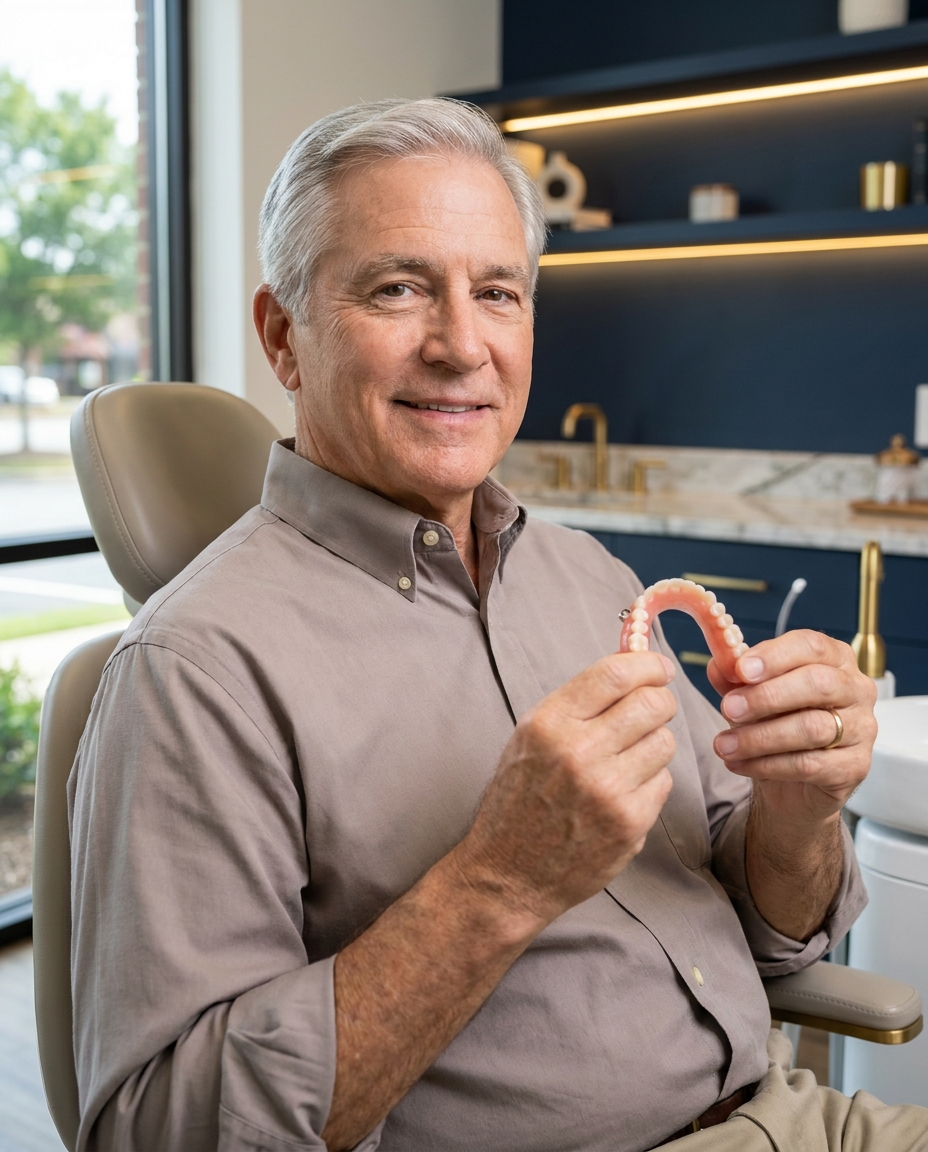
Snap-on dentures (also called overdentures) are the answer for patients who want most of the implant benefits without the All-on-4 price tag. We place 2-4 implants per arch, and your custom denture snaps onto them like a Lego piece.
You take it out for cleaning at night, but during the day it's anchored, doesn't slip, and you can eat almost anything. The bone-loss problem of traditional dentures is largely solved.
Cost vs. options
See your candidacy in 15 minutes
Book a complimentary implant consultation with Dr. Thobhani. We'll review your 3D CBCT scan and verify your insurance benefits in real time.
Book My ConsultationCall (770) 863-0005When you need to rebuild the whole arch

Full-mouth implants is the umbrella term for replacing every tooth in an arch with an implant-anchored solution. The most common version is All-on-4, which uses just four strategically angled implants per arch to support a fixed bridge of 12-14 teeth.
The patients we see for All-on-4 fall into three buckets: long-term denture wearers, patients with multiple failing teeth, and accident or medical patients facing full extraction.
Why All-on-4 instead of more implants?
The All-on-4 protocol was developed by Dr. Paulo Maló in 1998. Two posterior implants are tilted at 30-45 degrees so they anchor in the densest available bone, often eliminating the need for a sinus lift or bone graft.
All-on-4 in metro Atlanta runs $20,000-$32,000 per arch. Both arches typically $40,000-$58,000. See our All-on-4 cost transparency page, plus Cherry financing. Long-term, All-on-4 has a 94-98 percent ten-year success rate.
Implants vs. traditional dentures
Most patients asking about implants are weighing them against traditional dentures. Here's the honest comparison.
The takeaway: traditional dentures cost more over time and accelerate bone loss. Implants are an investment that pays back in function and longevity.
What actually happens, from consult to crown
Total process from consult to final crown for a single tooth implant is typically 4-6 months.
Consultation and 3D CBCT scan (Day 0)
60-minute visit. 3D scan, medical history, oral exam, real-time insurance verification. You leave with a written treatment plan and cost breakdown.
Pre-surgical prep (Weeks 1-4 if needed)
Extractions, bone graft, or antibiotic course if needed. For most cases we extract and graft same visit, then wait 8-12 weeks.
Implant placement (1 visit, ~90 min)
Local anesthesia plus optional sedation. Dr. Thobhani places the titanium post using guided 3D planning.
Osseointegration (3-4 months)
Your bone grows around the implant. Wear a temporary if visible-zone.
Abutment + impression (1 visit, ~30 min)
Attach the abutment, take a digital impression, send to lab to mill your crown.
Final crown placement (1 visit, ~45 min)
2-3 weeks after the abutment visit, your crown is ready. Seat, check the bite, polish, done.
What it actually costs in Georgia

Real fee ranges
Insurance and financing
Most dental plans don't fully cover implants but cover meaningful pieces. The crown portion is often covered at 50%. We pull benefits in real time during your consultation.
We accept Cherry financing with plans starting around $99/month for a single implant.
Why patients choose us for implant work

We're a multi-doctor practice on Cooper Lake Road serving Smyrna, Marietta, Vinings, Mableton, Sandy Springs, and Austell. Dr. Raheel Thobhani leads our implant work and places implants every week.
For cosmetic-zone implants, our cosmetic lead Dr. Natasha Kanchwala collaborates with Dr. Thobhani on the final crown. See our full team page.
The questions we hear every week
Twelve questions we get from real Smyrna, Marietta, and Vinings patients in our consultation room.
A single dental implant in Smyrna, GA typically runs $3,500 to $6,000 all-in. Multiple teeth replaced with implant bridges range from $8,000 to $14,000 per bridge. Full-mouth solutions like All-on-4 run $20,000 to $32,000 per arch. We publish our exact fee schedule openly during the consultation and verify your insurance benefits in real time.
Yes, in almost every case. Long-term denture wearers are some of our most successful implant patients because the relief is dramatic. The one variable is bone density. Years of denture wear accelerates jawbone loss, so we often pair implants with a small bone graft or use All-on-4 angled implants. A 3D CBCT scan tells us exactly what's possible during your first visit.
We typically wait until after delivery for elective implant surgery to avoid X-ray exposure and surgical risks. The exception is a dental emergency where the risk of waiting outweighs the risk of treatment. If you're pregnant and considering implants, we'll do the consultation and planning when it's safe and schedule the placement around your delivery.
If the bone is intact and the area isn't infected, we can sometimes place an immediate implant the same day as extraction. More commonly, we let the socket heal for 8 to 12 weeks before placing the implant, then another 3 to 4 months for osseointegration before the crown. Acting within the first six months matters most.
The implant itself has a 95 to 98 percent ten-year success rate and typically lasts a lifetime when placed correctly and cared for. The crown on top usually lasts 10 to 20 years before needing replacement. The biggest threats to implant longevity are uncontrolled gum disease, smoking, and poorly controlled diabetes.
All-on-4 uses four implants per arch to permanently anchor a fixed prosthesis to your jawbone. You don't take it out at night. Traditional dentures sit on your gums, are removable, and lose fit as your bone shrinks. All-on-4 stops the bone loss; dentures accelerate it. The cost difference reflects a permanent solution vs. an ongoing maintenance cost.
The procedure itself is virtually painless because we use local anesthesia plus optional sedation. Most patients describe the post-op discomfort as less than they expected, often comparable to a tooth extraction. Over-the-counter pain medication handles it for the majority of patients within 48 hours.
Partials still serve a clear purpose for patients who aren't ready for implants or who need a temporary while implants heal. The downside is that partials accelerate bone loss in the gap they cover, can damage the anchor teeth they clip onto, and need regular relines. For most patients we see, partials are a stepping stone, not a destination.
Yes, but with a higher failure risk. Smoking restricts blood flow to the gums and bone, which slows healing and roughly doubles the chance of implant failure compared to non-smokers. We require patients to stop smoking for at least one week before surgery and four to six weeks after for healing.
A snap-on denture uses two to four implants as anchor points for a denture that snaps on and off. You get most of the stability and bone-preservation benefits of implants at a fraction of the All-on-4 cost. The tradeoff is that you still take it out for cleaning. For many patients in their 60s and 70s, this is the sweet spot.
Most dental plans treat the implant post as 'not covered' but will cover the abutment and crown portions (typically at 50 percent). Some plans cover implants for medical necessity. We pull your insurance benefits in real time during your consultation. We also accept Cherry financing with payment plans starting at $99 per month.
We restore implants every week, not occasionally. Dr. Raheel Thobhani leads our implant and reconstruction work and uses guided 3D placement on every case. We're an ADA member practice with 4.9 stars across 200+ verified patient reviews, we serve Smyrna, Marietta, Vinings, Mableton, and Sandy Springs, and we publish our fee schedule openly.
Whatever's been holding back your smile, we can fix it
Book a complimentary 15-minute implant consultation. No pressure, no sales pitch, just clarity on what's possible for you.
Book My Free ConsultationCall (770) 863-0005The Complete Guide to Dental Implants in Smyrna, GA
Everything we tell our patients about replacing missing teeth, from a single tooth lost in an accident to a full-mouth restoration. Single implants, multiple implants, implant bridges, snap-on dentures, All-on-4, and how to know which one fits your case. Written by the team that places and restores implants every week at our Cooper Lake Road office.
What dental implants actually are (and what they aren't)
A dental implant is a small titanium post (about the size of a screw) that we place into your jawbone to replace the root of a missing tooth. Over the next three to four months, your bone grows around it and locks it in permanently, a process called osseointegration. After that, we attach a custom crown, bridge, or denture on top. The result looks, feels, and functions like a real tooth, because biologically it is anchored the same way.
The single most common misconception we hear is that an implant is "just a fake tooth." It isn't. A bridge, partial, or denture sits on top of your gums and adjacent teeth. Only an implant actually replaces the root, which is why it's the only tooth-replacement option that stops jawbone loss in the area where you lost a tooth. Within twelve months of losing a tooth, your jaw can lose up to 25 percent of its bone width in that spot. That's why timing matters as much as the procedure itself.
The three parts of every dental implant
When patients ask us why implants cost more than a bridge, this is the answer: a bridge is one procedure that grinds down two healthy teeth as anchors. An implant is three components, three visits over six months, and the only solution that preserves the bone you have. The patients we see ten and fifteen years out almost always wish they'd chosen the implant the first time.
Who's a candidate (and who isn't, yet)
The short answer: most adults who have lost or are losing teeth are candidates for dental implants. The longer answer is that candidacy isn't binary. It's a question of timing, bone density, gum health, and a few medical factors we can almost always work around.
Patients we see every week
Conditions that need a conversation, not a "no"
Pregnancy. We typically wait until after delivery for elective implant surgery to avoid X-ray exposure and minor surgical risks. Emergencies (an infected tooth that can't wait) are handled with extra care and usually only the absolutely necessary imaging. If you're pregnant and considering implants, we'll do the consult and planning now and schedule placement around your delivery.
Smoking. Smoking roughly doubles the risk of implant failure because nicotine restricts blood flow to the gums and bone. We require patients to stop smoking for at least one week before surgery and four to six weeks after for healing. If quitting entirely isn't realistic, we discuss the tradeoffs honestly before placement.
Diabetes. Well-controlled diabetes is fine. Uncontrolled diabetes (HbA1c above 8) slows healing and increases infection risk. We work with patients and their physicians to optimize glucose control before surgery, then proceed.
Bone loss. Years of denture wear or untreated gum disease can leave the jawbone too thin for a standard implant. We have three answers: a small bone graft (heals in 3 to 4 months), a sinus lift for upper-back teeth, or All-on-4 angled implants that anchor in the dense bone you still have. The 3D CBCT scan we take during your consult tells us exactly which path fits your case.
Medications and conditions. Bisphosphonates (osteoporosis drugs), recent radiation to the jaw, and active gum disease all need a conversation with your physician before we proceed. None of these is automatically disqualifying. Read more about all the missing teeth solutions we offer in Smyrna.
When you've lost one tooth
A single tooth implant is the most common case we see and the most predictable. One missing tooth, one implant, one crown. Total time from placement to final crown is typically four to six months.
What patients usually compare it to is a dental bridge. A bridge replaces a missing tooth by grinding down the two healthy teeth on either side and capping all three with a single span. It's faster (about three weeks) and cheaper (around $3,000 to $4,500), but it permanently damages two teeth that were perfectly fine and doesn't preserve the bone underneath.
Single implant cost in Smyrna, GA
Our all-in single tooth implant fee at Smyrna Dental Studio runs $3,500 to $6,000 depending on tooth location, whether a bone graft is needed, and the crown material. That's for the implant post, the abutment, and the final crown. We publish our fee schedule openly during the consult so you see line-item pricing, not a black-box quote.
Front teeth typically cost slightly more than back teeth because the cosmetic precision required is higher (matching shade, contour, and emergence profile against the existing smile line). For a cosmetic-zone implant, our cosmetic lead Dr. Natasha Kanchwala collaborates with Dr. Thobhani on the final crown to make sure the result is invisible. See our full breakdown of dental implants in Smyrna, GA for service details, or compare to crowns and bridges if you'd like to weigh both options.
When a single implant is the wrong call
Two cases. First, if multiple adjacent teeth are missing or failing, an implant bridge or All-on-4 often costs less per tooth than three or four single implants. Second, if your overall dental health is poor (active gum disease, multiple cracked teeth, ongoing decay), placing a single implant in isolation can be a band-aid. We sometimes recommend addressing the bigger picture first, then planning implants as part of a sequenced treatment plan.
Replacing two to four teeth in a row
You don't need an implant for every missing tooth. When two, three, or four teeth are missing in a row, we typically use an implant-supported bridge: two implants on either end with the missing teeth spanned between them. It's faster, less expensive than three or four individual implants, and just as stable.
For five or more missing teeth in the same arch, full-arch options like All-on-4 usually make more sense than a sequence of bridges. We'll walk you through the math during the consult.
What this looks like
When a bridge is the right call (and when it isn't)
A traditional dental bridge uses two existing teeth as anchors. An implant-supported bridge uses two implants as anchors. Both span a gap with replacement teeth in the middle. The difference is what happens underneath.
A traditional bridge requires us to grind down two healthy teeth into pegs to support the bridge crowns. Those teeth lose enamel permanently and become more vulnerable to decay and root issues over the next decade. An implant-supported bridge leaves your healthy teeth untouched and preserves the jawbone in the gap.
How implant bridge cost compares
A 3-unit traditional bridge in Smyrna runs about $3,500 to $5,500. An implant-supported 3-unit bridge runs $8,000 to $12,000 because it includes two implants. The implant version is roughly twice the cost up front, but lasts 20 to 30 years and preserves the surrounding bone. Traditional bridges typically need replacement every 10 to 15 years because the anchor teeth eventually fail.
See our detailed dental crowns and bridges page for traditional bridge work.
The middle ground: snap-on dentures
Snap-on dentures (also called overdentures or implant-retained dentures) are the answer for patients who want most of the implant benefits without the All-on-4 price tag. We place two to four implants per arch, and your custom denture snaps onto the implants like a Lego piece.
You take it out for cleaning at night, but during the day it's anchored, doesn't slip, and you can eat almost anything. The bone-loss problem of traditional dentures is largely solved because the implants stimulate the bone.
Cost vs. options
For many patients in their 60s and 70s, snap-on dentures are the sweet spot. You get most of the stability and bone preservation of full implants for half the cost. We'll walk through the tradeoffs honestly during your consultation.
See your candidacy in 15 minutes
Book a complimentary implant consultation with Dr. Thobhani. We'll review your 3D CBCT scan, walk through every option that fits your case, and verify your insurance benefits in real time, all in one visit.
When you need to rebuild the whole arch
Full-mouth dental implants is the umbrella term for replacing every tooth in an arch with an implant-anchored solution. The most common version is All-on-4, which uses just four strategically angled implants per arch to support a fixed, permanent bridge of 12 to 14 teeth.
The patients we see for All-on-4 fall into three buckets: long-term denture wearers tired of adhesives and slippage, patients with multiple failing teeth where saving them individually doesn't make economic sense, and accident or medical patients facing full extraction.
Why All-on-4 instead of more implants?
The All-on-4 protocol was developed by Dr. Paulo Maló in 1998. The two posterior implants are tilted at 30 to 45 degrees so they anchor in the densest available bone, often eliminating the need for a sinus lift or bone graft.
All-on-4 in metro Atlanta runs $20,000 to $32,000 per arch all-in. Both arches typically run $40,000 to $58,000. We publish an exact cost breakdown on our All-on-4 cost transparency page, and we accept Cherry financing. For deeper reading on full-mouth specifically, see our full-mouth dental implants page.
Long-term, All-on-4 has a 94 to 98 percent ten-year success rate in the published literature.
Implants vs. traditional dentures
Most patients who walk into our consultation room asking about implants are actually weighing them against traditional dentures. Here's the honest comparison we lay on the table.
| Factor | Dental Implants | Traditional Dentures |
|---|---|---|
| Stability | Permanent. Anchored in bone. Doesn't move. | Sits on gums. Slips with adhesive. Refits needed every 1-2 years. |
| Bone preservation | Stops jawbone loss. Acts as a tooth root. | Accelerates bone loss. Face shape changes over 5-10 years. |
| Eating freedom | Eat anything. 90%+ of natural bite force. | Restricted diet. ~25% of natural bite force. |
| Maintenance | Brush and floss like real teeth. | Soak overnight, adhesive daily, reline every 1-2 years. |
| Lifespan | Implants: lifetime. Crowns: 15-20+ years. | 5-10 years before relining or replacement. |
| Upfront cost (per arch) | $20K-$32K (All-on-4) | $1.5K-$4K |
| 10-year cost (per arch) | $20K-$32K (one-time) | $5K-$15K (relines, replacements, adhesives) |
| Speech | Natural. Most patients adjust within days. | Some patients struggle with certain sounds. |
| Aesthetic | Looks and feels like real teeth. | Can look artificial. Lip support changes over time. |
The honest takeaway: traditional dentures are an entry-level solution that costs more over time and accelerates the bone loss that made you need them in the first place. Implants are an investment that pays back in function, longevity, and quality of life.
What actually happens, from consult to crown
We tell every patient the same thing: the procedure is shorter than they expect, and the timeline is longer. The total process from first consult to final crown for a single tooth implant is typically four to six months.
Consultation and 3D CBCT scan (Day 0)
One 60-minute visit. We take a 3D cone-beam scan of your jaw, review your medical history, run an oral exam, and verify your insurance benefits in real time. By the end of that visit you have a written treatment plan, a written cost breakdown, and answers to every question.
Pre-surgical prep (Weeks 1 to 4 if needed)
If a tooth needs extracting, a bone graft is needed, or you need an antibiotic course first, this is when we handle it. For most cases, we can extract and graft in the same visit, then wait 8 to 12 weeks before placing the implant.
Implant placement (1 visit, ~90 minutes)
Local anesthesia plus optional sedation. Dr. Thobhani places the titanium post using guided 3D planning, places a healing cap on top, and you go home the same day.
Osseointegration (3 to 4 months)
The most important phase, and the longest. Your bone grows around the implant and locks it in place. This isn't a process we can rush.
Abutment + impression (1 visit, ~30 min)
Once the implant has integrated, we attach the abutment and take a digital impression. We send the impression to our lab to custom-mill your final crown.
Final crown placement (1 visit, ~45 min)
Two to three weeks after the abutment visit, your final crown is ready. We seat it, check the bite, polish, and you're done.
What it actually costs in Georgia
We publish our fee schedule openly because that's how we'd want to be treated. Here are the real all-in numbers for Smyrna Dental Studio in 2026.
Real fee ranges
Insurance and financing
Most dental plans don't fully cover implants, but many cover meaningful pieces. The crown portion is often covered at 50 percent. We pull your benefits in real time during your consultation so you know exactly what's covered before any decision.
We accept Cherry financing with payment plans typically starting around $99 per month for a single implant.
Why patients choose us for implant work
We're a multi-doctor practice on Cooper Lake Road serving Smyrna, Marietta, Vinings, Mableton, Sandy Springs, and Austell. Dr. Raheel Thobhani leads our implant and reconstruction work and places implants every week.
For cosmetic-zone implants where the result has to be visually invisible, our cosmetic lead Dr. Natasha Kanchwala collaborates with Dr. Thobhani on the final crown shade. See our full team page.
The questions we hear every week
Twelve questions we get from real Smyrna, Marietta, and Vinings patients in our consultation room every week.
A single dental implant in Smyrna, GA typically runs $3,500 to $6,000 all-in (implant + abutment + crown). Multiple teeth replaced with implant bridges range from $8,000 to $14,000 per bridge. Full-mouth solutions like All-on-4 run $20,000 to $32,000 per arch in metro Atlanta. We publish our exact fee schedule openly during the consultation and verify your insurance benefits in real time so you leave with a written estimate, not a guess.
Yes, in almost every case. Long-term denture wearers are some of our most successful implant patients because the relief is dramatic. The one variable is bone density. Years of denture wear accelerates jawbone loss, so we often pair implants with a small bone graft or use All-on-4 angled implants that anchor in dense available bone. A 3D CBCT scan tells us exactly what's possible during your first visit.
We typically wait until after delivery for elective implant surgery to avoid X-ray exposure and the small surgical risks during pregnancy. The exception is a dental emergency (infection, abscess) where the risk of waiting outweighs the risk of treatment. If you're pregnant and considering implants, we'll do the consultation, planning, and 3D imaging when it's safe, and schedule the placement around your delivery date.
If the bone is intact and the area isn't infected, we can sometimes place an immediate implant the same day as extraction. More commonly, we let the socket heal for 8 to 12 weeks before placing the implant, then another 3 to 4 months for osseointegration before the crown. Acting within the first six months matters most because that's when the most rapid bone loss happens after a tooth is lost.
The implant itself (the titanium post in the bone) has a 95 to 98 percent ten-year success rate and typically lasts a lifetime when placed correctly and cared for. The crown on top usually lasts 10 to 20 years before needing replacement, similar to any other dental crown. The biggest threats to implant longevity are uncontrolled gum disease, smoking, and poorly controlled diabetes.
All-on-4 uses four implants per arch to permanently anchor a fixed prosthesis to your jawbone. You don't take it out at night. It feels and functions like real teeth. Traditional dentures sit on top of your gums, are removable, and lose fit as your bone shrinks. All-on-4 stops the bone loss; dentures accelerate it. The cost difference (about $20K to $32K vs. $1.5K to $4K per arch) reflects a permanent solution vs. an ongoing maintenance cost.
The procedure itself is virtually painless because we use local anesthesia plus optional sedation. Most patients describe the post-op discomfort as less than they expected, often comparable to a tooth extraction. Over-the-counter pain medication handles it for the majority of patients within 48 hours. We see far less pain than people anticipate, and we tell patients exactly what to expect before they ever sit in the chair.
Partials still serve a clear purpose for patients who aren't ready for implants (cost, health, timing) or who need a temporary while implants heal. The downside is that partials accelerate bone loss in the gap they cover, can damage the anchor teeth they clip onto, and need regular relines. For most patients we see, partials are a stepping stone, not a destination.
Yes, but with a higher failure risk. Smoking restricts blood flow to the gums and bone, which slows healing and roughly doubles the chance of implant failure compared to non-smokers. We require patients to stop smoking for at least one week before surgery and four to six weeks after for healing. If you can't stop entirely, we'll discuss the tradeoffs honestly before placement.
A snap-on denture (also called an overdenture or implant-supported denture) uses two to four implants as anchor points for a denture that snaps on and off. You get most of the stability and bone-preservation benefits of implants at a fraction of the All-on-4 cost. The tradeoff is that you still take it out for cleaning. For many patients in their 60s and 70s, this is the sweet spot between traditional dentures and full-arch implant restoration.
Most dental plans treat the implant post as 'not covered' but will cover the abutment and crown portions (typically at 50 percent). Some plans now cover implants for medical necessity (accident, cancer, congenital absence). We pull your insurance benefits in real time during your consultation so you see exactly what's covered before any decision. We also accept Cherry financing with payment plans starting at $99 per month and no credit impact to check your rate.
We restore implants every week, not occasionally. Dr. Raheel Thobhani leads our implant and reconstruction work and uses guided 3D placement on every case. We're an ADA member practice with 4.9 stars across 200+ verified patient reviews, we serve Smyrna, Marietta, Vinings, Mableton, and Sandy Springs, and we publish our fee schedule openly. The honest answer: book a consultation, see the office, ask hard questions, and decide. Implants are a long-term decision and the right practice should welcome the scrutiny.
Whatever's been holding back your smile, we can fix it
Book a complimentary 15-minute implant consultation. No pressure, no sales pitch, just clarity on what's possible for you.