
SERVICES
Quick answer: An implant-supported denture is a full set of replacement teeth that attaches to dental implants in your jaw instead of resting only on your gums. Some snap on and off for cleaning, and others are fixed in place. Smyrna Dental Studio can examine your mouth and explain which type, if any, fits your bone and goals.
Done with dentures in a glass? Ask about implant-supported dentures.
★ 4.9 stars on Google, 700+ reviews
Implants placed by Dr. Raheel Thobhani, DMD
At Smyrna Dental Studio, we provide implant-supported dentures to give patients in Smyrna, GA, a secure, comfortable alternative to traditional removable dentures. By combining the stability of dental implants with the coverage of a denture, we help restore your ability to eat, speak, and smile with confidence, no messy adhesives required.
Key facts
Implant-supported dentures at a glance
What it is: a denture that locks onto implants for more stability than a conventional denture.
Two styles: removable snap-on dentures, or fixed dentures that only a dentist removes.
Implants needed: the number depends on the style, the arch and your bone.
Comfort: placement uses local anesthesia, and you can ask about sedation options.
Timeline: bone typically needs a few months to bond with the implants, and a temporary denture is often worn meanwhile.
Insurance: coverage varies by plan, so ask us to review your benefits.
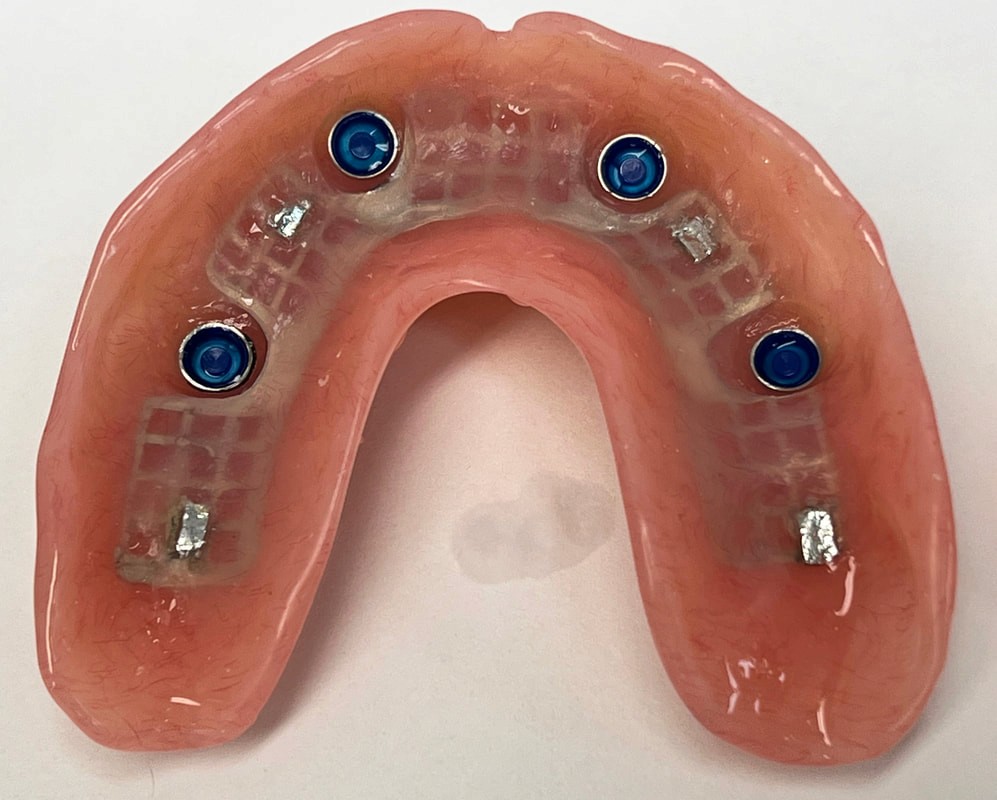
The Modern Solution for Missing Teeth
For decades, traditional dentures were the only option for replacing a full arch of teeth. However, they often come with significant downsides, such as slipping, gum irritation, and the inability to chew hard foods. Implant-supported dentures (often called "snap-in dentures" or "overdentures") solve these problems by anchoring the denture directly to dental implants surgically placed in your jawbone.
Unlike a regular denture that rests on your gums and relies on suction or glue, an implant-supported denture snaps securely onto special attachments on the implants. This connection provides a stable foundation. Furthermore, because the implants mimic natural tooth roots, they stimulate the jawbone, which may help slow the bone loss and facial changes that are common with long-term denture wear. For many patients, it is a middle ground between a traditional denture and a fully fixed implant bridge.
Who it is for
Who are implant-supported dentures right for?
This option often suits people who are missing most or all of their teeth in an arch, or who wear dentures that slip, rub or limit what they can eat. According to Cleveland Clinic, you need enough jawbone to support the implants, although a bone graft can add volume in some cases.
It may not suit you if you have active gum disease, uncontrolled diabetes, or you smoke or vape, because these can slow healing or raise the chance of problems. If you prefer to avoid surgery, or your bone would need extensive rebuilding, another plan may fit better.
Ask your dentist: Should mine be removable or fixed? How many implants will I need? Can my current denture be used?
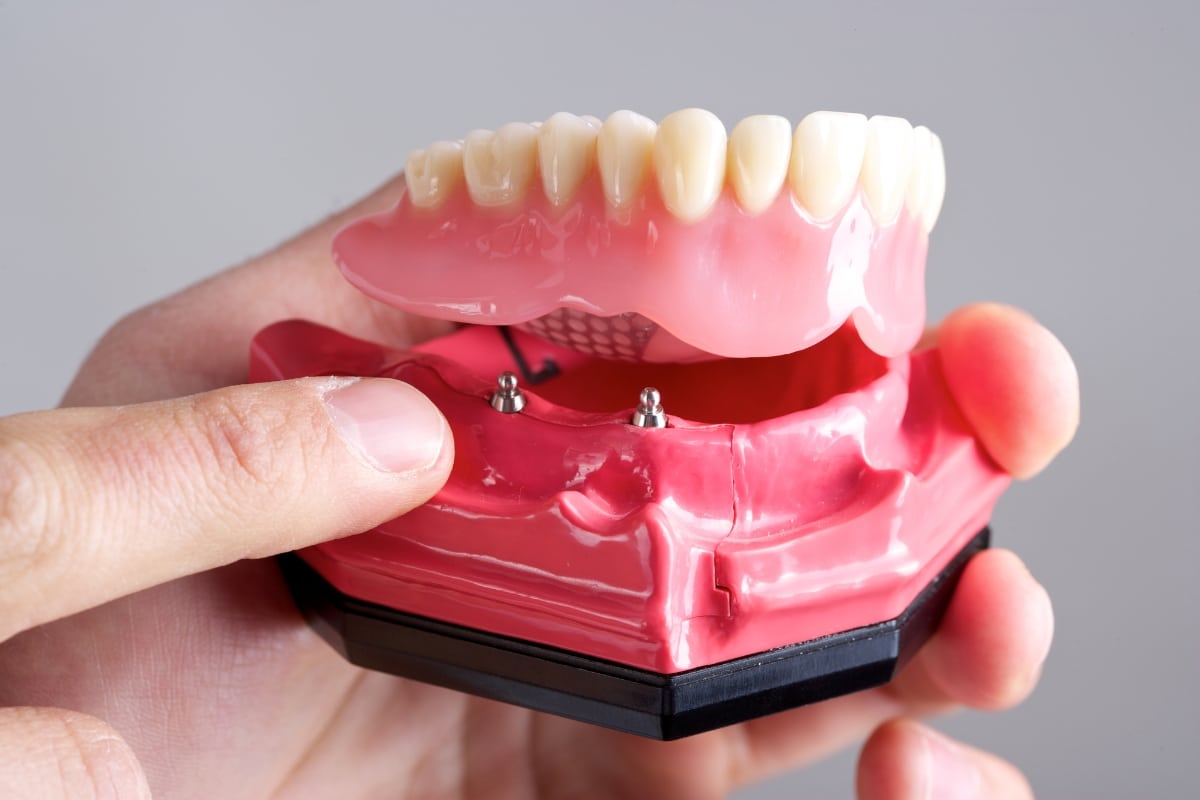
Benefits of Implant-Supported Dentures
Choosing to stabilize your dentures with implants offers profound improvements to your daily quality of life:
A Secure Fit: The denture snaps onto the implants, which helps keep it from slipping or clicking while you talk or laugh.
Restored Chewing Power: Many patients can return to a more varied diet, including foods like steak, apples, and nuts that are often hard to eat with traditional dentures.
Supports Jawbone Health: The implants stimulate the bone, which may help slow the deterioration (resorption) of the jaw structure that ages your facial appearance.
No Messy Adhesives: Forget the daily hassle and bad taste of denture glues and pastes; your implants provide the retention instead.
Improved Comfort: Because the denture is anchored by implants rather than rubbing against the gums, sore spots and irritation are often reduced.
Our Process: Restoring Your Smile
We use 3D imaging and careful surgical planning so your new smile is designed to be functional and natural looking.
01
Consultation & 3D Planning
We begin with a comprehensive exam and a 3D CBCT scan to evaluate your bone density, plan the placement of your implants, and design your custom smile.
02
Implant Placement Surgery
Dr. Raheel Thobhani surgically places the titanium dental implants (usually 2 to 4 per arch) into your jawbone under local anesthesia or sedation for your comfort.
03
Healing & Integration
Over the next few months, a process called osseointegration occurs, where your jawbone fuses with the implants to create a strong, stable bond; you may wear a temporary denture during this time.
04
Final Restoration & Fitting
Once healing is complete, we attach your custom-made final denture to the implants, checking the fit, bite, and appearance.
Cost and insurance
How much do implant-supported dentures cost?
The cost depends on the style you choose, removable or fixed, and on how many implants you need. It also depends on whether teeth must be removed, whether you need a bone graft first, the materials used for the denture, and the type of anesthesia or sedation. Because these details vary, we discuss cost after an exam and 3D scan.
Smyrna Dental Studio accepts dental insurance, and our team can help you understand your benefits. Coverage for implants and dentures varies by plan, so ask early. Financing is available through Cherry for qualifying patients. For more detail, see our article on insurance and implant-supported dentures.
Risks and alternatives
Risks, limits and alternatives
Cleveland Clinic lists infection, nerve damage, mouth injury and sinus perforation as possible complications of implant surgery, and says they are usually minimal. An implant can also fail to bond with the bone, and the gums around implants can become inflamed if they are not cleaned well. Smoking raises these risks.
The denture itself will need care. Removable dentures are cleaned and taken out daily, fixed dentures need careful cleaning underneath, and the denture portion may eventually need adjustment, relining or replacement.
Alternatives include a conventional full denture, a partial denture if you still have some teeth, or fixed full-arch implant teeth. If your bone loss is significant or your medical history is complex, you may need a referral to a specialist for part of the care, and we will say so plainly.
Recovery and aftercare
What to expect after getting implant-supported dentures
Cleveland Clinic reports that most people feel back to normal within about a week after implant surgery, with swelling and soreness easing over a few days. Plan on soft foods at first and avoid strenuous exercise for a couple of days.
Healing then continues for a few months while the jawbone bonds with the implants, and a temporary denture is usually worn in the meantime. After your final denture is attached, clean it and the implants every day, as instructed, and keep your regular checkups. Call us for severe bleeding, pain that medication does not relieve, pus near an implant, or a fever of 101 degrees Fahrenheit or higher.


FAQs About Implant-Supported Dentures in Smyrna, GA
How are these different from traditional dentures?
Is the procedure painful?
Do I take implant-supported dentures out at night?
Can I get this if I already have dentures?
How many implants will I need?
How do I clean implant-supported dentures?
How long do implant-supported dentures last?
Can I get implant-supported dentures if I have lost bone?
Everything you need before you book
Related treatments and reading
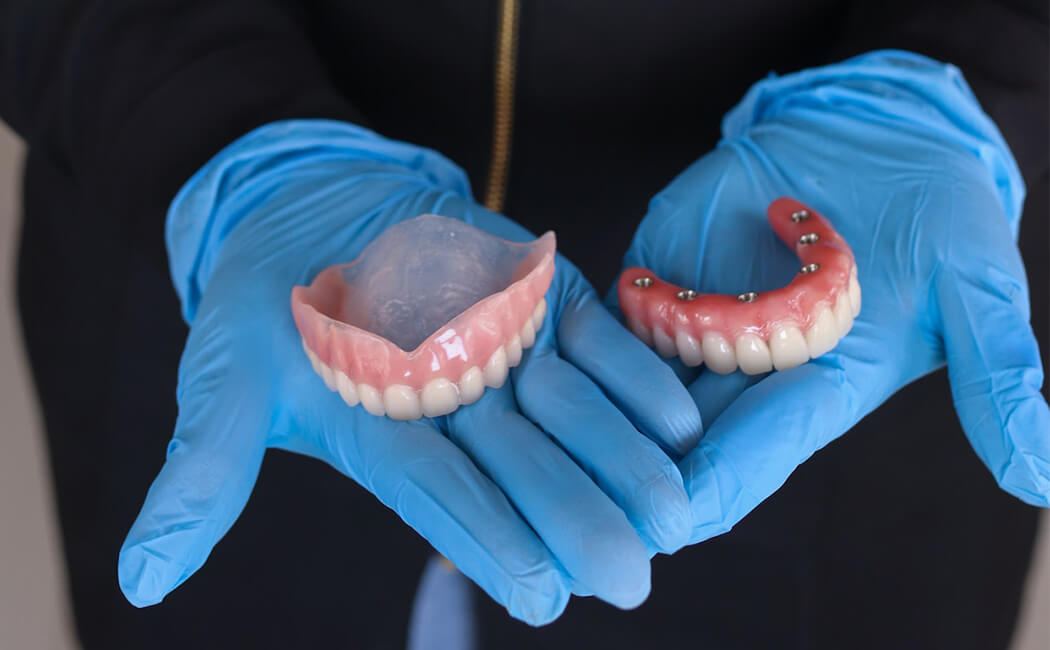
Reclaim Your Freedom to Eat and Smile
Don’t let loose dentures dictate what you can eat or how you live your life. Experience the freedom of a secure smile with implant-supported dentures.
Contact Smyrna Dental Studio today or book online to schedule your consultation and find out if you are a candidate for this treatment.