Can I Eat Normally With Veneers? A Smyrna Dentist's Guide
TL;DR: Eating With Porcelain Veneers
Yes, you can eat almost everything with porcelain veneers, with about 95% of a normal diet unchanged. The exceptions are ice, hard candy, popcorn kernels, and pen-chewing habits, which can chip the porcelain over its 15 to 20 year lifespan.
Safe immediately: Soft proteins, pasta, rice, eggs, ripe fruit, vegetables, soup
Safe within 1 to 2 weeks: Steak, raw apples, carrots, nuts (chew with back teeth)
Avoid forever: Ice, hard candy, popcorn kernels, pen caps, fingernails
Use caution with: Sticky toffee, taffy, dark coffee, red wine
Lifespan: 15 to 20 years with normal eating; longer with a night guard if you grind
The honest answer: veneers are stronger than they look
Patients across Smyrna, Marietta, and Sandy Springs regularly ask us if they will have to give up steak, apples, or their favorite Atlanta brunch foods after getting porcelain veneers. The short answer is no. Modern porcelain veneers are bonded to your natural teeth and become functionally part of your bite, so you can chew nearly everything you ate before. There are a small number of habits we ask patients to retire, mostly involving extreme hardness or sticky pull. Below we walk through what is safe, what is risky, and what we coach Smyrna patients on at the consultation.
What you can eat right after veneers are bonded
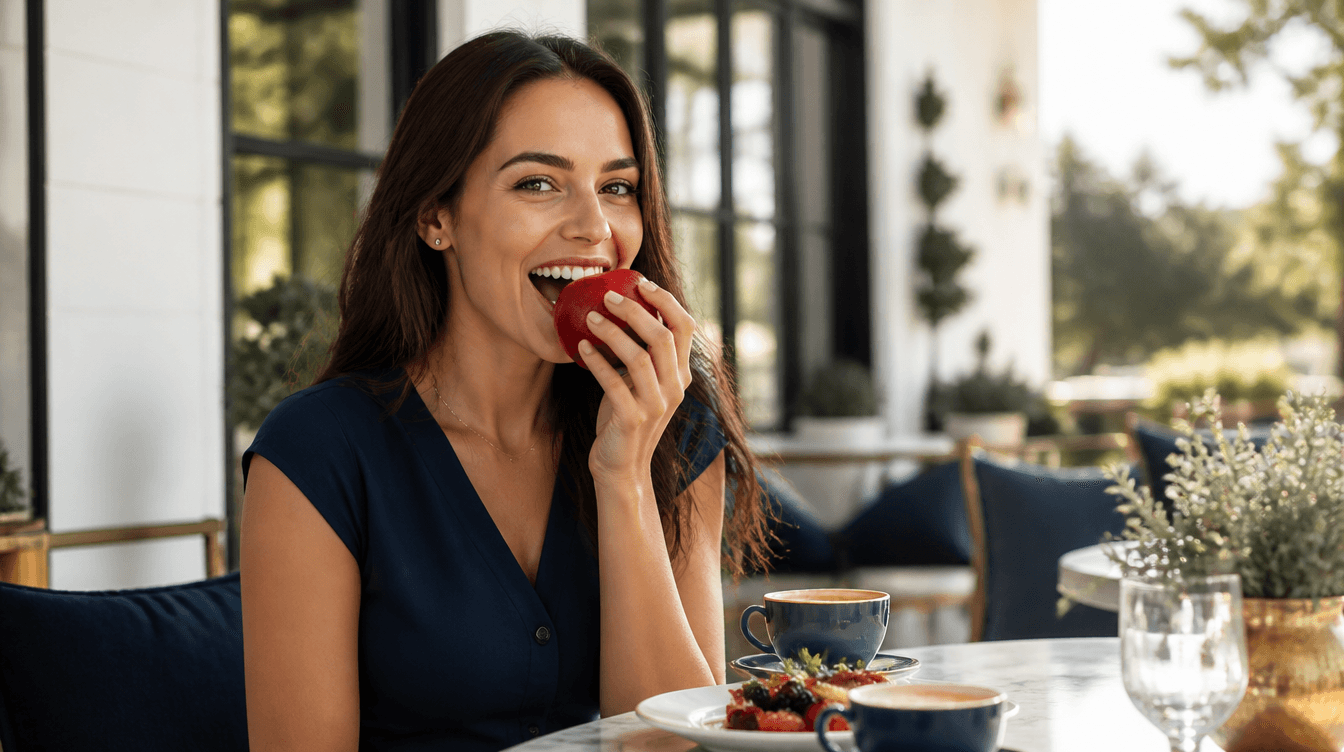
For the first 24 to 48 hours after we bond your veneers at our Smyrna office, we recommend sticking to softer foods to let the bonding cement reach full strength. That means scrambled eggs, oatmeal, soup, pasta, soft proteins, rice, and ripe fruit. By day 3 the bond is fully cured and you can return to a normal diet, with the lifelong habit changes mentioned below. According to the American Dental Association, modern porcelain veneers are bonded with resin cements that achieve full strength within 24 hours of curing, and patients can typically resume normal chewing the same week. Our veneer process includes a delivery-day instruction sheet so you know exactly what is safe at each stage.
The four foods we ask Smyrna veneer patients to retire for life
Modern lithium disilicate porcelain has a flexural strength of roughly 360 to 400 MPa, which is harder than natural enamel in many directions. But porcelain has one weakness: concentrated point-load impact from extremely hard, small objects. The four habits we ask every veneer patient to give up are chewing ice, biting fingernails, opening packaging with your teeth, and crunching down on unpopped popcorn kernels. These create concentrated stress on a single point of the veneer edge, which is exactly how chips happen. The same advice applies to natural teeth, but veneer porcelain has slightly less give than enamel, so the fracture threshold is lower.
Steak, apples, and the foods that look risky but are not
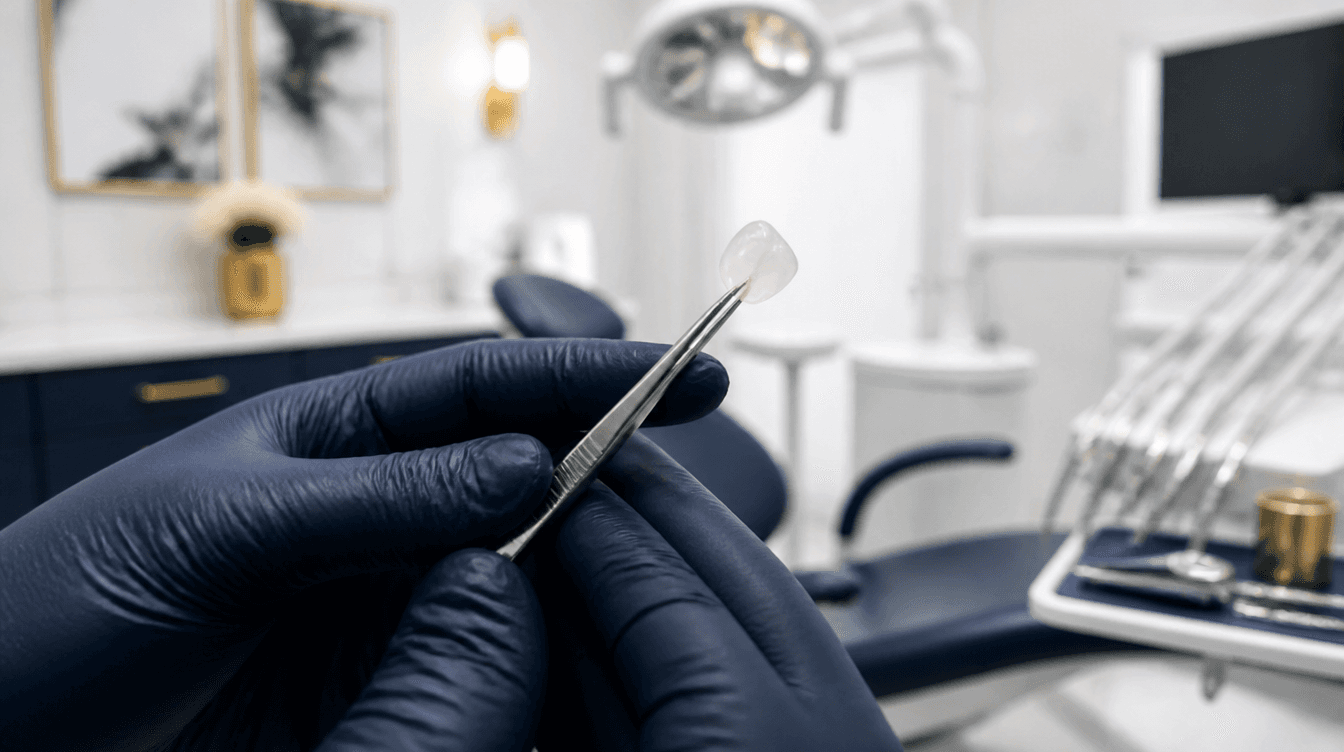
When patients walk in worried about veneers, they almost always ask about the same three foods: steak, raw apples, and bagels. All three are completely safe. The trick is technique, not avoidance. We coach patients to slice steak into bite-size pieces and chew with the back molars rather than tearing with the front teeth. For apples, slice rather than bite. For bagels and crusty bread, the same logic applies. Our cosmetic lead, Dr. Natasha Kanchwala, plans every veneer case using digital smile design and verified bite mapping, so the veneer thickness and edge geometry are matched to the patient's actual chewing pattern. That bite-specific design is one of the reasons our veneer chip rate stays well under the published industry average of around 4% over 10 years (PubMed clinical longevity review).
Coffee, wine, and the staining question nobody asks until it is too late
Porcelain itself does not stain. The bonding cement at the veneer edge can pick up surface staining over time from heavy daily coffee, red wine, or tobacco use, and that is the most common cosmetic complaint we hear at the 5 year recheck. Patients who get hygiene cleanings every six months and use a non-abrasive whitening toothpaste rarely have visible staining issues, even with daily coffee. Our cosmetic team also offers in-office polish refreshes at the recall visits to keep the bonded edge looking new. Veneers do not change what you eat. They just slightly change how you maintain.



Frequently Asked Questions
Can I bite into a sandwich with veneers?
Yes. A sandwich, burger, taco, or anything similar is completely safe. The only adjustment we coach Smyrna patients on is to take normal-size bites rather than oversized ones and to chew evenly across both sides of the mouth. The veneer bond is designed to handle full chewing force.
Will veneers crack if I chew gum?
Standard chewing gum is fine. Sticky toffee, taffy, caramel apples, and similar pull-candy can occasionally tug at the veneer edge with enough force to weaken the bond over years of repeated exposure, so we ask patients to avoid those. Sugar-free gum chewed normally has no impact.
Can I drink coffee or red wine with veneers?
Yes. Porcelain does not stain. The bonding cement at the very edge of each veneer can pick up surface stain over years of heavy use, but this is reversible with a polish at your hygiene visit. Most of our coffee-drinking patients see no visible change at the 10 year mark.
What food breaks veneers most often?
Ice, by a significant margin. Ice chewing causes about 60% of the chipped-veneer cases we see across our Smyrna practice, followed by popcorn kernels and using teeth to open packaging. The published research aligns: ice and hard nuts are the two leading mechanical fracture causes in porcelain veneer literature.
Do I need to wear a night guard with veneers?
If you grind your teeth at night, yes. We screen every Smyrna veneer patient for nocturnal bruxism at the consultation using occlusal wear-pattern analysis. About 30 to 40% of veneer patients need a custom night guard, and we deliver it at the same appointment as the veneers (Cleveland Clinic on bruxism). This is one of the highest-return investments in long-term veneer survival.
Can you eat with pop-on veneers?
Pop-on, clip-in, and snap-on veneers are removable cosmetic shells, not dental restorations. Most manufacturers advise against eating in them, and patients who try usually report that they trap food, shift under chewing pressure, and stain. They do not stop decay or correct a bite. Dr. Kanchwala regularly sees patients in Smyrna who arrive after a year of clip-ins wanting something they can actually live in. Bonded porcelain veneers function as teeth because they are attached to teeth.
A few small habits, a 15 year-plus smile
For most Smyrna veneer patients, the post-treatment diet looks identical to the pre-treatment diet, with three or four lifelong habit retirements. The patients we see hitting the 15 year mark with original veneers all share the same four behaviors: they do not chew ice, they do not open packaging with their teeth, they wear a night guard if they grind, and they keep up with twice-yearly hygiene visits. None of those require giving up the foods you love.
Ready to plan your veneer case?
Whatever has been holding back your smile, we can fix it. Whether you are in Smyrna, Marietta, or Sandy Springs, the team at Smyrna Dental Studio handles your veneer case from digital smile design through final delivery, with a 20 year practice heritage and a custom plan for your bite. Explore smile makeover options, schedule your consultation today, or call (470) 801-9986.
Written by Blake Hundley.