Why Don't Dentists Recommend Invisalign? Honest Reasons
TL;DR: Why Some Dentists Don't Recommend Invisalign
About 20 to 30% of patients we screen for Invisalign at our Smyrna practice are better candidates for traditional braces. The reasons are almost always severe rotation, vertical bite issues, or compliance concerns. Invisalign works beautifully for roughly 70% of mild-to-moderate cases.
Severe rotation: Teeth rotated more than 20 degrees often need wires
Vertical issues: Open bites and severe deep bites usually need braces
Compliance: Patients who can't commit to 22 hours per day fail with Invisalign
Severe malocclusion: Class II/III skeletal cases may need surgery plus orthodontics
Best fit: Mild-to-moderate crowding, gaps, and minor rotations
The honest answer most patients never get
Invisalign is the most-marketed clear aligner system in the country, and most of the patients we see in Smyrna ask about it before they ask about traditional braces. The truth is that Invisalign works beautifully for the right cases and poorly for the wrong ones, and a dentist who screens carefully will tell you which side of that line your bite falls on. Below we walk through the specific reasons our Smyrna team sometimes recommends braces over Invisalign, the cases where Invisalign is clearly the better choice, and how we make that call from a 3D scan rather than a glance.
Severe rotation: where Invisalign hits its mechanical limit
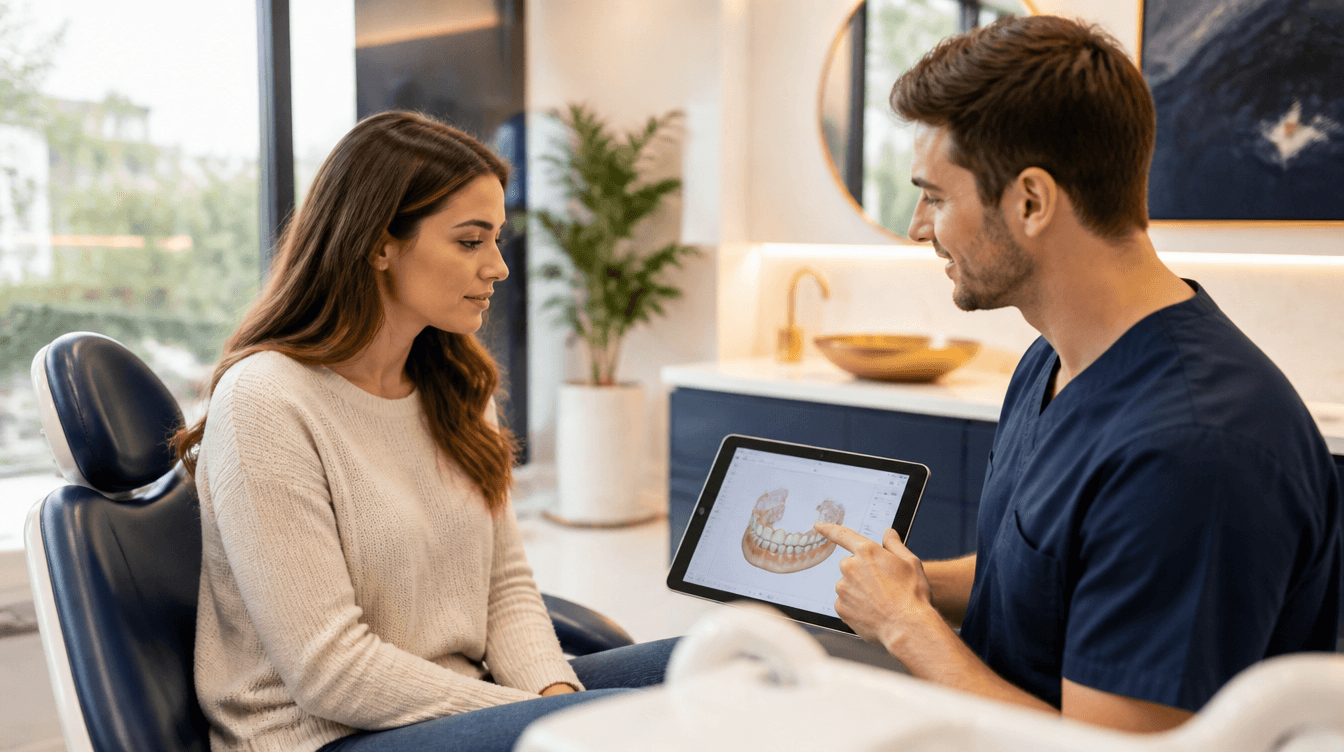
Invisalign uses controlled plastic pressure to move teeth, and it does this very well for tilts, gaps, and minor rotations. Where it struggles is when a single tooth is rotated more than around 20 degrees from the desired final position. Aligners cannot grip a heavily rotated tooth tightly enough to rotate it back without slipping. Traditional braces solve this with brackets and rubber bands that physically grip the tooth from multiple angles. According to the American Association of Orthodontists, complex rotation and severe crowding remain the leading cases referred to braces over clear aligners. We screen for this at the Smyrna consultation using a 3D digital scan that maps every tooth's exact rotation angle, so the answer comes from data, not a guess. Our certified Invisalign team, working within Dr. Leslie Patrick's comprehensive care framework, plans every case from that scan rather than from a single photo or impression.
Open bites, deep bites, and the vertical issues aligners can't move
Invisalign can correct mild bite issues, but vertical problems are where the limits show up fast. An open bite (top and bottom teeth do not touch when biting down) and a severe deep bite (top teeth almost completely cover the bottom teeth) often require force vectors that aligners cannot produce alone. A clinical comparison published on PubMed found that fixed appliances were significantly more effective than aligners for severe vertical and Class II skeletal corrections. When patients come in with these issues, we are upfront: braces will get you a better result faster, even if Invisalign would be more comfortable.
Compliance: the single biggest reason Invisalign cases fail
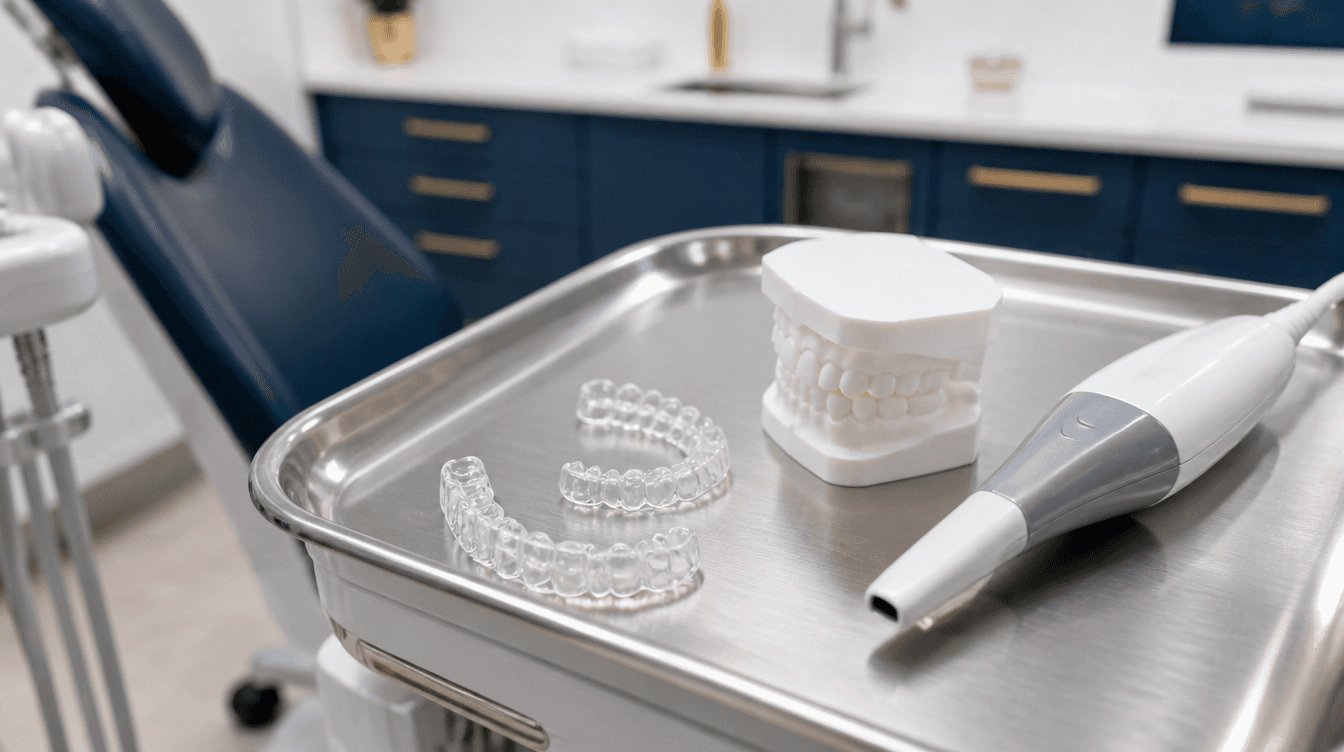
Invisalign works only if you wear the aligners 22 hours per day, every day, for the full duration of treatment. The single biggest mistake we see patients make is removing them for meals, snacks, drinks, or social situations and forgetting to put them back in. According to ADA evidence-based dentistry guidance, aligner non-compliance is the leading cause of prolonged orthodontic treatment timelines. About 25% of the patients we screen tell us upfront they will not wear an aligner that long, and for those patients we recommend braces from day one. Braces work even when you forget about them, which is why they remain the gold standard for adolescent patients and for adults who know themselves well enough to admit compliance will be hard.
Severe malocclusion: when neither aligners nor braces alone are enough
A small subset of patients have skeletal Class II or III malocclusion that would require orthognathic surgery in addition to orthodontics. In these cases, neither Invisalign nor traditional braces alone will produce a stable long-term result. Our Smyrna team coordinates with orthodontists and oral surgeons across the Atlanta metro for these referrals, and we are honest with patients about that pathway from the first visit. The Smyrna clear aligner comparison page covers the additional alternatives we consider for borderline cases, including Spark and other non-Invisalign aligner systems.



Frequently Asked Questions
What kind of bite is Invisalign best for?
Mild-to-moderate crowding, small gaps, simple tilts, and minor rotations under 20 degrees. About 70% of adult patients we screen for orthodontic treatment fit this range, and Invisalign works very well for them. The remaining 30% need braces or a surgical referral.
Will an Invisalign provider tell me if I'm not a good candidate?
A good provider will. We turn down or redirect about 1 in 5 Invisalign-curious patients at our Smyrna consultations because the case is too complex or the patient's lifestyle won't support 22-hour wear. If a provider says yes to every patient, that is a yellow flag.
Are Invisalign attachments necessary for me?
For most cases, yes. Attachments are small tooth-colored bumps bonded to specific teeth that give the aligners a grip point for difficult movements. Patients are sometimes surprised to learn aligners are not just smooth plastic, but those attachments are what make complex rotations possible.
How do I know if my dentist is qualified to do Invisalign?
Ask whether the practice is an Invisalign-certified provider, how many cases they finish per year, and whether they use a 3D digital scanner like iTero. Our Smyrna team is a certified provider and we use 3D scanning at every initial consultation, which is the standard of care for accurate case planning.
What happens if I start Invisalign and it doesn't work?
If progress stalls (we check at every refinement scan), we will switch you to braces or refer you to an orthodontist for the remainder of treatment. About 5% of our cases need this kind of mid-course correction, and we never charge a switching penalty for it.
Honest screening up front saves a year of treatment later
When patients walk into our Smyrna office asking for Invisalign, the conversation is never just yes or no. We map your bite with a 3D scan, tell you the percentage chance Invisalign hits your goal versus braces, and give you a written timeline for both options. About 70% of patients will be great Invisalign candidates. About 30% will be told politely that braces or a referral is the smarter long-term call. The patients who succeed long-term are the ones who got that honest answer up front instead of starting the wrong treatment.
Ready for an honest screening?
Whatever has been holding back your smile, we can fix it. Whether you are in Smyrna, Marietta, or Sandy Springs, the team at Smyrna Dental Studio uses 3D digital scanning to give you a clear answer, not a sales pitch. Learn more about our Invisalign program, schedule your consultation today, or call (470) 801-9986.
Written by Blake Hundley.