Dental Bridge vs. Implant: Cost, Longevity & How to Choose (Smyrna, GA)
Short answer: A dental bridge fills a gap by anchoring a replacement tooth to the teeth on either side, while a dental implant places a small titanium post in the jaw to stand on its own. Bridges usually cost less up front and go faster; implants tend to last longer and do not touch neighboring teeth. The right choice depends on your bone, budget, and the teeth around the gap. A dentist should evaluate your situation before you decide.

By Dr. Raheel Thobhani, DMD, at Smyrna Dental Studio in Smyrna, GA
Losing a tooth feels bigger than it sounds. You notice the gap when you smile, chew, or talk. The good news is that two reliable options can fill that space, and both are offered at Smyrna Dental Studio. This guide walks through how each works, what they tend to cost, how long they last, and how to think it through. This is general information, not a diagnosis.
What is a dental bridge and how does it work?
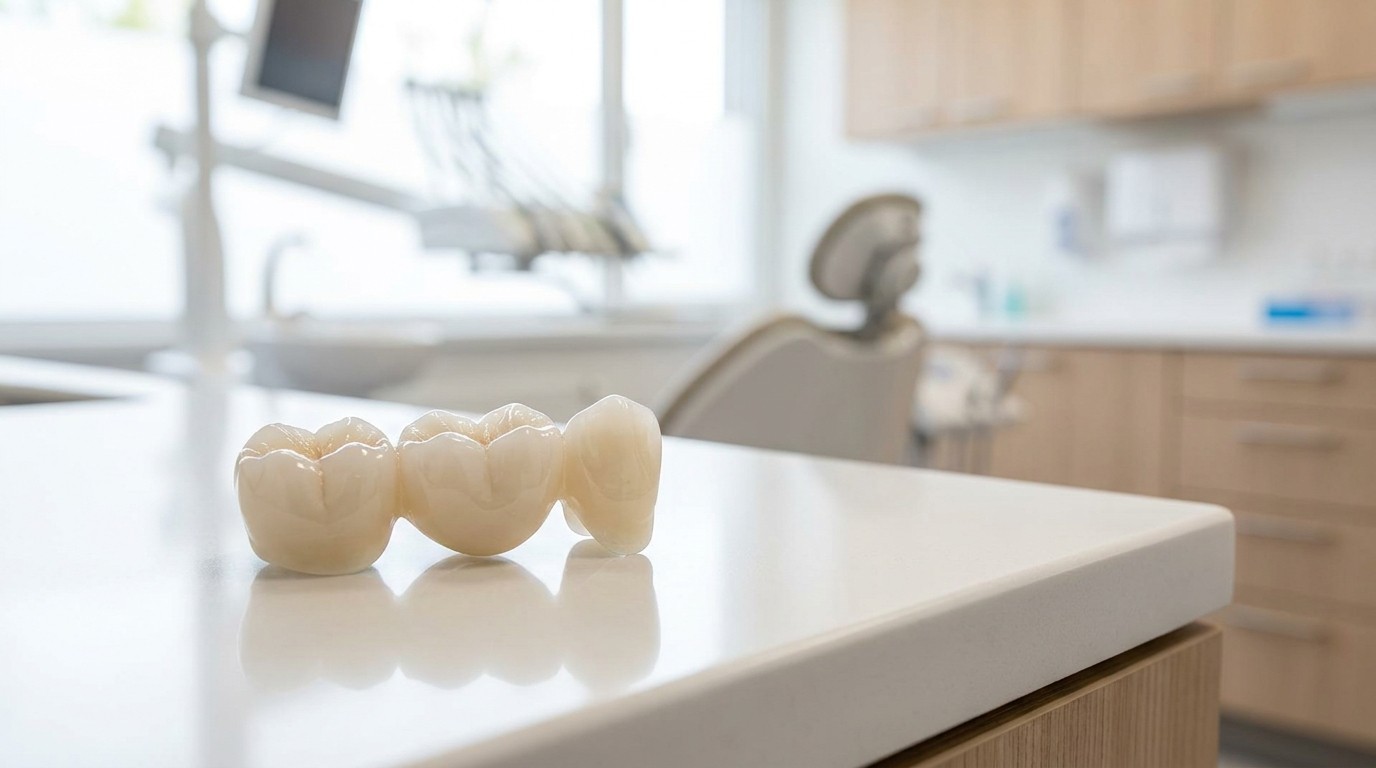
A dental bridge replaces one or more missing teeth by spanning the gap between healthy teeth. The teeth on each side, called abutments, are shaped and capped with crowns. A false tooth, the pontic, sits in the middle and connects to those crowns. The whole piece is cemented in place, so it does not come out like a denture.
Think of it like a small bridge over a creek. The banks on each side hold the structure, and the span carries you across the gap. In your mouth, the natural teeth on either side carry the load instead of a post in the jaw.
Common types of bridges
Traditional bridge
Crowns on both neighboring teeth hold the pontic. This is the most common design.
Cantilever bridge
The pontic anchors to a tooth on only one side, used when a tooth sits on just one edge of the gap.
Maryland bridge
A false tooth is held by thin wings bonded to the backs of nearby teeth, which removes less natural tooth structure.
Implant-supported bridge
Implants, rather than natural teeth, anchor the span when several teeth in a row are missing.
At Smyrna Dental Studio, our team reviews the gap, your bite, and the health of the surrounding teeth before recommending a design. Sedation is available if dental visits make you anxious.
Dental bridge vs implant: which is better?
Neither option is better for everyone. A dental implant survives in roughly 95% of cases at 5 to 10 years, based on a clinical retrospective study (PMC, 2024). Bridges have a strong track record too, yet they lean on neighboring teeth. The better choice depends on your bone, the health of nearby teeth, your timeline, and your budget.
Here is a simple way to weigh the two.
When a bridge may make sense
The teeth beside the gap already need crowns or have large fillings.
You want a faster result with fewer surgical steps.
Your jawbone is not ideal for an implant and you prefer to skip grafting.
Up-front cost is a major factor for you right now.
When an implant may make sense
The teeth on each side of the gap are healthy and untouched.
You want to avoid reshaping neighboring teeth.
You have enough jawbone, or you are open to a graft to build it up.
You are focused on long-term durability and protecting the bone under the gap.
One point patients sometimes miss: an implant helps preserve the bone where the tooth was lost, because the post stimulates the jaw the way a root does. A bridge does not replace that root, so the bone under the pontic can shrink over time. Both options are offered here, so we can match the plan to your mouth.
How much does a dental bridge cost?
Bridge costs vary widely. As a general range, a traditional three-unit bridge often runs from a few hundred to a few thousand dollars per tooth, depending on materials, the number of units, and your area. For comparison, a single dental implant with the abutment and crown typically falls around $3,000 to $6,000 (Delta Dental), and full-mouth work costs much more.
Those numbers are only a starting point. Your real price depends on the bridge type, the materials, how many teeth are involved, and whether any prep work is needed first. The only way to get an accurate figure is a personalized estimate after an exam. You can see general guidance on our pricing page, and we are glad to talk through the math with you.
Want a closer look at the implant side of that comparison? We break the numbers down in our guide to dental implant cost in Smyrna, GA.
How long does a dental bridge last?
A well-cared-for bridge commonly lasts many years, often in the range of 5 to 15 years or more, before it needs replacement. Implants tend to last longer, with that roughly 95% survival at 5 to 10 years reported in clinical research (PMC, 2024). Daily care and regular checkups make a real difference for both.
What shortens a bridge's life? Decay at the edges of the supporting teeth, gum disease, grinding, and skipped cleanings are the usual culprits. The supporting teeth still have living roots, so they can still get cavities under or around the crowns. That is why cleaning around and under the bridge matters so much, which we cover further down.
Does insurance cover dental bridges?
Many dental plans treat bridges as a major restorative service and cover a share of the cost, often around half, after deductibles and up to an annual maximum. Coverage rules differ by plan, so the percentage and limits vary. We do not list specific carriers here. The most reliable step is to confirm your benefits before treatment.
If a bridge is not fully covered, financing can spread the cost into monthly payments. Many patients use third-party dental financing or in-house options to make the work manageable. Our team can help you review what applies to your plan. For more on keeping care affordable, see our notes on affordable dental care in Smyrna.
Does a bridge affect the teeth next to it?
Yes, a traditional bridge changes the neighboring teeth. To place the crowns that hold the bridge, the dentist removes some enamel from the abutment teeth so the crowns fit. That reshaping is permanent, and once a tooth is prepped it will always need a crown. This is one of the main trade-offs people weigh against an implant.
If those neighboring teeth are already damaged or already need crowns, the trade-off matters less, since they would be crowned anyway. If they are healthy and untouched, some patients prefer an implant precisely because it leaves the nearby teeth alone. A Maryland bridge removes less structure than a traditional one, but it is not right for every gap. We talk through these trade-offs at your consult so the plan fits your priorities.
How long does it take to get a bridge vs an implant?
A bridge is usually the faster path. Most traditional bridges take about two visits over a few weeks: one to prep the teeth and take impressions, and one to fit the final bridge. An implant takes longer because the post needs time to fuse with the bone, a process that often spans a few months before the final crown goes on.
A rough timeline
Bridge timeline
A bridge takes roughly 2 to 3 weeks across two appointments, sometimes faster with same-day technology for parts of the process.
Implant timeline
An implant often takes 3 to 6 months from placement to final crown, longer if a bone graft is needed first.
If speed is your top concern, a bridge has the edge. If you can wait and want the long-term benefits, the implant timeline is usually worth it. Our practice uses CEREC technology for same-day crowns in many cases, which can streamline parts of the restorative process. Your exact schedule depends on your mouth and healing.
Can a bridge be replaced with an implant later?
Often, yes. If a bridge wears out or fails, many patients move to an implant afterward. The dentist removes the old bridge, evaluates the bone and gums, and plans the implant. Sometimes a bone graft is needed first, since the bone under the pontic may have shrunk while the bridge was in place.
This is worth thinking about up front. Starting with a bridge does not lock you out of an implant later, but waiting can mean extra steps like grafting. If you are leaning toward an implant eventually, it can be worth discussing whether to go that route from the start. We can map out both paths so you understand the long-term picture, not just the next visit. You can also explore other choices in our overview of dental implant alternatives in Smyrna.
How do you clean under a dental bridge?
Cleaning under a bridge takes one extra step that regular flossing cannot reach. Because the pontic sits against your gum with no gap to slide floss between, you need a floss threader or special floss to pass under the false tooth, plus a small interdental brush or a water flosser. Daily cleaning under the bridge helps prevent decay and gum problems at the supporting teeth.
A simple daily routine
Brush twice a day, angling the bristles toward the gumline around the bridge.
Use a floss threader or super floss to clean under the pontic once a day.
Add an interdental brush or water flosser to clear out anything brushing misses.
Keep your regular checkups so we can catch issues at the bridge early.
Good home care protects the natural teeth holding your bridge, and those teeth are the foundation of the whole restoration. If cleaning under the bridge feels awkward at first, ask us at your visit and we will show you the technique.




Frequently asked questions
What is a dental bridge and how does it work?
A dental bridge fills a gap by anchoring a false tooth to the teeth on either side. Those neighboring teeth get crowns that hold the replacement tooth in the middle. The piece is cemented in place, so it stays put and restores chewing and your smile.
Dental bridge vs implant: which is better?
Neither wins for everyone. Implants survive in about 95% of cases at 5 to 10 years (PMC, 2024) and leave neighboring teeth alone. Bridges are faster and often cost less up front. The right pick depends on your bone, budget, and the teeth around the gap.
How much does a dental bridge cost?
Bridge costs vary by type, materials, and number of teeth, so prices range widely. A single implant with crown often runs about $3,000 to $6,000 (Delta Dental) for comparison. An exam and personalized estimate give you the only accurate number.
How long does a dental bridge last?
A well-maintained bridge commonly lasts around 5 to 15 years or more before replacement. Implants tend to last longer, with about 95% survival at 5 to 10 years in clinical research (PMC, 2024). Daily cleaning and regular checkups help both options last.
Does insurance cover dental bridges?
Many plans treat bridges as a major restorative service and cover a portion, often around half, after deductibles and up to an annual limit. Coverage varies by plan. Confirm your benefits first, and ask about financing if there is a balance left to pay.
Does a bridge affect the teeth next to it?
Yes. A traditional bridge requires reshaping the neighboring teeth so crowns can hold the bridge, and that change is permanent. If those teeth already need crowns, the trade-off is smaller. If they are healthy, some patients choose an implant to leave them untouched.
How long does it take to get a bridge vs an implant?
A bridge usually takes about two visits over a few weeks. An implant often takes 3 to 6 months because the post needs time to fuse with the bone, and longer if a bone graft is needed. A bridge is the faster route when timing matters most.
Can a bridge be replaced with an implant later?
Often, yes. If a bridge wears out, many patients switch to an implant afterward. The dentist checks the bone and gums first, and a graft is sometimes needed because bone under the pontic can shrink. Starting with a bridge does not rule out an implant down the road.
How do you clean under a dental bridge?
Use a floss threader or super floss to pass under the false tooth, since regular floss cannot reach there. Add an interdental brush or water flosser, and brush along the gumline. Daily cleaning under the bridge protects the supporting teeth from decay and gum disease.
Reviewed by Dr. Raheel Thobhani, DMD, at Smyrna Dental Studio in Smyrna, GA.
This article is general information, not a diagnosis or treatment plan. Tooth replacement choices depend on your bone, your bite, and the teeth around the gap, so a dentist should evaluate your situation in person.
Trying to decide between a dental bridge and an implant? We offer both, from single-tooth to full-arch options, at Smyrna Dental Studio. Call (770) 863-0005 or request a consultation to get a personalized estimate. We serve Smyrna and nearby Vinings, Mableton, and Marietta.