Dental Implants vs. Dentures - Which Tooth Replacement Option Is Best?
TLDR (Too Long; Didn't Read)
Dental implants and dentures are both viable options for replacing missing teeth, but they're fundamentally different. Implants cost more upfront ($3,500-$8,000 per tooth) but last 20+ years with minimal maintenance. Dentures cost less initially ($500-$2,000) but require replacements every 5-8 years and ongoing adjustments. Implants feel and function like real teeth. Dentures require special care and have limitations on what you can eat. The right choice depends on your budget, bone health, and lifestyle.
Ready to start? Schedule your consultation today for a personalized smile design.
Choosing Between Dental Implants and Dentures: A Complete Comparison Guide
You're missing teeth, and you need to replace them. Your dentist mentions two main options: dental implants or dentures. You've heard both terms, but you're not entirely sure what the difference is or which one is right for you. This decision affects not just your smile, but your ability to eat, speak, and feel confident for years to come. It deserves careful consideration.
The truth is, there's no single "best" option. What's best for you depends on your specific situation: your budget, your bone health, your lifestyle, and what matters most to you in a tooth replacement. Some patients choose implants and never look back. Others choose dentures for reasons that make perfect sense for their situation. The goal of this guide is to help you understand both options so thoroughly that you can make an informed decision with confidence.
At Smyrna Dental Studio, Dr. Kanchwala, Dr. Thobhani, and Dr. Patrick have helped countless patients navigate this exact decision. They've placed thousands of implants and worked with patients who wear dentures. They understand the real-world pros and cons of each option, not the marketing spin. They'll be honest with you about what each option entails. Schedule a consultation and let's figure out which tooth replacement option makes sense for your life.
Understanding Dental Implants
What Are Dental Implants and How Do They Work?
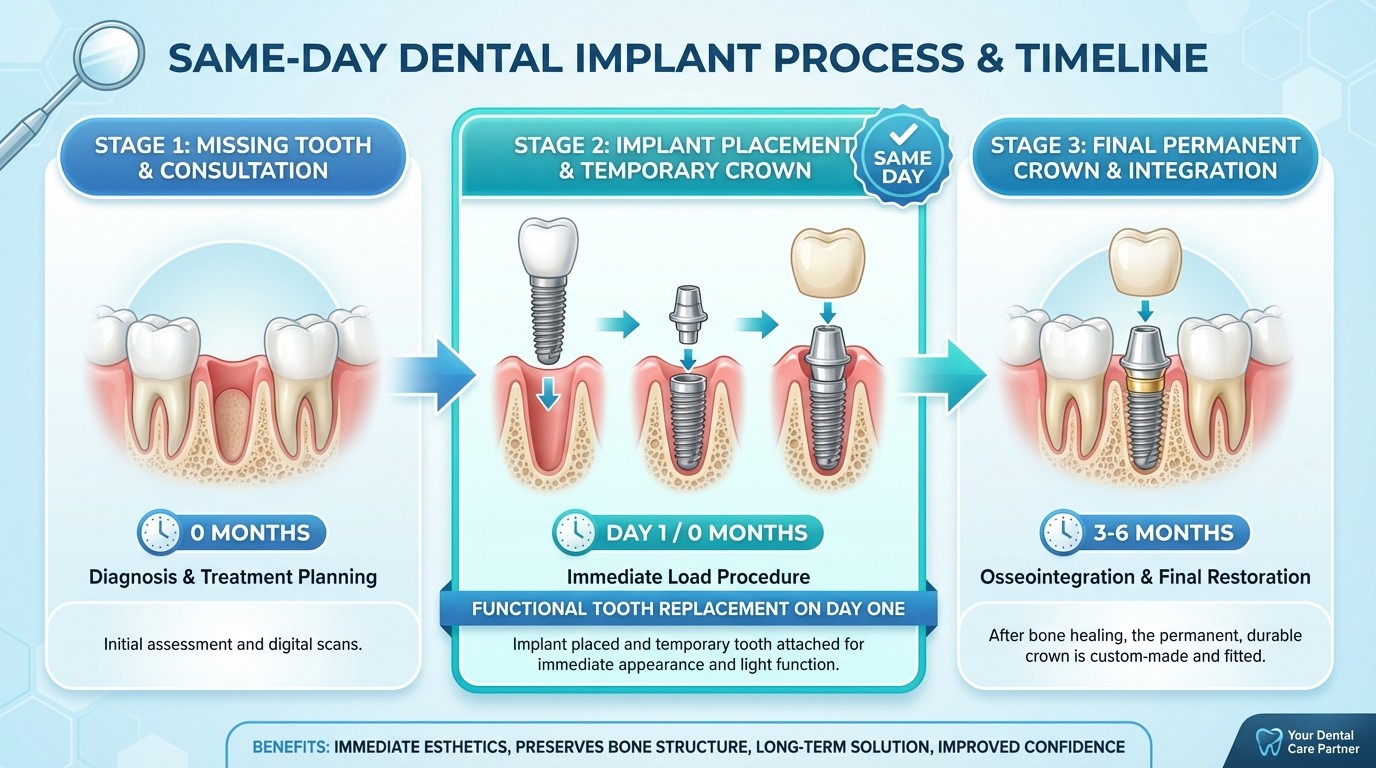
A dental implant is a small titanium screw that's surgically placed into your jawbone where a tooth is missing. Over 3-6 months, the bone grows around the implant and fuses with it, creating a strong, stable foundation. Once the bone has integrated with the implant, an abutment (connector piece) is attached to the implant, and a crown (your replacement tooth) is placed on top of the abutment. The result feels and functions almost exactly like a natural tooth.
The genius of implants is that they replace the entire tooth, including the root. Traditional dentures or bridges only replace the visible crown of the tooth. That's a crucial difference. Because implants have a root-like foundation, they preserve bone and prevent the bone loss that happens when teeth are missing. They also integrate completely into your mouth, so they feel natural when you're eating, speaking, or smiling.
The Advantages of Dental Implants
Longevity: A dental implant can last 20, 30, or even 40+ years with proper care. Many patients who got implants 20 years ago still have them today. Dentures typically need to be replaced every 5-8 years as your mouth changes shape. Over a lifetime, you'll likely replace dentures multiple times, while one implant can last the rest of your life.
Feel and Function: Implants feel like real teeth. You can eat whatever you want without restrictions. You can speak clearly without worrying about your teeth slipping or clicking. You can smile confidently without self-consciousness. Dentures, by contrast, require adjustment to how you speak and eat, and they can shift or move when you're talking or eating.
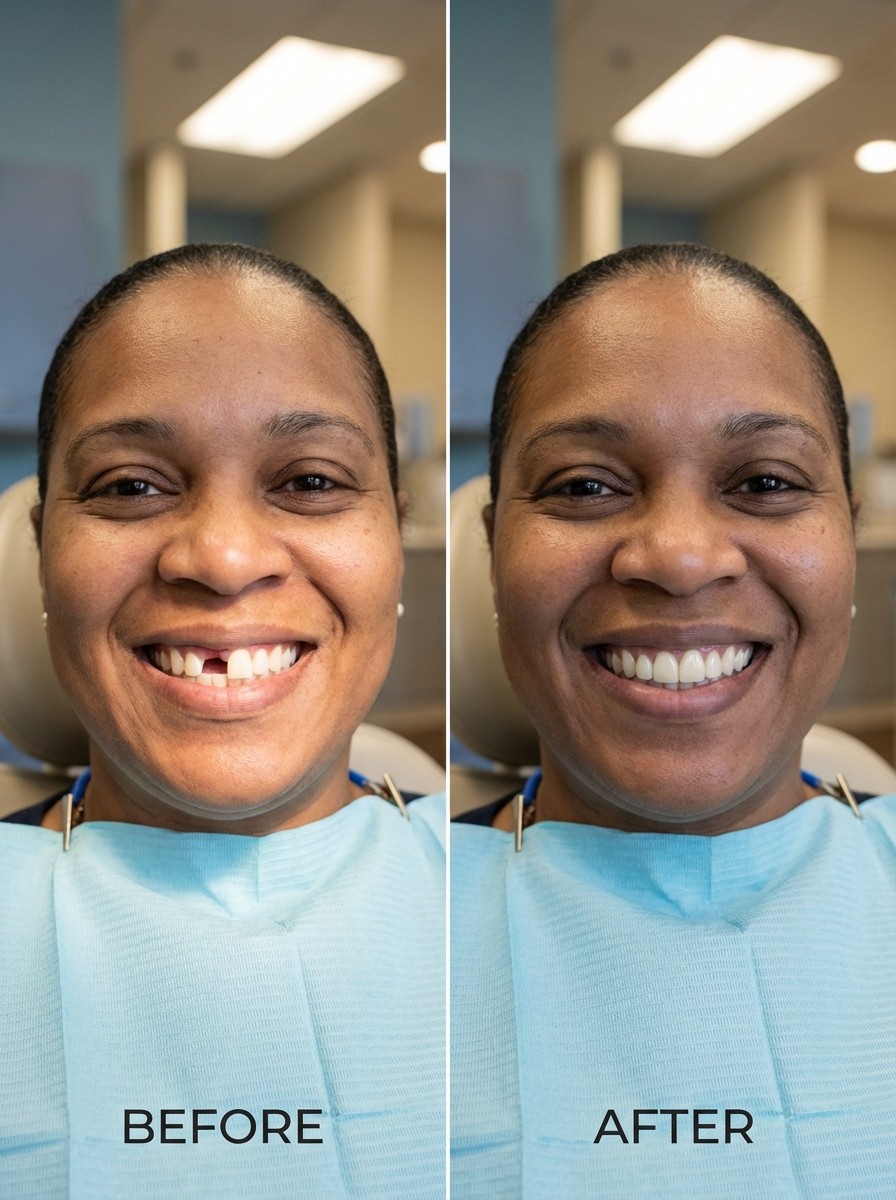
Bone Preservation: When a tooth is missing, the bone underneath starts to deteriorate because there's no tooth root stimulating it. Over time, this bone loss changes the shape of your face and jaw. Implants prevent this bone loss by acting like a natural tooth root, stimulating the bone and keeping it healthy. Dentures don't do this. If you wear dentures for many years, your face may look sunken or aged due to bone loss.
No Special Care: You brush and floss implants like natural teeth. There's no special cleaning routine, no denture adhesive, no overnight soaking. Implants integrate into your normal oral hygiene routine.
Confidence: Knowing your teeth won't slip out or click is a huge confidence boost. You can laugh freely, speak professionally, eat at restaurants without worry. For many patients, this psychological benefit alone makes implants worth the investment.
The Disadvantages of Dental Implants
Cost: Implants are expensive. A single implant typically costs $3,500 to $6,000. Multiple implants cost proportionally more. If you need bone grafting before implant placement, that adds another $500-$2,000. This upfront cost is substantial, though financing options can make it manageable.
Surgery Required: Implant placement is a surgical procedure. It requires anesthesia, surgical precision, and recovery time. Some patients are anxious about surgery. Others have medical conditions that make them poor candidates for implants. If you're nervous about the procedure, Dr. Kanchwala's gentle approach can help, and sedation dentistry options are available.
Timeline: Getting an implant takes time. From first appointment to final crown, the process typically takes 4-6 months because the bone needs time to integrate with the implant. If you need bone grafting first, it could take even longer. If you need teeth replaced immediately, dentures might be the faster option.
Not Everyone is a Candidate: If you have significant bone loss, you might need bone grafting before implants. If you have certain medical conditions or take certain medications, you might not be a good candidate for implants. Your dentist will determine this during consultation.
Understanding Dentures
What Are Dentures and How Do They Work?
Dentures are removable prosthetic teeth attached to a custom-fitted acrylic base that rests on your gums. Complete dentures replace all your teeth on either the upper or lower jaw. Partial dentures replace some teeth and attach to your remaining natural teeth. Dentures have been a tooth replacement option for decades, and modern dentures are far more comfortable and realistic-looking than they were years ago.
When you get dentures, your dentist takes molds of your mouth, and a lab creates custom dentures based on your mouth shape and your desired tooth appearance. You'll have fitting appointments to adjust the dentures until they fit comfortably and feel natural when you speak and eat.
The Advantages of Dentures
Lower Initial Cost: Dentures typically cost $500 to $2,000 per arch (upper or lower). That's a fraction of the cost of implants. If budget is your primary constraint, dentures offer a way to replace missing teeth affordably.
No Surgery: Dentures don't require surgery or anesthesia. There's no recovery time. You can get dentures relatively quickly, sometimes in just a few weeks.
Reversible: If you get dentures and later decide you want implants, you can pursue implants. The process isn't irreversible. With implants, once you commit to them, changing your mind is more complicated.
Easier Access if You Have Health Issues: If you have serious medical conditions that make surgery risky, dentures avoid surgical complications. Your doctor might recommend dentures over implants for health reasons.
The Disadvantages of Dentures
Ongoing Replacement and Adjustments: Dentures don't last forever. As your jaw bone loses density and changes shape, your dentures become loose and need adjustments (called relines). Eventually, you'll need completely new dentures. Over 20 years, you might replace dentures 3-4 times, which adds significant cost.
Requires Special Care: You can't just brush dentures with your regular toothbrush and toothpaste. You need to remove them daily, soak them in a cleaning solution, and brush them with a special denture brush. If you're someone who values simplicity, this is an additional burden.
Speech and Eating Limitations: Dentures can affect how you speak. Some patients notice a slight lisp or difficulty pronouncing certain sounds. As for eating, hard or sticky foods are problematic. You learn to cut food smaller and chew differently. Eating isn't as natural or enjoyable as it is with implants or natural teeth.
Movement and Clicking: Dentures can shift or move when you speak or eat, causing clicking sounds or visible movement. This is embarrassing for many patients and requires constant awareness.
Bone Loss: Unlike implants, dentures don't prevent bone loss. In fact, bone loss continues even with dentures. Over years and decades, significant bone loss occurs, which changes your facial appearance and makes dentures harder to keep stable. Your face might look sunken or aged.
Reduced Taste: Because dentures cover the roof of your mouth (for upper dentures), they can interfere with your sense of taste, which diminishes your enjoyment of food.
Adhesives and Maintenance: You might need denture adhesive to keep your dentures stable, especially as bone loss progresses. This adds to the ongoing cost and maintenance burden.
Side-by-Side Comparison: Implants vs. Dentures
Cost Analysis Over Time
This is where the long-term math becomes interesting. Implants cost more upfront but less over time. Dentures cost less upfront but more cumulatively. Let's look at the numbers.
Implants: Initial cost $4,000. Annual maintenance (checkups, cleaning, occasional repairs): $200-$500. Over 20 years, total cost: $8,000-$14,000. Over 30 years: $10,000-$16,000. Once the implant is paid for, your only cost is routine maintenance.
Dentures: Initial cost $1,500. Annual maintenance (adjustments, relines, cleaning products): $200-$400. New dentures every 5-8 years: $1,500 each. Over 20 years (requiring 2-4 replacements), total cost: $7,000-$12,000. Over 30 years (requiring 4-6 replacements), total cost: $10,000-$15,000. The costs stay consistent year after year.
The actual long-term cost difference is smaller than you might think. But implants provide better function and last longer, which factors into the value equation beyond just dollars.
Bone Loss and Facial Appearance
This is a critical factor many patients don't consider until it's too late. When a tooth is missing, the bone underneath deteriorates because there's no tooth root stimulating it. Over years, significant bone loss occurs. This affects how your face looks.
With dentures, bone loss continues throughout your life. Your jaw becomes narrower, your face looks sunken, and your lips lose fullness. Your facial structure changes dramatically over decades. Implants prevent this bone loss. Because the implant acts like a tooth root, it stimulates the bone and keeps it healthy. Your facial structure stays more stable, and you look younger longer.
Dr. Patrick emphasizes this point during consultations: the bone loss associated with dentures isn't just a functional issue, it's an aesthetic issue that gets worse over time.
Comparing replacement options? Our guide to dentures in Smyrna, GA lays out immediate, regular, snap-on, and All-on-4 options side by side. For price ranges from a single implant up to All-on-6, plus answers to common cost questions, see our Smyrna dental implant cost guide.



Common Questions About Implants and Dentures
Question: "If I get dentures now, can I switch to implants later?"
The Answer: Technically yes, but it's more complicated than you'd think. If you wear dentures for many years and experience significant bone loss, you might need bone grafting before implants become possible. Bone grafting adds cost and extends the timeline. You also might find that after years of denture wearing, the bone loss is so severe that implants aren't feasible at all. This is why some patients who waited too long regret not getting implants when they still had adequate bone. If you think you might want implants eventually, discuss this with Dr. Thobhani during your consultation. You might want to pursue implants sooner rather than waiting.
Myth: "Dentures are more natural-looking than implants"
The Truth: Modern dentures look quite good, but implants look and feel more natural. Because implants are individual teeth, each one can be customized to match your natural teeth perfectly. Dentures, especially full dentures, have a slightly artificial appearance that most people can notice. Additionally, because dentures can shift or move, this movement is often visible to others. Implants stay completely fixed and stable, which makes them look more natural.
Question: "Will my insurance cover implants or dentures?"
The Answer: Most dental insurance plans don't cover implants because they're considered a cosmetic or elective procedure. Some plans cover a portion of dentures as a major service (usually 50% after your deductible), but full coverage is rare. Check your plan to see what's covered. Regardless of coverage, implants can be financed through payment plans or third-party financing like CareCredit, making them more affordable than you might think.
Myth: "Implants hurt to get placed"
The Truth: The implant placement procedure uses local anesthesia (just like getting a cavity filled) so you don't feel pain during the procedure. You feel pressure and vibration, but not pain. After the anesthesia wears off, some mild soreness is normal, similar to soreness after a tooth extraction. For anxious patients, sedation options are available. Most patients report that the procedure is less painful than they expected.
Question: "How long do implants actually last?"
The Answer: Implants can last 20, 30, 40+ years, sometimes for life. The longest-term data shows implants placed in the 1980s are still functional today. That said, implants don't last forever. Eventually, they might need replacement, but this is rare. Most implants placed today will outlast the patient. The lifespan depends on bone health, oral hygiene, and how well you care for your teeth and gums.
Myth: "You can't feel anything with dentures so they're easier to wear"
The Truth: Actually, the opposite is true. You can feel dentures all the time. You feel them shifting, clicking, and moving when you eat or speak. You feel the acrylic base in your mouth. This constant awareness can be annoying or embarrassing. With implants, after a few months of adjustment, you forget they're not natural teeth. They feel completely normal.
Question: "What if I'm too old for implants?"
The Answer: Age alone is not a barrier to implants. What matters is your overall health and bone density. Some 80-year-olds are excellent implant candidates. Some 50-year-olds aren't due to health issues or severe bone loss. Dr. Kanchwala will assess your specific situation and tell you whether implants are viable for you. Don't assume you're too old without getting an evaluation.
Making Your Decision: Implants or Dentures
Choosing between implants and dentures is a significant decision, and it's one you should make with full information and professional guidance. Both options have real advantages and real limitations. Neither is inherently "better" because what's better depends entirely on your specific situation, priorities, and lifestyle.
Here's what we recommend: Schedule a consultation with Dr. Kanchwala, Dr. Thobhani, or Dr. Patrick at Smyrna Dental Studio. Come prepared to discuss your budget, your lifestyle, and what matters most to you in a tooth replacement option. Be honest about your concerns and your hesitations. Our team will assess your bone health, your overall dental health, and your candidacy for implants. They'll explain both options thoroughly, walk you through the pros and cons as they apply to your specific situation, and help you feel confident about whatever decision you make.
Call us at (770) 863-0005 or book online to schedule your consultation. We're located at 4480 N Cooper Lake Rd SE, Suite 210, Smyrna, GA 30082. We serve patients throughout Smyrna, Marietta, Vinings, and the surrounding Cobb County area. We also offer flexible payment options and financing to make either option more affordable.
Why Smyrna Dental Studio for Your Tooth Replacement Decision?
Dr. Kanchwala is known for her gentle approach and for making patients feel comfortable discussing all their options without pressure. Dr. Thobhani believes in patient education and making sure you truly understand the decision you're making. Dr. Patrick brings modern clinical expertise and will honestly tell you whether implants or dentures make more sense for your specific situation. Together, they've helped hundreds of patients navigate this exact decision. They won't push you toward the more expensive option. They'll recommend what makes sense for you. Schedule your consultation today and let's find the right tooth replacement solution for your smile.