Failed Dental Implant? Signs, Causes, and Fixes
Quick answer: what to do about a failing implant
Is a loose or painful implant an emergency?
Yes. Any movement, persistent pain, swelling, or pus around an implant should be evaluated promptly, because early care protects the surrounding bone. Dental implants succeed at a high rate, with reported survival around 95% at 5 to 10 years (PMC, 2024), so a problem is uncommon but worth checking quickly.
The first visit is for triage: find the cause, control any infection, and stabilize the area. The longer-term fix, whether that means saving the implant or removing and replacing it, is a planned process, not a single same-day repair.

A dental implant is meant to feel as solid and quiet as a natural tooth, so pain, swelling, or wobble can be alarming. If you are worried about a failed dental implant, you are not alone, and most problems can be addressed when you act early. At Smyrna Dental Studio in Smyrna, GA, Dr. Raheel Thobhani, DMD treats both implant concerns and dental emergencies. This guide walks through the warning signs, why implants fail, what to do next, and whether a failed implant can be replaced.

What are the signs of a failed dental implant?
Warning signs you should not ignore
A healthy implant feels stable and comfortable. The clearest red flag is movement: an implant should never wiggle or shift the way a loose natural tooth might. Other signs include a dull ache or sharp pain when you chew, red or puffy gums around the post, bleeding, a bad taste, or pus, which can point to infection.
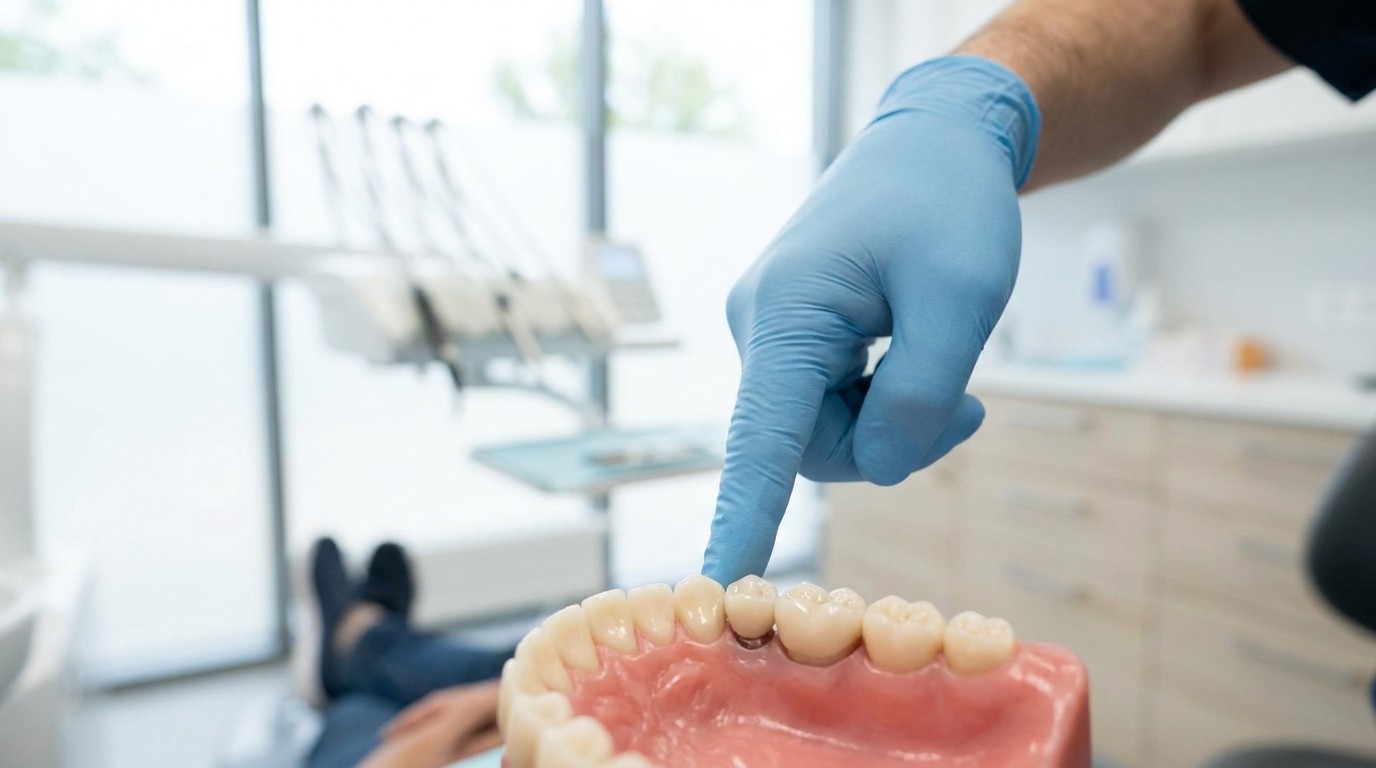
Gum recession that exposes the metal threads of the implant post, ongoing swelling, or new difficulty biting down are also reasons to call. None of these guarantee the implant has failed, but each one is worth a same-week look. If you notice them in Smyrna, Vinings, or Mableton, contact Smyrna Dental Studio rather than waiting to see if it settles on its own.
Why do dental implants fail?
The most common causes
The leading cause is peri-implantitis, an infection similar to gum disease that gradually destroys the bone holding the implant in place. Other causes include poor early healing, when the implant never fully fuses to the bone in a process called osseointegration, plus heavy or uneven chewing forces, teeth grinding, smoking, uncontrolled diabetes, or a direct injury.
Because the reasons differ, the right fix differs too. That is why a careful diagnosis comes before any treatment plan, and why your own history and habits matter as much as the X-ray.
What happens at an emergency implant visit?
Diagnosis, comfort, and stabilization
The first appointment is calm and focused on relief. Dr. Thobhani starts with an exam and often a 3D scan to see the bone around the entire implant and pinpoint the cause and extent of the problem. If there is infection, the priority is numbing the area, draining any abscess, and prescribing antibiotics when needed.
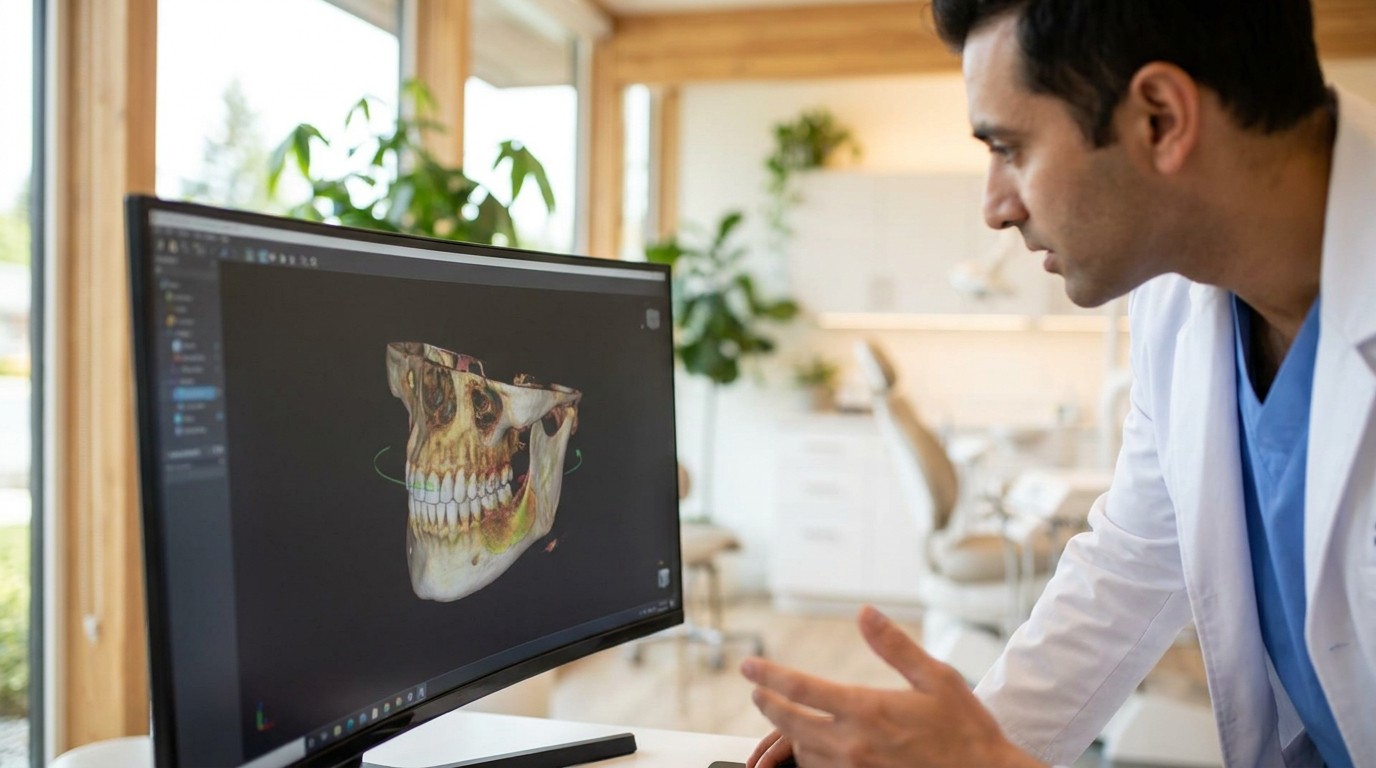
From there, the goal is stabilization. Depending on what the scan shows, that may mean removing the crown to relieve pressure or, if the implant is very loose, removing the implant itself. Either way, you leave with a clear plan and a comfortable temporary solution while the longer fix is mapped out.
Can a failed dental implant be replaced?
Rescue versus removal and replacement
In most cases, yes, the site can support a new implant. When an implant has lost some bone but is still reasonably stable, a rescue procedure may be possible, cleaning the implant surface and adding a bone graft to rebuild support. When the implant has lost its fusion with the bone, removal is the more predictable path.
Replacement is a sequence, not a single visit. The failed implant is gently removed, the site is cleaned, a bone graft creates a fresh foundation, the area heals over several months, and a new implant is then placed. If your tooth situation is complex, options like an All-on-4 full-arch approach or other implant alternatives may be discussed during planning.
How much does it cost to fix a failed implant?
Why the price varies
There is no single figure, because the work ranges from a focused cleaning to full removal, bone grafting, and a new implant. For context, a single implant commonly runs about $3,000 to $6,000 (Delta Dental), and repair plans differ from that baseline depending on grafting and healing needs.
An exact price always needs an exam and imaging. Many offices, including ours, can talk through insurance and financing in general terms once a plan is set. You can compare typical figures on our implant cost guide or review our pricing page before your visit.



Frequently asked questions
Can my implant be fixed the same day as my emergency visit?
Usually no. The emergency visit handles diagnosis, pain, and infection. The long-term fix, whether a rescue or a removal and replacement, is a planned process that often needs months of healing. You will, however, leave comfortable and with a temporary solution.
I had my implant placed by another dentist. Can you still help?
Yes. Smyrna Dental Studio can evaluate and treat implant problems no matter where the original surgery was done. Bringing any prior records or scans, if you have them, helps speed up the diagnosis.
If my implant is removed, can I get a new one in the same spot?
In most cases, yes. The process typically involves removing the failed implant, placing a bone graft to rebuild a healthy foundation, and then placing a new implant after several months of healing. That sequence gives the new implant a strong base.
How can I help an implant last longer?
Daily brushing and flossing around the implant, regular cleanings, not smoking, managing conditions like diabetes, and wearing a night guard if you grind all help. Most implants do well long term, so consistent home care and checkups go a long way.
A worrying implant is usually a solvable problem
An aching, loose, or swollen implant is stressful, but acting early gives you the most options and protects the surrounding bone. If you are in Smyrna, Vinings, Mableton, or Marietta and you suspect an implant problem, call Smyrna Dental Studio at (770) 863-0005 for an urgent evaluation. This article is general information, not a diagnosis, and a dentist should evaluate your specific situation before any treatment.
Reviewed by Dr. Raheel Thobhani, DMD, at Smyrna Dental Studio in Smyrna, GA. Dr. Thobhani treats dental implants, oral surgery, and dental emergencies for patients across the greater Atlanta area.