Gum Disease Treatment Smyrna GA - Periodontal Care & Prevention
TLDR (Too Long; Didn't Read)
Gum disease ranges from mild gingivitis (bleeding gums, reversible with good hygiene) to severe periodontitis (bone loss, permanent tissue damage). Early treatment prevents tooth loss and systemic health problems. Mild gum disease treatment costs $200-$500 for professional cleaning and improved home hygiene. Severe periodontal disease treatment costs $1,000-$3,000+ and might require scaling, root planing, antibiotics, or periodontal surgery. Untreated gum disease is the #1 cause of tooth loss in adults. At Smyrna Dental Studio, Dr. Kanchwala, Dr. Thobhani, and Dr. Patrick treat gum disease aggressively to save your teeth and your health.
Ready to start? Schedule your consultation today for a personalized smile design.
Gum Disease Treatment in Smyrna: Saving Your Teeth and Your Health
Your gums are bleeding when you brush. You notice them swelling or receding. Your breath doesn't smell fresh. You're worried but you're not sure what's happening. What you're experiencing is likely gum disease, one of the most common dental problems affecting American adults. The good news: caught early, gum disease is treatable. The bad news: ignored, gum disease destroys your teeth and affects your overall health.
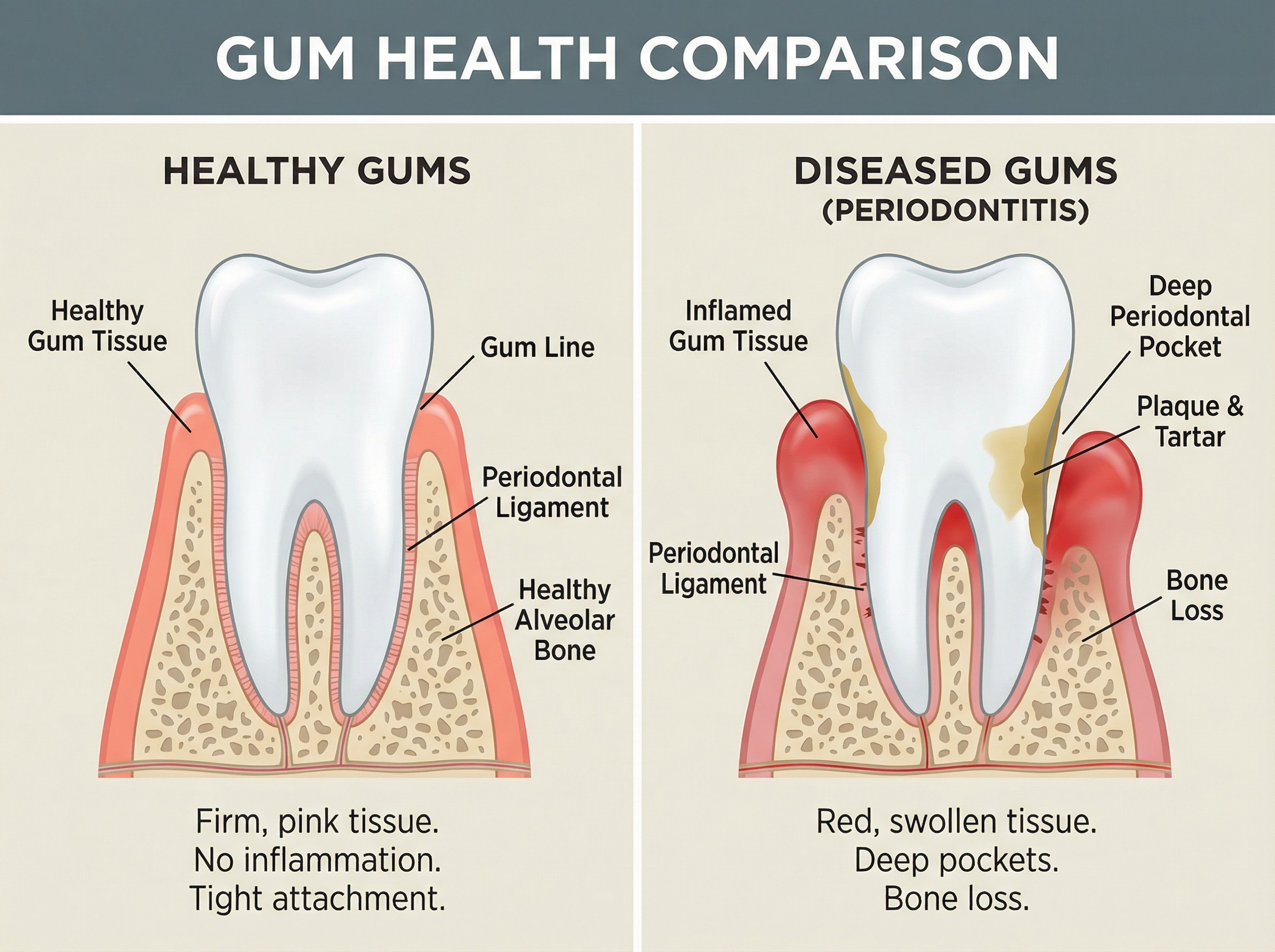
Gum disease is an infection and inflammatory response in your gum tissue. Bacteria in plaque attack your gums, causing inflammation, bleeding, and eventually bone loss if left untreated. Once bone is lost to gum disease, it's difficult to regenerate. Your teeth become loose. Eventually, they fall out. Gum disease is the #1 cause of tooth loss in American adults.
But there's hope. Modern periodontal treatment can stop gum disease progression, reduce inflammation, and help you keep your teeth. At Smyrna Dental Studio, Dr. Kanchwala, Dr. Thobhani, and Dr. Patrick are experienced in treating all stages of gum disease. They'll assess your specific situation, explain what's happening, and create a treatment plan to save your teeth and protect your health. If you've noticed signs of gum disease, schedule a periodontal evaluation with our team immediately.
Understanding Gum Disease Stages
Stage 1: Gingivitis (Mild Gum Disease)
Gingivitis is the earliest stage of gum disease. Your gums bleed when you brush or floss. They might be slightly swollen or red. You might notice bad breath that doesn't improve with brushing. At this stage, no bone loss has occurred. Your teeth are not yet at risk of falling out.
The good news: gingivitis is reversible. With improved brushing and flossing technique, regular professional cleanings, and your dentist's guidance, you can reverse gingivitis completely. Your gums will stop bleeding, return to their normal color and thickness, and go back to being healthy.
This is why catching gum disease early matters so much. Gingivitis is easily treatable. More advanced stages are not.
Stage 2: Early Periodontitis (Moderate Gum Disease)
Early periodontitis is where bone loss begins. Your gums might recede (pull away from your teeth), creating pockets between your gum and tooth. Pockets deeper than 3mm indicate bone loss has occurred. You might experience discomfort or sensitivity. Some patients notice their teeth look longer because gum tissue has receded.
At this stage, gum disease is still reversible with aggressive treatment, but prevention of further bone loss is the main goal. Reversing existing bone loss is extremely difficult.
Stage 3: Advanced Periodontitis (Severe Gum Disease)
Advanced periodontitis means significant bone loss has occurred. Your teeth might be loose or shifting. You might experience pain when chewing. The infection might be visible or you might have pus coming from your gums. Your breath is noticeably bad. Without treatment, your teeth will fall out.
At this stage, the goal is halting further bone loss and saving teeth that are still viable. Some teeth might be too far gone and need extraction, but aggressive treatment can often save the majority of your remaining teeth.
Gum Disease Treatment Options
Professional Cleaning and Improved Home Care
For gingivitis and early periodontitis, professional cleaning combined with improved home care might be all that's needed. A professional cleaning removes hardened plaque (tartar) that your toothbrush can't remove. Your dentist then teaches you proper brushing and flossing technique and recommends the right tools (electric toothbrush, water flosser, etc.).
Cost: $150-$350 for a professional cleaning.
Scaling and Root Planing (Deep Cleaning)
For moderate gum disease, scaling and root planing (SRP) is the gold standard treatment. This is a deep cleaning where your dentist or hygienist removes plaque and tartar from below the gumline and smooths the root surface of your tooth to remove bacteria-harboring roughness. SRP can be done under local anesthesia if your gums are very sensitive.
SRP typically requires 2-4 appointments depending on the severity. You might need antibiotics to help kill the bacteria causing the infection.
Cost: $500-$1,500 for the full treatment depending on severity.
Antibiotics and Antimicrobial Therapy
For bacterial infections, antibiotics might be prescribed orally or applied locally in your gum pockets. Some offices use specialized antimicrobial rinses or gel treatments to reduce bacterial load and support healing.
Cost: $100-$300 depending on the specific antibiotics or treatments used.
Periodontal Surgery
For severe gum disease where bone loss is extensive, periodontal surgery might be necessary. This could involve graft procedures to regenerate lost bone or gum tissue, or surgical removal of severely infected tissue. Periodontal surgery is typically done by a periodontist (a gum specialist) though some general dentists with advanced training perform it.
Cost: $1,000-$3,000+ depending on the specific surgical procedure.
Connection Between Gum Disease and Overall Health
Gum Disease and Heart Disease
Research shows a strong link between gum disease and heart disease. The bacteria in your mouth from gum disease can enter your bloodstream and contribute to inflammation in your cardiovascular system. Patients with gum disease have higher risk of heart attack and stroke. Treating gum disease might reduce your cardiovascular risk.
Gum Disease and Diabetes
Gum disease and diabetes have a bidirectional relationship. Uncontrolled diabetes increases gum disease risk. Untreated gum disease makes diabetes harder to control. Treating gum disease helps improve blood sugar control in diabetic patients.
Gum Disease and Respiratory Infections
Bacteria from gum disease can be aspirated into your lungs, increasing risk of respiratory infections and pneumonia, especially in elderly or immunocompromised patients.
Gum Disease and Overall Inflammation
Gum disease is an inflammatory condition that increases systemic inflammation. Chronic inflammation is linked to numerous health problems. Treating gum disease reduces overall inflammation and supports better overall health.
Preventing Gum Disease
Excellent Oral Hygiene
Brush twice daily with a soft-bristled toothbrush. Floss at least once daily. Use an antimicrobial mouthwash if recommended by your dentist. The goal is removing plaque daily before it hardens into tartar.
Regular Professional Cleanings
Visit your dentist at least twice yearly, more frequently if you have a history of gum disease. Professional cleanings remove tartar that home care can't address. Regular monitoring catches early signs of disease.
Lifestyle Factors
Don't smoke. Smoking dramatically increases gum disease risk and makes treatment less effective. Manage stress. Stress suppresses immune function and makes you more susceptible to gum disease. Eat a healthy diet rich in vitamins and minerals. Avoid excessive sugar and processed foods.
Medical Coordination
If you have diabetes or other conditions affecting gum health, work with your doctor and dentist together. Treating underlying conditions helps prevent or control gum disease.




Common Questions About Gum Disease
Myth: "Bleeding gums when brushing is normal"
The Truth: Bleeding gums are a sign that something is wrong. Healthy gums don't bleed. Bleeding indicates inflammation and infection. You shouldn't ignore it. See your dentist and find out what's causing it. Early treatment can prevent it from becoming a serious problem.
Question: "Is gum disease hereditary?"
The Answer: Gum disease susceptibility has a genetic component, but lifestyle and hygiene are more important factors. Some people are genetically more prone to gum disease, but they can prevent it with excellent hygiene and professional care. Conversely, people without genetic predisposition can develop gum disease through poor hygiene. Genetics loads the gun, but lifestyle pulls the trigger.
Myth: "Once you have gum disease, you'll always have it"
The Truth: Caught early (gingivitis stage), gum disease is completely reversible. Even advanced periodontitis can be halted and stabilized with aggressive treatment. You might deal with an ongoing need for professional care and excellent home hygiene, but you can achieve healthy gums. The key is catching it early and treating it aggressively.
Question: "Can I use home remedies to treat gum disease?"
The Answer: Home remedies like salt water rinses or oil pulling can be supportive but won't treat significant gum disease. You need professional evaluation and treatment. See your dentist. Once you're under professional care, you can support healing with excellent home care, but professional treatment is essential.
Question: "What's the difference between a regular cleaning and a deep cleaning?"
The Answer: A regular cleaning (prophylaxis) removes plaque and tartar from above and just below the gumline. A deep cleaning (scaling and root planing) removes plaque and tartar from deeper below the gumline and smooths the root surface. Deep cleaning is therapeutic (treats disease). Regular cleaning is preventive (maintains health).
Myth: "Gum disease only affects your mouth"
The Truth: Gum disease affects your whole body. The infection and inflammation in your mouth contribute to systemic health problems. Untreated gum disease increases risk for heart disease, stroke, diabetes complications, and respiratory infections. Treating gum disease is about more than just saving your teeth. It's about protecting your overall health.
Question: "How long does gum disease treatment take?"
The Answer: It depends on severity. Gingivitis might resolve with one professional cleaning and improved home care (immediate). Early periodontitis might require 2-4 deep cleaning appointments over 4-6 weeks. Advanced periodontitis might require professional cleanings, antibiotics, possible surgery, and ongoing professional monitoring over months. Your dentist will tell you what to expect.
Take Action Against Gum Disease Now
Gum disease doesn't get better on its own. Without treatment, it progresses, bone is lost, and eventually teeth are lost. The best time to treat gum disease is as early as possible, ideally at the gingivitis stage when it's still completely reversible. The second-best time is today.
If you've noticed bleeding gums, swelling, recession, or bad breath, don't ignore it. Schedule a periodontal evaluation with Dr. Kanchwala, Dr. Thobhani, or Dr. Patrick at Smyrna Dental Studio. They'll assess your gum health, explain what's happening, and create a treatment plan to save your teeth and protect your health.
Treating gum disease now prevents tooth loss, saves money on expensive future restorations, protects your overall health, and gives you peace of mind. We're located at 4480 N Cooper Lake Rd SE, Suite 210, Smyrna, GA 30082, and we serve patients throughout Smyrna, Marietta, Vinings, and Cobb County. Contact us today to schedule your evaluation.
Why Choose Smyrna Dental Studio for Gum Disease Treatment?
Dr. Kanchwala brings expertise in periodontal disease and aggressive treatment protocols that save teeth. Dr. Thobhani educates patients about the connection between gum health and overall health, motivating them to take treatment seriously. Dr. Patrick uses modern techniques and evidence-based approaches to treat all stages of gum disease. Our team coordinates with your primary care physician to address underlying health conditions that affect gum health. We treat gum disease seriously because we know it threatens both your teeth and your overall health. Let's protect your gums and your health.