How Long Do Porcelain Veneers Last? A Dentist's Honest Answer
TL;DR: How Long Do Porcelain Veneers Last?
Most porcelain veneers last 10 to 15 years, and clinical studies show 95% are still functional after 10 years. With proper care, many patients keep their veneers for 20 years or more.
10-year survival rate: 95.5% according to a peer-reviewed systematic review.
15-year survival rate: approximately 85%.
Realistic range: 10 to 15 years average, 20+ years achievable with excellent care.
What shortens lifespan: teeth grinding, biting hard objects, poor oral hygiene, and skipping checkups.
What extends lifespan: a custom night guard, regular cleanings, and using veneers for chewing food (not opening packages).
The biggest variable: the skill of the dentist who places them. Tooth prep precision and bonding technique matter more than the brand of porcelain.
The honest answer about porcelain veneer lifespan
If you are considering porcelain veneers, you have probably read everything from "they last forever" to "they only last five years," and both are wrong. The truth lives in the middle and depends on three things: the quality of the porcelain, the precision of the dentist who places them, and how you treat them after. Patients across Smyrna, Marietta, and Sandy Springs come to Smyrna Dental Studio expecting a clear, evidence-based answer instead of a sales pitch. Here is exactly what the research shows about porcelain veneer longevity, and what you can do to land on the long end of the range.

What the research actually shows about veneer longevity
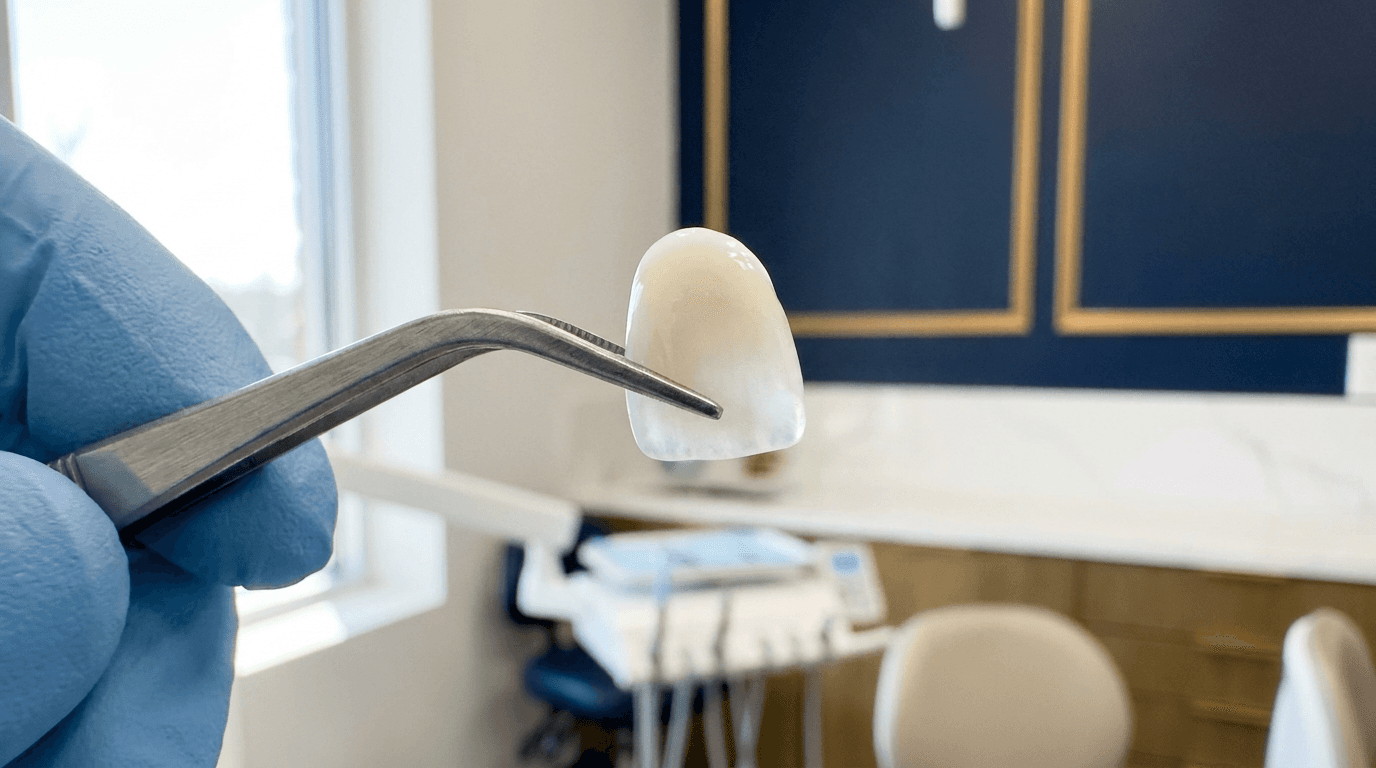
According to a peer-reviewed systematic review published in the National Library of Medicine, porcelain laminate veneers have a 95.5% survival rate at 10 years and approximately 85% at 15 years. That means out of every 100 patients who get veneers from a skilled cosmetic dentist, roughly 95 still have all of them functioning normally a full decade later. By comparison, composite resin bonding rarely makes it past 5 to 7 years before needing replacement. The clinical case for porcelain over composite, when budget allows, is straightforward.
Why the dentist who places them matters more than the brand of porcelain
The single biggest variable affecting veneer lifespan is the skill of the dentist placing them, not the brand of porcelain. Tooth preparation is what makes or breaks a 20-year veneer. Aggressive over-prep weakens the underlying tooth structure and shortens lifespan. Under-prep leads to bulky, unnatural-looking veneers that patients eventually request to redo. Our cosmetic team at Smyrna Dental Studio uses minimally-invasive prep with magnification and a custom temporary phase, so the final veneers fit your bite exactly and protect the underlying tooth long-term.
Daily habits that decide your veneer lifespan
Daily habits matter just as much as the work itself. Per Healthline's review of veneer longevity, the most common reasons veneers fail prematurely are teeth grinding, biting on hard objects (ice, fingernails, pen caps), and using teeth to open packages. If you grind your teeth at night, a custom night guard is non-negotiable. We fit one at the same appointment we deliver veneers so your investment is protected from day one. This aligns with findings from a published longevity review, which identifies untreated bruxism as one of the leading causes of premature veneer failure.
The maintenance protocol behind 20-year veneers
Porcelain itself does not stain, but the bonding line where the veneer meets the natural tooth can pick up coffee, red wine, or tea staining over time. Twice-yearly professional cleanings keep that margin clean and let us catch any minor edge chips before they become bigger problems. Patients who pair regular cleanings with a custom night guard are the ones we routinely see hitting 20 years on their original veneers. Smile makeover patients who follow this maintenance protocol get the best long-term results.



Frequently Asked Questions
Can porcelain veneers last 30 years?
It is rare but possible. Most clinical research stops measuring at the 20-year mark because the dataset becomes thin past that point. A small percentage of patients do keep their original veneers 25 to 30 years if the placement was excellent and they maintain disciplined oral hygiene plus night guard use. For planning purposes, count on 15 to 20 years as the realistic upper range.
What happens when veneers wear out?
Most veneers do not fail dramatically. They typically need replacement when the bonding margin starts staining visibly, when small edge chips accumulate, or when the underlying tooth shows signs of decay. Replacement is straightforward: we remove the old veneer, refresh the prep, take new impressions, and bond a new one. The underlying tooth is preserved.
Do veneers feel any different after 10 years?
If they were placed correctly and you have maintained good hygiene, they should feel exactly the same as the day they were delivered. If you start to notice sensitivity, a rough edge, or any movement, that is a signal to come in for an evaluation. Catching small issues early often lets us repair rather than replace.
Can I extend my veneer lifespan beyond 20 years?
The patients we see hitting 20 plus years all share the same habits: a consistent night guard for any history of grinding or clenching, regular twice-yearly cleanings, daily flossing, and they treat their veneers like the natural teeth they replace. They do not bite ice, do not use their teeth as tools, and do not skip checkups. The math is unglamorous but reliable.
How do porcelain veneers compare to composite veneers in lifespan?
Porcelain veneers typically last 10 to 15 years, with strong potential to reach 20. Composite veneers (resin bonded directly to the tooth) typically last 5 to 7 years before needing repair or replacement. Composite is less expensive upfront but the lifetime cost is often higher because of more frequent redos. Most patients choose porcelain when they plan to keep the smile long-term.
Will my veneers look natural after 15 years?
Porcelain itself does not change color, so the veneers themselves will look identical to day one. However, your natural unveneered teeth (especially the ones behind the smile zone) will gradually darken with age, which can create visible color mismatch. We address this with periodic in-office whitening on the natural teeth to keep the smile balanced over time.
How long do porcelain veneers last?
Porcelain veneers typically last 10 to 15 years, and with careful maintenance many patients keep them well beyond that. Longevity depends less on the porcelain than on what sits underneath it. Dr. Natasha Kanchwala evaluates bite forces, gum health, and grinding habits before designing a case, because a veneer bonded to an unstable foundation fails early no matter how well it was made. At Smyrna Dental Studio the plan is built for the second decade, not just the reveal appointment. Individual results vary and depend on an exam.
Do veneers ruin your natural teeth?
Traditional porcelain veneers require removing a thin layer of enamel, usually around half a millimeter, and that change is permanent. It does not damage the tooth when the case is planned and executed correctly. Dr. Kanchwala walks Smyrna patients through that tradeoff before anything is prepared, including whether minimal prep veneers or bonding could reach the same result with less reduction. The goal is the most conservative option that still gets you where you want to go.
The reality for Smyrna dental patients
Porcelain veneers are one of the most predictable cosmetic dental investments you can make, with research-backed survival rates over 95% at 10 years. The lifespan you actually get depends almost entirely on two things: who places them and how you protect them afterward. With excellent prep, a custom night guard, and twice-yearly cleanings, hitting 20 years on your original veneers is realistic, not optimistic.
Ready to plan a smile that actually lasts?
Skip the guesswork and get a real evaluation. Whether you are in Smyrna, Marietta, or Sandy Springs, the cosmetic team at Smyrna Dental Studio, led by Dr. Natasha Kanchwala, builds smile plans designed to last 15 to 20 years from the first consultation. Schedule your consultation today or call (470) 801-9986.
Written by Blake Hundley.