What Percentage of Dental Bone Grafts Fail? The Real Numbers
TL;DR: How Often Do Dental Bone Grafts Actually Fail?
Most dental bone grafts succeed 90 to 98% of the time. The most-cited 2026 dataset of 45,715 grafts found a 97.83% success rate, meaning only about 2 in 100 grafts fail when placed by an experienced clinician.
Overall success rate: 90 to 98%, depending on graft type, patient health, and surgeon expertise.
2026 large-scale study: 97.83% success across 45,715 grafts (national dataset).
Worldwide failure rate: typically 5 to 10%.
Sinus lift grafts: 5.64% failure rate.
Guided bone regeneration (GBR): only 0.54% failure rate.
Top causes of failure: smoking, uncontrolled diabetes, poor surgical technique, and post-op infection.
The honest numbers behind bone graft success and failure
If you have been told you need a bone graft before getting dental implants, the question on your mind is probably the same one we hear from patients every week: "How often does this actually fail?" The answer is reassuring once you see the data, but the right number depends on the type of graft, your overall health, and who is placing it. Patients across Smyrna, Marietta, and Sandy Springs ask this for good reason. A failed graft means more time, more money, and another surgery. Here is exactly what the research shows about dental bone graft failure rates and how Smyrna Dental Studio works to keep our patients on the high side of those numbers.
What the largest 2026 dataset actually found
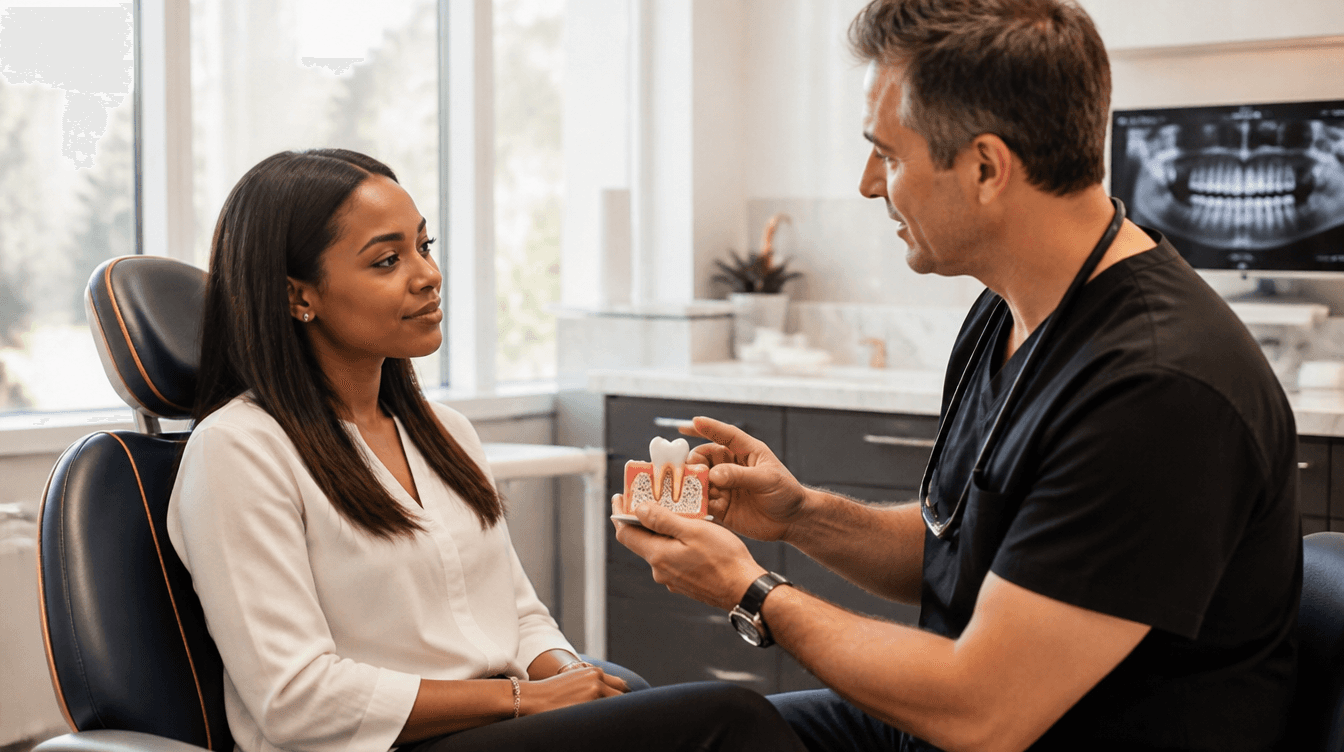
A January 2026 large-scale national study published in MDPI analyzed 158,824 dental implants placed between 2014 and 2022, including 45,715 bone grafts. The dataset showed a clinical success rate of 97.83%, meaning roughly 2.17% of grafts failed. That is the largest sample size ever published on this question, and the result aligns with what most clinical practices report. When a board-certified surgeon places a bone graft using modern materials and techniques, failure is the exception, not the norm.
Failure rates by graft type (and why it matters)
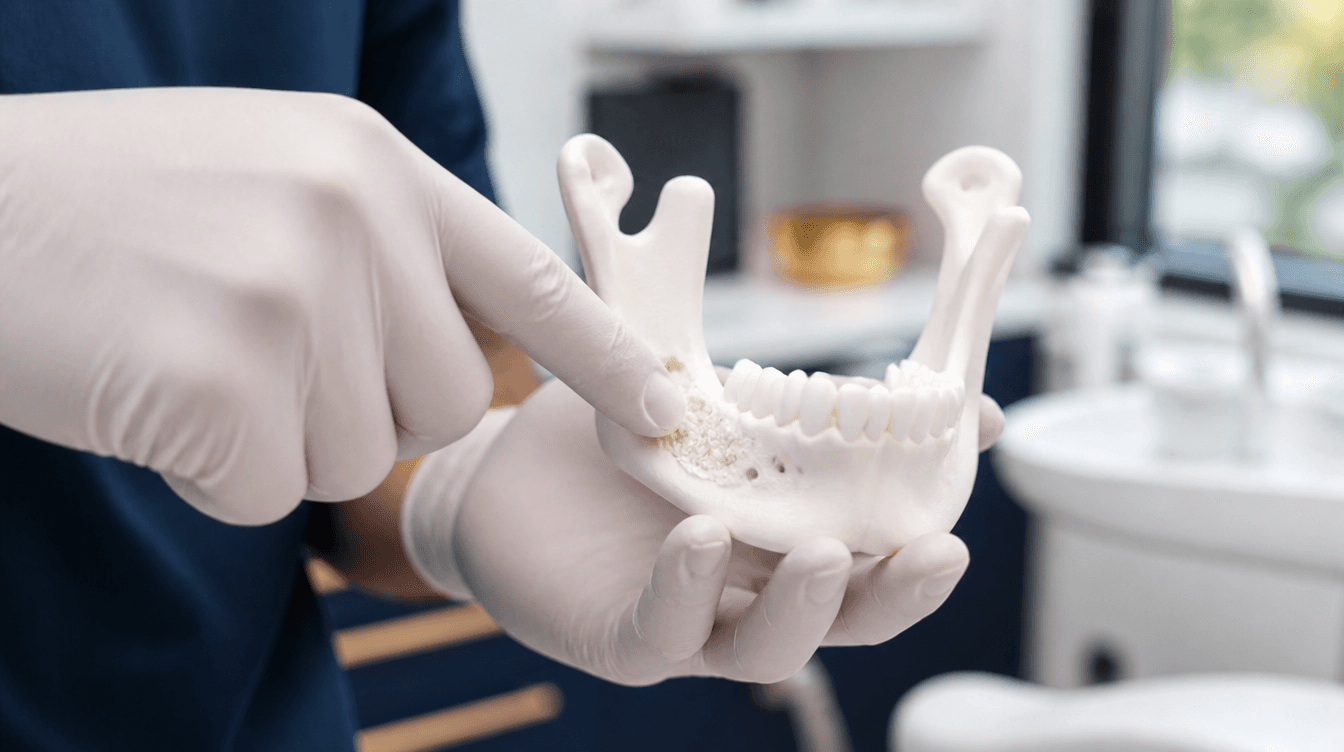
Not all grafts are equally durable. Per a retrospective study published in the National Library of Medicine, sinus lift augmentations have a higher failure rate (about 5.64%) compared to guided bone regeneration procedures, which fail at just 0.54%. Autologous block grafts (your own bone harvested from another site) sit in the middle, with success rates between 80.9% and 91.5%. Our implant team matches the graft technique to your specific anatomy and bone-loss pattern, which is the single biggest predictor of long-term success.
Why grafts actually fail (and how we prevent it)
According to a narrative review on bone augmentation risk factors, the four most consistent predictors of bone graft failure are smoking, uncontrolled diabetes, poor surgical technique, and post-operative infection. Smoking alone roughly doubles the failure rate because nicotine restricts blood flow to the surgical site and starves the graft of oxygen during the critical 4 to 6 month integration window. We require patients to stop smoking at least two weeks before and ideally six weeks after the procedure, and we coordinate directly with primary care physicians for any patient with diabetes to confirm A1C levels are controlled before scheduling.
What patients can do to land in the 97% success group
The patients we see succeed long-term all share the same post-op pattern: they follow the soft-food protocol for the full 4 weeks, take antibiotics exactly as prescribed, and avoid disturbing the surgical site (no straws, no smoking, no aggressive brushing near the area). Compliance is unglamorous but it is what separates a 4-week healing window from a 12-week complication. All-on-4 patients who require grafting follow this same protocol with excellent outcomes.



Frequently Asked Questions
How do I know if my bone graft is failing?
Early warning signs include increasing pain after day 5 (instead of decreasing), swelling that gets worse rather than better, a foul taste or smell, loosening of the gum flap, or visible graft material exiting the surgical site. Mild discomfort and minor swelling for the first 3 to 4 days is normal. Anything escalating past that window means call us immediately so we can evaluate.
Can a failed bone graft be redone?
Yes, in most cases. After clearing any infection and allowing the site to heal for several months, we can re-graft using either the same technique or a different material based on what we learned from the first attempt. A second graft has roughly the same success rate as the first when placed by an experienced surgeon. The main cost is time, since the redo cycle adds 6 to 9 months to your overall implant timeline.
How long until I know if my bone graft worked?
Most patients are out of the high-risk window by the 8-week mark. We confirm full integration with a follow-up 3D scan at the 4 to 6 month point, which is when we know the graft has fully fused with your existing bone and is ready to support an implant. Until that scan confirms integration, we treat the area as still healing.
Does smoking really make that big a difference?
Yes. Multiple clinical studies show smoking roughly doubles the failure rate of bone grafts, and nicotine in any form (cigarettes, cigars, vaping, nicotine pouches) has the same effect. The reason is biological, not behavioral: nicotine constricts the small blood vessels feeding the graft site, which prevents the oxygen and nutrient delivery the graft needs to integrate. Stopping for a few weeks around the surgery is one of the highest-leverage things a patient can do.
Do I need a bone graft if I am getting All-on-4?
Often no. The All-on-4 technique is specifically engineered to angle the implants in a way that uses existing bone density without grafting in most cases. Roughly 60 to 70% of All-on-4 patients can skip grafting entirely. The CBCT scan at your consultation will show whether your bone volume supports the standard placement or whether selective grafting is needed first.
How much extra time does grafting add to my treatment?
Typical bone graft healing takes 4 to 6 months before the implant can be placed. So if your overall implant timeline would otherwise be 6 months, grafting extends it to 10 to 12 months. We use that extra time productively to plan the implant placement, confirm bone integration with new scans, and finalize the prosthetic design before surgery.
The bottom line for Smyrna patients
Dental bone grafts are one of the highest-success procedures in modern dentistry, with research-backed success rates above 97% in the largest published datasets. The risk is real but small, and almost every variable that drives failure (smoking, blood sugar control, post-op compliance, surgeon skill) is controllable. If you have been told you need a graft before implant placement, the data should reassure you, not scare you.
Ready to plan your bone graft and implant timeline?
Get a real evaluation, not a guess. Whether you are in Smyrna, Marietta, or Sandy Springs, the team at Smyrna Dental Studio uses 3D CBCT imaging to map your existing bone and tell you exactly whether grafting is needed, what type, and what your realistic timeline looks like. Schedule your consultation today or call (470) 801-9986.
Written by Blake Hundley.