Veneers vs Crowns: Which Is Right for Your Tooth?
Quick answer: veneers vs crowns in plain terms
Which one should I choose?
Choose a porcelain veneer when your tooth is healthy and you mainly want to improve color, shape, or small gaps. Choose a dental crown when the tooth is cracked, heavily filled, worn down, or has had a root canal and needs full coverage to stay strong.
The simplest rule we use is this: a veneer covers the front of the tooth for looks, while a crown covers the whole tooth for protection. One study found bonded porcelain veneers had a roughly 95.5% survival rate at 10 years (PMC, 2021), so a well-cared-for veneer can last a long time. Either way, an exam is the only way to know which is right for your tooth.

If you want to upgrade your smile, veneers and crowns are two of the most common options, and patients often mix them up. They look similar once they are in place, yet they solve very different problems. One is mostly cosmetic, the other is mostly about strength and protection. At Smyrna Dental Studio in Smyrna, GA, we walk patients through this choice every week, so here is a clear, honest breakdown to help you understand which fits your tooth and your goals.
What is the difference between veneers and crowns?
Front-of-tooth shell vs full-tooth cap
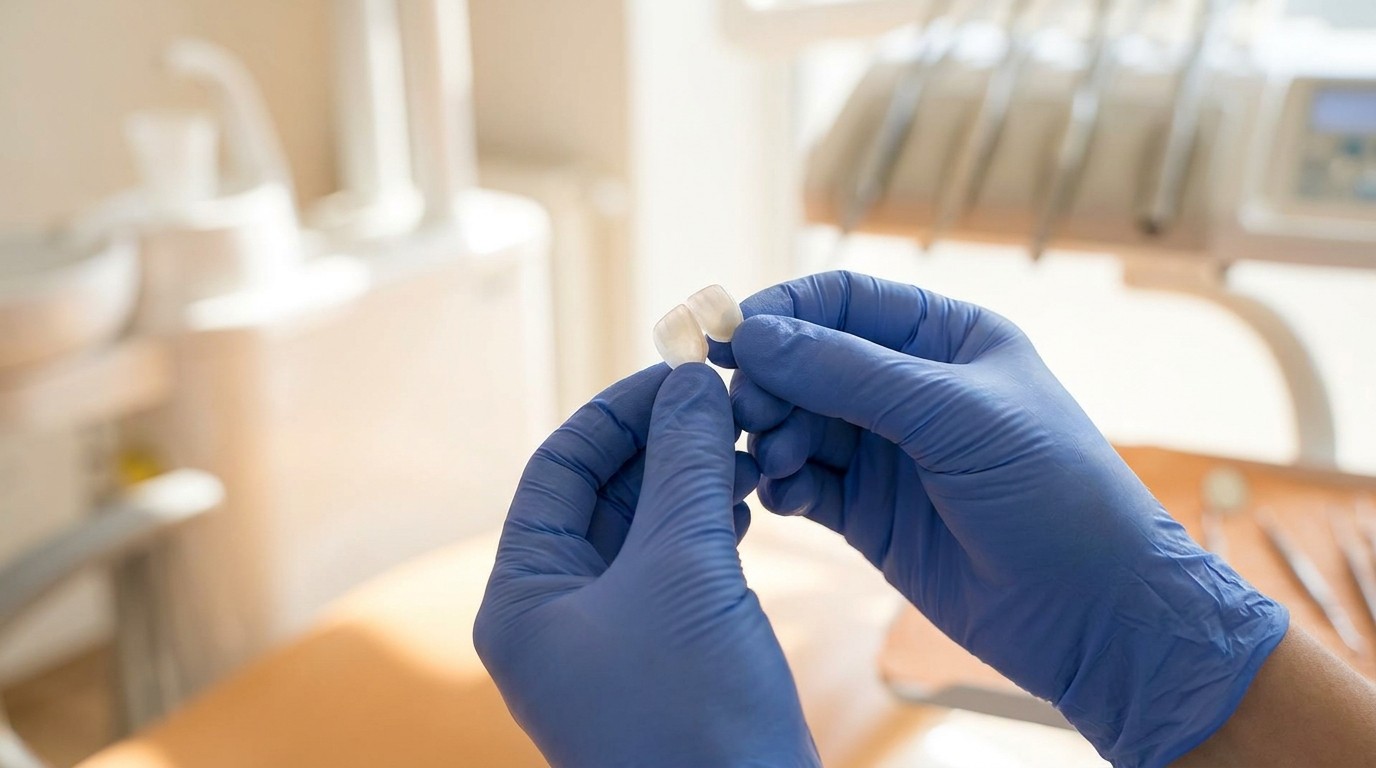
A porcelain veneer is a thin, custom shell of dental porcelain bonded to the front surface of a tooth. It is mostly a cosmetic option, used to mask deep stains, reshape short or uneven teeth, and close small gaps. Because it sits only on the front, your dentist removes very little enamel, often less than a millimeter, to make room for it.
A dental crown is a tooth-shaped cap that covers the entire tooth, all the way around to the gumline. It is mainly a restorative option built to rebuild strength and function. Crowns suit teeth with large fillings, cracks, heavy wear from grinding, or a recent root canal. Because the crown wraps the whole tooth, it requires more reshaping than a veneer. At our Smyrna office, both can be color-matched to look natural.
Which is better for a damaged or cracked tooth?
Why structure decides the choice
For a tooth that is cracked, broken, or weakened by a big filling, a crown is usually the right call. Veneers are thin and bond only to the front, so they cannot hold a fragile tooth together under chewing pressure. A crown surrounds the tooth on all sides and acts like a protective helmet that absorbs and spreads out the force.
This matters most after a root canal, since treated teeth tend to become more brittle. Research shows that placing a crown after a root canal is linked to far better long-term tooth survival (NCBI Bookshelf). If your concern is a structurally weak tooth rather than appearance, a crown is the safer choice. You can read more about timing in our guide to whether you need a crown after a root canal.
Can you get a veneer on a back tooth?
Molars need full coverage
Veneers are usually not recommended for back teeth. Your molars handle the heaviest chewing and grinding forces in your mouth, and a thin front-facing shell is not built to take that load. A crown gives the 360-degree coverage and strength a molar needs to chew comfortably for years.
Veneers shine on the teeth that show when you smile, the front and side teeth often called your smile zone. If you are weighing a more conservative cosmetic fix, it also helps to compare options like dental bonding vs veneers, since bonding can address small chips and gaps without porcelain at all.
How long do veneers and crowns last?
Care matters more than the type
Both veneers and crowns are durable restorations that can last well over a decade with good habits. One review reported roughly 95.5% survival for porcelain veneers at 10 years (PMC, 2021), and crowns are also known for strong long-term performance. In practice, longevity depends more on daily care than on which restoration you pick.
Brushing twice a day, flossing, avoiding habits like chewing ice, and keeping regular checkups all extend the life of either option. A night guard can protect both if you grind your teeth. For a deeper look at what affects lifespan, see our article on how long veneers last.
How much do veneers and crowns cost in Smyrna?
Why prices vary tooth by tooth
Cost depends on the tooth, the materials, how many teeth are treated, and your insurance, so think in ranges rather than one fixed price. For veneers, national figures put the average around $1,765 per tooth, with a broad range from roughly $500 to $2,895 (CareCredit). Crown pricing also varies widely by case.
Cosmetic veneers are often considered elective, so insurance may not cover them, while a crown that restores a damaged or decayed tooth is more likely to receive some coverage. Many offices offer financing to spread out payments. An exact price always needs an exam, but you can explore typical numbers in our overview of smile makeover cost in Smyrna.
Which option fits depends on how much tooth structure is left. Smyrna Dental Studio plans both porcelain veneers and same-day crowns in house, so the recommendation is based on the tooth rather than on what the office happens to offer.
Which option fits depends on how much tooth structure is left. Smyrna Dental Studio plans both porcelain veneers and same-day crowns in house, so the recommendation is based on the tooth rather than on what the office happens to offer.




Frequently asked questions
Which one looks more natural, a veneer or a crown?
Both can look very natural when designed carefully and matched to your other teeth. Each is made from translucent porcelain that mimics how real enamel reflects light, so the choice usually comes down to the tooth's needs, not the appearance.
Which procedure removes more of my natural tooth?
A crown removes more tooth structure because it covers the whole tooth on every side. A veneer is more conservative, since the dentist only prepares the thin front surface. Your tooth's condition decides how much reshaping is appropriate.
Does a veneer or crown hurt to get?
Both procedures are done with local anesthetic to keep you comfortable, and many patients feel only mild, short-lived sensitivity afterward. Your dentist can talk through comfort and sedation options at your visit if you feel anxious.
Can a veneer or crown be replaced later?
Yes. If a veneer or crown wears out, chips, or comes loose over the years, it can be removed and remade. Keeping up with regular checkups helps your dentist catch small problems before they grow.
What should I look for in a cosmetic dentist in Smyrna?
Ask to see cases the dentist personally treated rather than stock photography, ask how they plan a smile before touching a tooth, and ask what happens if you do not like the result. Smyrna Dental Studio previews cosmetic cases digitally so you can see the direction before anything becomes permanent. Dr. Kanchwala's position is that you should be able to see the outcome before you commit to it.
Finding the right fit for your smile
The veneer versus crown decision really comes down to one idea: use the most conservative option that solves the problem. If your tooth is healthy and your goal is cosmetic, a veneer often makes sense. If the tooth is cracked, heavily filled, or treated with a root canal, a crown protects it. The only way to know for sure is a hands-on evaluation. If you are in the area, call Smyrna Dental Studio at (770) 863-0005 to book an exam. We serve Smyrna and nearby Vinings, Mableton, and Marietta. This is general information, not a diagnosis. A dentist should evaluate your situation before any treatment.
Reviewed by Dr. Raheel Thobhani, DMD, at Smyrna Dental Studio in Smyrna, GA. Dr. Thobhani focuses on restorative and implant care and helps patients choose treatments that protect long-term tooth health.