What Is a Deep Cleaning at the Dentist, and Is It Necessary?
Quick answer: what is a deep cleaning at the dentist?
A deep cleaning, also called scaling and root planing, removes plaque and tartar from above and below the gumline and smooths the tooth roots so gums can heal. Dentists often recommend it for gum disease. Healthy gum pockets usually measure 1 to 3 millimeters, and deeper pockets can be a sign of gum disease.
It reaches below the gumline, where a regular cleaning and your toothbrush do not.
Your gums are numbed with local anesthesia before treatment starts.
It usually takes one to two hours and may be split into two visits.
Sore gums for a couple of days and some sensitivity to hot and cold are common afterward.
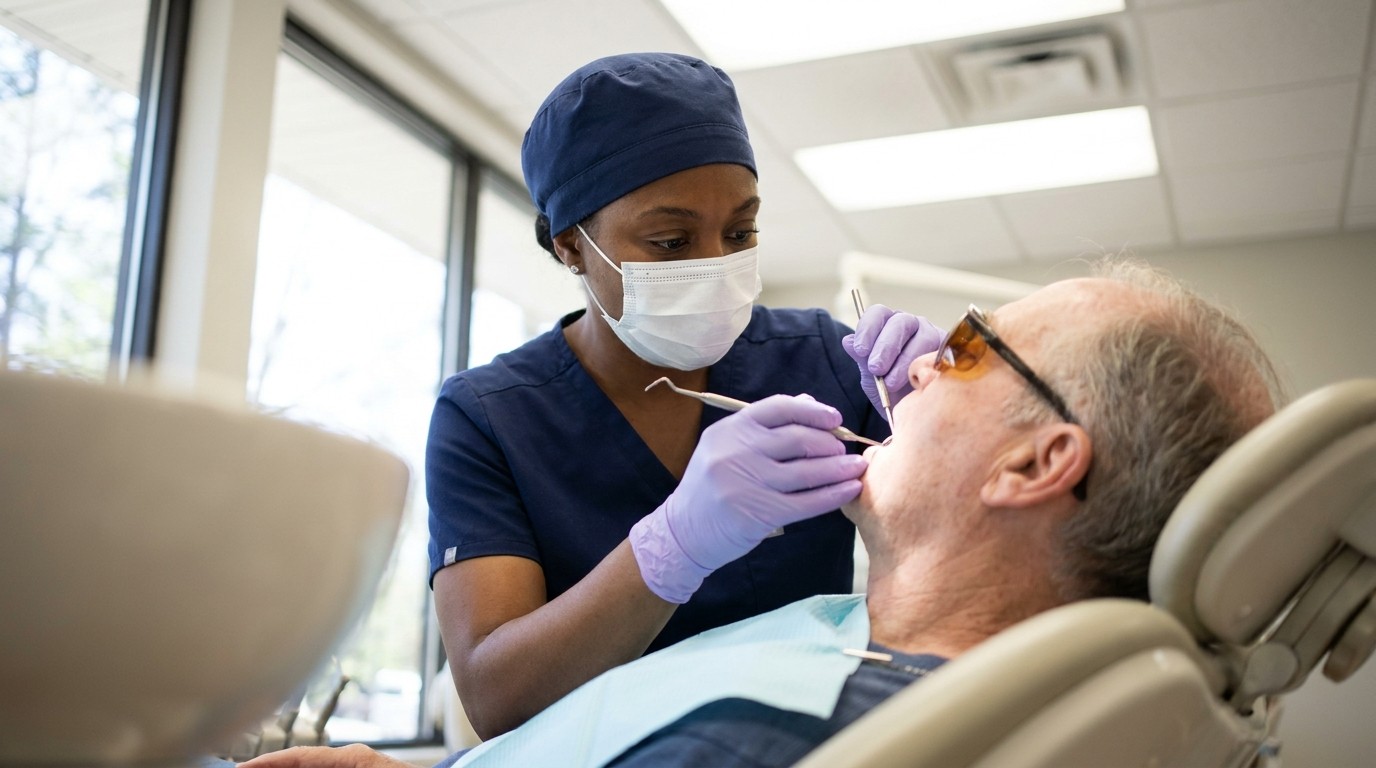
You were told you need a "deep cleaning," and now you are wondering what it is, whether it will hurt, and whether you really need it. Below, we explain how it differs from a regular cleaning, what recovery feels like, and how to tell if it is truly needed. At Smyrna Dental Studio in Smyrna, GA, we want you to understand a treatment before you agree to it.

What is a deep cleaning at the dentist?
A deep cleaning is a nonsurgical gum treatment called scaling and root planing. Scaling removes plaque and tartar from the teeth above and below the gumline. Root planing smooths the roots under the gums. According to Cleveland Clinic's overview of scaling and root planing, it is usually the first treatment for mild to moderate gum disease.
Teeth scaling vs. a regular cleaning
A regular cleaning is preventive care for healthy gums. A deep cleaning goes further, into pockets below the gumline that a toothbrush cannot reach.
Question | Regular cleaning | Deep cleaning |
|---|---|---|
Who it is for | Healthy gums, as routine care | Gums with signs of gum disease |
Where it cleans | Teeth at the gumline and just below it | Above and below the gumline, along the roots |
Numbing | Usually not needed | Local anesthesia is used |
Visits | Usually one | One or two |
How routine cleanings work at our office
Our professional dental cleanings use Guided Biofilm Therapy, a gentle approach that focuses on finding and removing the sticky biofilm (plaque) on teeth and along the gumline. A deep cleaning is a separate treatment for gum disease.
Why would a dentist recommend a deep cleaning?
A dentist recommends a deep cleaning when your exam shows gum disease below the gumline. In a healthy mouth, the pockets around the teeth usually measure 1 to 3 millimeters, according to the National Institute of Dental and Craniofacial Research. Deeper pockets, bleeding and bone loss on X-rays can point to periodontitis.
What the dentist measures
Your hygienist or dentist gently slides a tiny ruler called a probe between each tooth and the gum to measure the space. X-rays can show bone loss.
Signs that can come with deeper pockets
Gums that are red, swollen or tender
Gums that bleed easily when you brush or floss
Gums that pull away from the teeth, so teeth look longer
Loose or sensitive teeth
Bad breath that does not go away
Gum disease can also be present with no warning signs, which is why the measurements matter. To compare your gums with the earliest stage, see what gingivitis looks like next to healthy gums.
Want this checked? A gum exam gives you real numbers instead of guesses, so you can decide with clear facts. Book a visit online or call (770) 863-0005.
Is a deep cleaning at the dentist painful?
A deep cleaning should not be very painful while it happens, because your gums are numbed with local anesthesia first. Tenderness is more likely afterward. Your gums may feel sore for a couple of days, and your teeth may be more sensitive to hot and cold for a while. Over-the-counter pain relievers can help.
Making the visit more comfortable
Tell us if you feel anything during treatment. If dental visits make you anxious, ask about sedation options. For any pain reliever, follow the product label and ask a pharmacist or doctor what is safe for you.
How long is a deep cleaning, and what is recovery like?
A deep cleaning usually takes one to two hours. It can be done in one visit or split into two, depending on how many areas need care and what you prefer. Most people go back to their normal routine the same day. There are no cuts or stitches.
What is normal during recovery
Tender gums for a couple of days
Some light bleeding when you brush
Teeth that feel a little loose at first, which should settle as the gums tighten
Sensitivity to hot and cold, which Cleveland Clinic says should fade within a month or two

If one tooth stays sensitive long after the rest have settled, it could be something else, such as a cavity, which can look different than you expect.
When to call us after a deep cleaning
Bleeding that does not stop
Pain that does not get better with medication
Severe swelling
Call our office if any of these happen. If you have swelling with trouble breathing or swallowing, a high fever, or swelling spreading to your eye, face or neck, go to the ER or call 911.
How long does a tooth deep cleaning last?
Ideally, you need a deep cleaning only once. The goal is to get your gums healthy enough that you do not need another one. Gum disease can come back, though, so lasting results depend on regular professional cleanings and daily brushing and cleaning between your teeth. Periodontitis cannot be reversed, but treatment can help keep it under control.
Maintenance cleanings after treatment
People who have had gum disease often need cleanings more often than twice a year. MedlinePlus notes that some people need professional cleanings three to four times a year for more severe gum disease. Your dentist will suggest a schedule based on your measurements. At home, brush twice a day and clean between your teeth daily. Our guide to flossing compared with water flossing can help you pick a tool.
Is a deep cleaning really necessary?
A deep cleaning is necessary when gum disease has moved below the gumline, because a regular cleaning cannot reach that buildup. Left untreated, advanced gum disease can destroy the bone that supports your teeth, and teeth can loosen or be lost. If your gums measure healthy, a regular cleaning is the right choice.
Why do dentists push deep cleanings?
It is reasonable to ask. A sound recommendation comes with evidence you can see: your pocket measurements, the spots that bled, and X-rays of your bone level. Ask your dentist to walk you through those numbers.
Disadvantages of deep cleaning teeth
Complications are rare, but Cleveland Clinic lists these possible risks:
Tooth sensitivity and gum tenderness
Bleeding
Gum recession, as swollen gums shrink while they heal and show more of the root
Infection
Teeth that feel loose for a while




Frequently asked questions
Can I eat after a deep cleaning?
Yes. You can usually eat and drink normally after a deep cleaning, as long as it does not hurt. While your mouth is still numb, it is wise to wait before chewing so you do not bite your cheek or tongue.
What do teeth look like before and after a deep cleaning?
Before treatment, you may see tartar along the gumline and gums that look red, puffy or bleed easily. Over the weeks after treatment, gums often look calmer and less swollen. As swelling goes down, gums can shrink a little, so you may see slightly more of each tooth than before.
Will my teeth feel loose after a deep cleaning?
They might at first. Teeth can feel slightly loose right after a deep cleaning, and this should settle as the gums heal and tighten around the teeth. If a tooth feels looser over time instead of firmer, call us so we can take a look.
Do you need antibiotics with a deep cleaning?
Not always. Your dentist may place an antibiotic around the roots of affected teeth or prescribe one by mouth, depending on your situation. If you are given a prescription, take it exactly as directed and ask your pharmacist or doctor if you have questions about it.
See your gum measurements and decide with confidence
A deep cleaning is a treatment for gum disease below the gumline, not an upgrade on a regular cleaning. If you are unsure whether you need one, schedule an exam and ask to see your measurements. Dr. Leslie Patrick and our team focus on family and preventive care, and we can explain your options for gum disease treatment in plain language. Book your exam online or call (770) 863-0005, and our team will help find the earliest visit available. We welcome patients from Smyrna and nearby areas. This is general information, not a diagnosis. A dentist needs to examine you to advise on your situation.