What Is the 30-Minute Rule for Invisalign?
Quick answer: What the 30-minute rule means
We could not find a "30-minute rule" in any clinical source we read. If it means keeping aligners out for half an hour at a time, treat it as a memory aid, not a medical requirement. The studies we read describe about 20 to 22 hours of wear a day, with aligners out for meals, hot drinks and cleaning.
The studies we read give a daily total (20 to 22 hours), not a 30-minute limit.
Take aligners out to eat and for hot drinks, then clean up and put them back in.
Aligners have real limits, and a dentist can tell you if they fit your case.
You may have heard there is a "30-minute rule" for Invisalign and wondered if you are breaking it every time you eat lunch. It is a fair worry, because the time your aligners spend out of your mouth adds up over a day. The short answer is that the studies we read give a daily wear total, not a 30-minute limit. If you are thinking about aligners in Smyrna, GA, our team at Smyrna Dental Studio is happy to talk it through.

What is the 30-minute rule for Invisalign?
The 30-minute rule for Invisalign does not appear in any clinical source we opened. If you hear it described as keeping aligners out for only about half an hour at a time, treat that as a memory aid, not a medical requirement. The studies we read give a daily total instead: 20 to 22 hours of wear.
What the sources actually say
A published study of aligner protocols states that Invisalign aligners are to be worn 20 to 22 hours per day and changed on a set schedule. It leaves roughly 2 to 4 hours a day for everything else.
Another study told patients to wear each aligner for a minimum of 22 hours a day, except during meals, hot drinks and oral hygiene. Neither paper mentions a 30-minute limit.
Why the idea can still be handy
The idea may help because it turns a daily total into something you can picture. If a meal takes about 30 minutes and you brush afterward, you can see how three meals plus cleaning still leave room inside your daily allowance. Your own plan may differ, so follow what your dentist tells you. If you are still weighing aligners, you can read about Invisalign treatment at our Smyrna office.
How many hours a day should you wear Invisalign?
Plan on 20 to 22 hours a day, the range one study cites from the manufacturer's protocol. A second study told patients to wear aligners at least 22 hours a day, except during meals, hot drinks and oral hygiene. Your dentist can confirm the exact target for your plan.
Where the rest of your day goes
Twenty-two hours of wear leaves two hours out, and twenty hours leaves four. Our post on whether people really wear Invisalign 22 hours a day walks through what that looks like in real life.
What happens when wear time slips
The second study we mentioned used a different aligner brand and self-reported wear time. It sorted 2,644 patients by how many of their aligners they wore at least 22 hours a day. About 36 percent were fully compliant, 38 percent fairly compliant and 26 percent poorly compliant. Self-reported hours can be off in either direction, so treat these as rough numbers.
Wearing aligners less than directed may slow treatment or affect how well teeth move, so tell your dentist if you fall behind.
Want this checked? If you are unsure whether your wear schedule is on track, or whether aligners suit you at all, you can book a visit online or call us at (770) 863-0005.
What should you do when you take your aligners out?
Take your aligners out for meals, hot drinks and cleaning your teeth, then put them back in when you finish. The study we read lists those reasons for removal. Ask your dentist what applies to your own plan, including water, and call the office if an aligner hurts, cracks or does not fit.
A simple routine
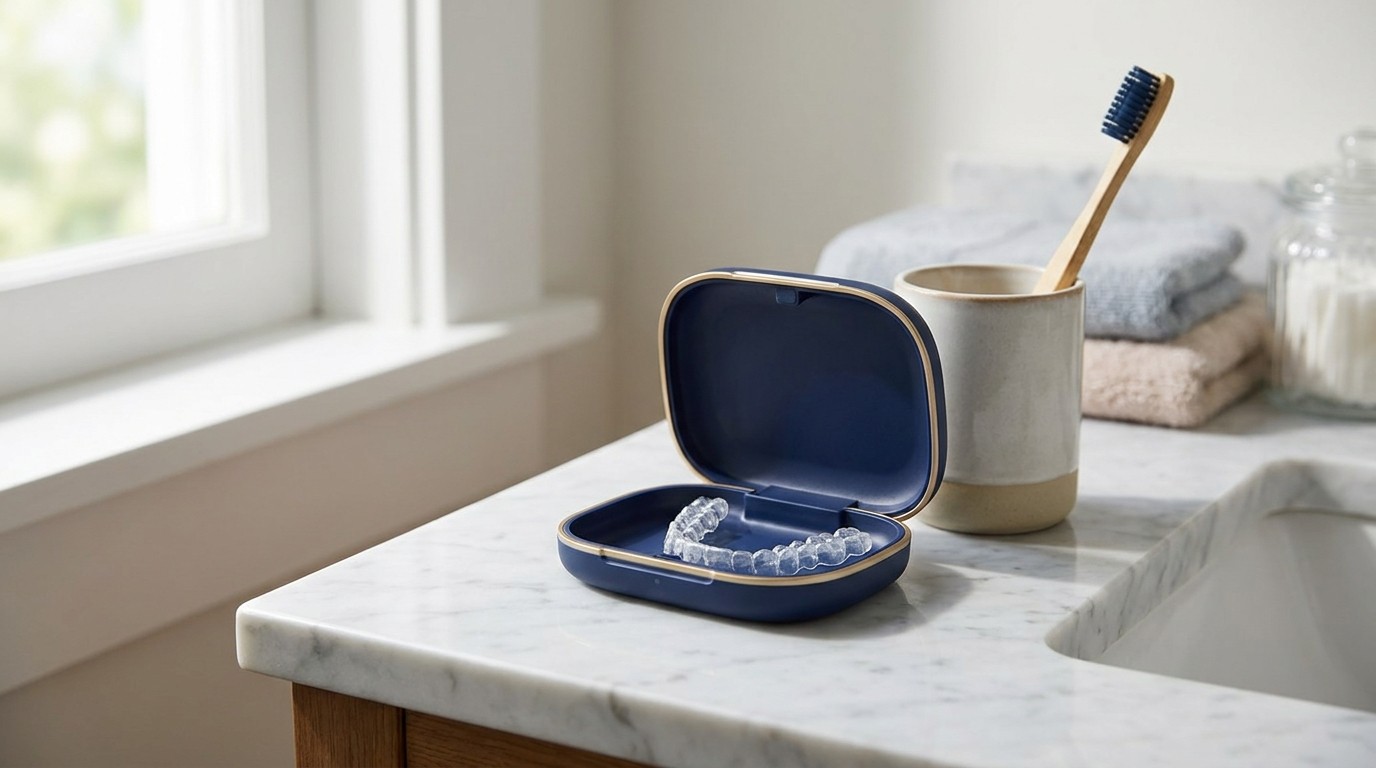
Remove your aligners and place them in their case, not a napkin.
Eat or drink what you planned to.
Clean your teeth as your dentist directed.
Put your aligners back in.
Storing them in the case matters because loose aligners are easy to lose or throw away. If you lose one, call your dentist rather than guessing what to do next.

What are the disadvantages of Invisalign?
Clear aligners have real limits. A systematic review found that some movements, such as root movements and extrusions, are hard to achieve, and that refinements are often needed. It also found a greater effect on speech than fixed appliances. Aligners also depend on you wearing them.
What a research review reported
The systematic review of clear aligner treatment also listed advantages, including better oral hygiene and less discomfort than fixed appliances in the studies it covered. It noted a possible health concern about microplastics, but no studies had yet looked at this in aligner patients, and it called the overall evidence insufficient. It did not discuss a 30-minute rule.
The everyday downsides
Because aligners come out, you have to remember to put them in. Eating out, travel and busy days are where wear time tends to slip. Our post on why people quit Invisalign covers the common reasons.
The upsides worth weighing
The same removable design makes it easier to brush and clean your teeth than with fixed appliances, according to the review. We cover more in our guide to Invisalign benefits. Whether aligners are a good fit depends on your teeth and bite, which a dentist has to check in person.
How can you make the wear time easier to keep?
Build a routine around meals: take your aligners out, eat, clean your teeth, and put the aligners back in. Keep a case with you so they do not get lost or thrown away. A steady habit helps you reach the daily wear total the studies describe, without watching a clock.
Habits that help
Keep a case in your bag, car and desk.
Set a phone reminder after meals.
Plan snacks with your schedule so you are not removing aligners all day.
Sore teeth and new trays
Some people find a new set of aligners feels tight at first. You can read what the most painful stage of Invisalign is. And once treatment ends, retainer wear matters too, as our post on how quickly teeth shift without a retainer explains.




Frequently asked questions
Is there a time limit for each time you take Invisalign out?
We could not find a fixed time limit per removal in the studies we read. They give a daily wear total instead, and one lists meals, hot drinks and oral hygiene as reasons to remove aligners. Follow the wear instructions your dentist gives you, since they come from your own treatment plan.
What if I leave my aligners out longer than 30 minutes?
One long meal will not necessarily undo your treatment, but it does eat into your daily wear time. The studies we read focus on the daily total. If it happens often, tell your dentist so they can check your progress.
Can I drink anything with my aligners in?
We could not find a source that lists which drinks are fine with aligners in, so we cannot give you a blanket answer. The study we read has patients take aligners out for meals and hot drinks. Ask your dentist which drinks, including water, are right for your plan.
Should I take my aligners out to brush my teeth?
Yes, the study we read lists oral hygiene as a reason to remove aligners. Your dentist can show you how to brush and clean around them. If you notice bleeding, pain or swelling around your gums, call the office. If swelling spreads to your face or neck, or comes with a fever or trouble breathing or swallowing, go to the ER or call 911.
Is Invisalign right for everyone?
Not always. A review of clear aligner research notes that some tooth movements are harder with aligners. A dentist has to look at your teeth, gums and bite to say whether they fit your goals. That is what a consultation is for.
Talk through your aligner options with us
If you want to know whether Invisalign suits your smile, we can walk you through it at a consultation. You can read about our Invisalign services in Smyrna and meet our team, including Dr. Natasha Kanchwala. Book online or call (770) 863-0005 and we will help find the earliest visit available, serving Smyrna and nearby Vinings, Mableton, Marietta and Austell. This is general information, not a diagnosis. A dentist needs to examine you to advise on your situation.
