All-on-6 vs All-on-4 Implants: How to Choose
Quick answer: All-on-6 adds two implants for more support
So which one is right for you?
All-on-4 uses four implants to hold a full arch of replacement teeth, while All-on-6 uses six. The two extra posts in All-on-6 spread your bite force across more anchors, which can help if you have a heavy bite or softer bone in the back of the jaw. All-on-4 needs less bone and uses angled implants to skip low-bone areas.
Neither option is automatically better. The right choice depends on your bone volume, your bite, and goals a dentist confirms with a 3D scan. Dental implants survive at roughly 95% over 5 to 10 years when placed and maintained well (NIH/PMC), so getting the foundation right matters more than the number alone.

If you are looking at full-arch tooth replacement, you have probably seen two names come up again and again: All-on-4 and All-on-6. They sound almost identical, and both replace a full row of teeth with a fixed bridge anchored on dental implants. The real difference comes down to how many implants support that bridge and what your jawbone can handle. At Smyrna Dental Studio in Smyrna, GA, we use 3D imaging to match the right approach to your anatomy. Here is how the two compare.

What is the difference between All-on-4 and All-on-6?
It really is in the number of implants
Both treatments are forms of full-arch restoration. A dentist places titanium implants into the jawbone, and those implants permanently anchor one fixed bridge of new teeth. The difference is the count and placement. All-on-4 uses four implants, with two set vertically in the front and two tilted at an angle in the back to make the most of available bone. All-on-6 follows a similar layout but adds two more implants in the posterior, or back, of the jaw.
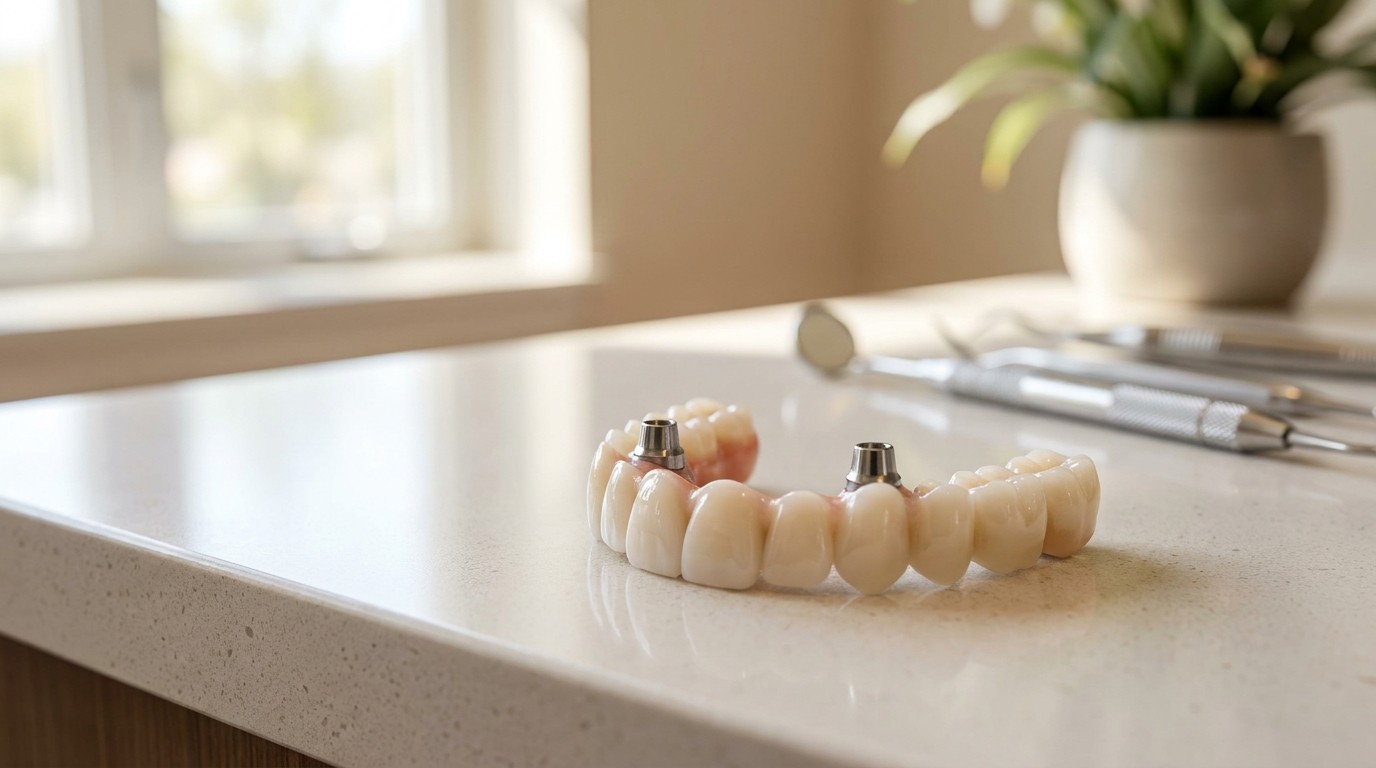
That extra pair changes how your bite force gets distributed. Think of the implants as pillars under a bridge. Four pillars can hold the structure, and six spread the load across more points. Whether you need that added support is a clinical call, not a one-size-fits-all rule, and it is the question we work through together at our Smyrna office.
Why would you choose All-on-6 over All-on-4?
The case for more anchors
All-on-6 makes the most sense for patients with strong bite forces, a grinding habit, or enough healthy bone in the back of the jaw. The two added implants build a broader foundation and share the chewing load more evenly. If one implant were to have trouble years down the road, a six-implant bridge often has enough remaining support to stay functional, where a four-implant design has less margin.
More implants can also mean more stimulation for the surrounding bone, which may help preserve density in the back of the mouth over time. None of this guarantees an outcome, and a heavier setup is not automatically the durable one. It is simply a tool we reach for when your anatomy and bite call for it.
Why don't all patients get All-on-6?
Bone volume is the limiting factor
If six implants are sturdier, why is All-on-4 still so common? The honest answer is bone. Placing two extra implants in the back of the jaw requires sufficient healthy bone there, and many people who have been missing teeth for years have lost volume in exactly that spot. The back of the jaw also sits near the maxillary sinuses on top and the mandibular nerve on the bottom, so extra posts need careful vertical space.
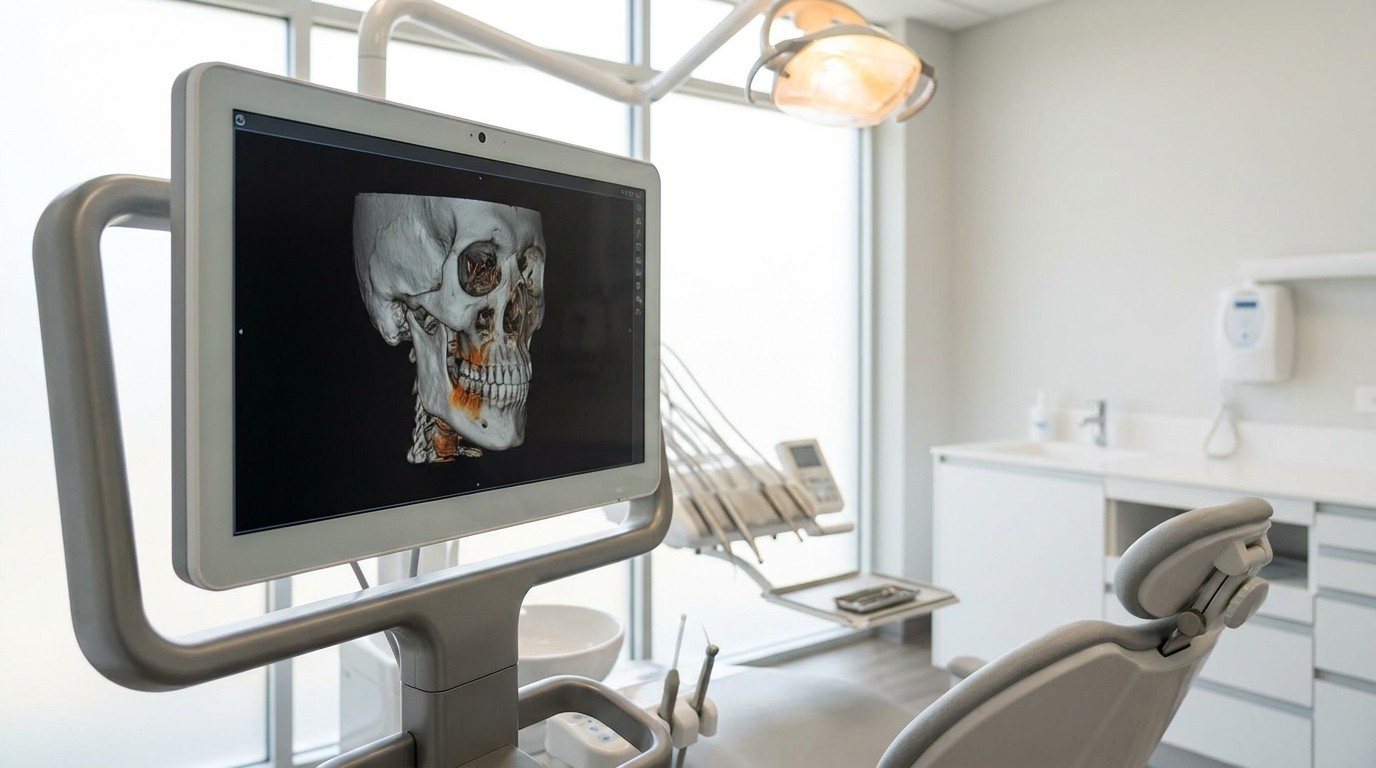
When bone is limited, All-on-4 is often the stronger choice because its angled design routes around low-bone areas and can reduce the need for added procedures. If extra support is the goal but bone is short, a sinus lift or grafting may make six implants possible. We map all of this on a 3D scan before recommending anything. To go deeper on the four-implant approach itself, see our guide to All-on-4 dental implants.
How much do All-on-4 and All-on-6 cost?
Why prices land in a range
Full-arch implant treatment is priced as a range that varies, not a fixed sticker. All-on-6 usually costs more than All-on-4 because it involves two more implants, more abutments, and a bit more surgical time. The gap is often smaller than patients expect, but the total still depends on your imaging, any grafting, the materials in your bridge, and whether you treat one arch or both. An exact price needs an exam.
For reference, a single conventional dental implant typically runs about $3,000 to $6,000 (Delta Dental), and full-arch cases are quoted as a package rather than per tooth. Dental insurance and financing can offset part of the cost depending on your plan. For a fuller breakdown, read our dental implant cost guide for Smyrna, or compare fixed implants with removable options in full-mouth implants vs dentures.
How do you decide between four and six implants?
A 3D scan does the deciding
You cannot tell from a mirror how much bone you have or where your nerves sit. A 3D Cone Beam CT (CBCT) scan lets us measure your exact bone density and anatomy, then plan implant number and angle around it. The goal is the safest, most predictable foundation, whether that turns out to be four implants or six.
Bite force, grinding habits, your gum health, and how long teeth have been missing all factor in too. We weigh those together with you rather than defaulting to the higher number. This is general information, not a diagnosis. A dentist should evaluate your situation before any treatment plan.




Frequently asked questions
Is All-on-6 more expensive than All-on-4?
Usually, yes. Six implants mean more hardware and a bit more surgical time, so the cost is generally higher. The difference is often smaller than patients expect, and we give a clear, itemized comparison at your consultation. An exact price needs an exam.
Is recovery harder with six implants?
The recovery experience is very similar. There are two more surgical sites, but most patients manage soreness with over-the-counter medication either way. The healing window for the implants to fuse with bone, called osseointegration, is roughly 3 to 6 months in both cases.
How do I know if I have enough bone for All-on-6?
You cannot tell by looking. We use a 3D CBCT scan to measure your bone density and locate nearby nerves and sinuses. That imaging shows whether six implants can be placed safely or whether All-on-4 or grafting is the better path.
Can I start with four implants and add more later?
It is technically possible but more complex and costly than planning correctly up front. Adding implants later can mean removing the existing bridge, new surgery, and a brand-new bridge. It is far better to confirm the ideal number before the first procedure.
Are All-on-4 and All-on-6 permanent?
Both are fixed, non-removable bridges anchored on implants, so they stay in your mouth and are cleaned in place. They are built to last for years with good care and checkups, though no dental restoration lasts forever. Long-term outcomes depend on your bone, hygiene, and bite.
Find the right full-arch option for your smile
Whether the answer is four implants or six, the goal is the same: a secure, fixed set of teeth built on a foundation that fits your anatomy. The better choice is the one your bone, bite, and 3D scan support, not simply the higher number. If you are weighing full-arch implants, our team at Smyrna Dental Studio is happy to walk you through what is realistic for your case. Call (770) 863-0005 to schedule a consultation. We serve Smyrna and nearby Vinings, Mableton, and Marietta. This article is general information, not a diagnosis, and a dentist should evaluate your situation before any treatment.
Reviewed by Dr. Raheel Thobhani, DMD, at Smyrna Dental Studio in Smyrna, GA. Dr. Thobhani provides implant and full-arch restorative care for patients across the greater Atlanta area.