Dental Bonding vs. Veneers: Which Fixes Chips, Gaps & Stains?
Short answer: Dental bonding and porcelain veneers both hide chips, gaps, and stains, but they work differently. Bonding adds a tooth-colored resin in one visit and costs less. Veneers are thin porcelain shells, bonded to the front of teeth, that tend to last longer and resist stains. The right choice depends on your goals, your budget, and an exam. At Smyrna Dental Studio, we offer both.
Maybe a front tooth chipped on a fork. Maybe a small gap has bugged you for years, or coffee stains will not lift with whitening. Two popular cosmetic fixes can help: dental bonding and porcelain veneers. They sound similar, and people often mix them up. They are not the same, though, and the better option for one person can be the wrong call for another. Below, Dr. Natasha Kanchwala, DMD, breaks down how they compare so you can ask better questions at your visit.

What is the difference between dental bonding and veneers?
The core difference is the material and how it is applied. Dental bonding uses a soft, tooth-colored composite resin that your dentist shapes directly onto your tooth, then hardens with a light, usually in one appointment. Veneers are thin, custom porcelain shells made in a lab and cemented to the front of your teeth, typically over two visits.
How bonding works
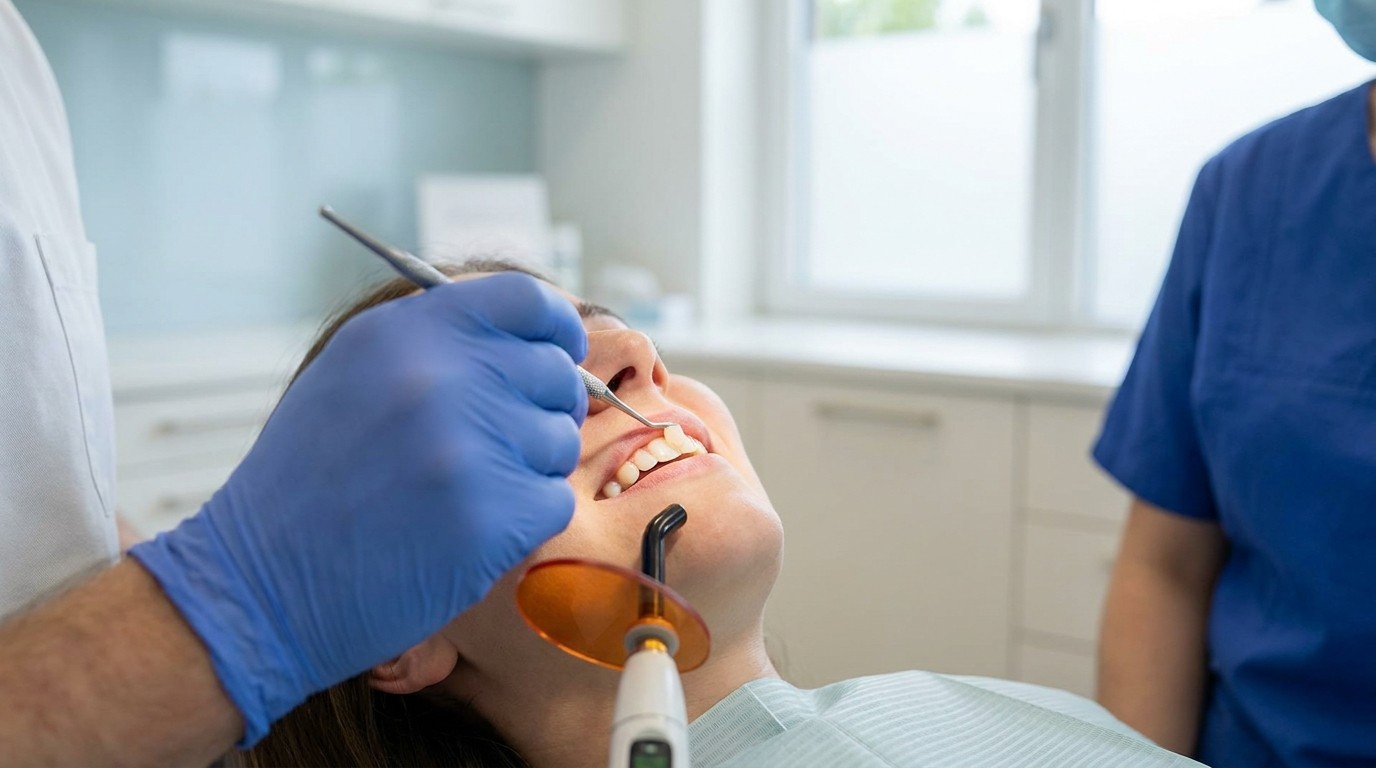
With bonding, the dentist lightly roughens the tooth surface, applies the resin, and sculpts it by hand. A curing light sets it. Then the material is polished to match your other teeth. There is often little to no drilling, and many cases need no anesthetic. It is a same-day fix for minor flaws.
How veneers work
Veneers usually require a small amount of enamel to be shaped off the front of the tooth so the shell fits flush. The dentist takes a scan or impression, and a lab crafts the porcelain. You wear a temporary in the meantime. At the second visit, the veneer is bonded in place and adjusted for fit and bite.
The quick takeaway
Think of bonding as a hand-sculpted patch and veneers as a tailored cover. Bonding is faster and more conservative. Veneers involve more upfront work but use a harder, more stain-resistant material. Curious how veneers stack up against crowns too? See our guide on veneers vs. crowns in Smyrna.
Which is better for chips, gaps, or stains?
Neither option wins across the board. It depends on how much you want changed. Bonding shines for small, isolated fixes. Veneers tend to suit larger or full-smile makeovers. Here is how each issue usually plays out.
For chips
A small chip on one tooth is a classic bonding job. The dentist can often rebuild the corner in a single visit, with no lab and no temporary. For a badly broken tooth, or several chipped teeth across your smile, a veneer or other restoration may hold up better over time.
For gaps
Small spaces between teeth can be closed with bonding by widening the teeth slightly with resin. Veneers can do this too, often with a more uniform result for several teeth at once. Larger gaps, or bites that need alignment first, may call for clear aligners before any cosmetic work.
For stains
Here is where the two diverge most. Deep stains that whitening cannot fix are a strong case for veneers, because porcelain does not stain like natural enamel. Bonding can cover a stained tooth, but the resin itself can pick up color over the years. We cover that next.
When neither is the answer
Sometimes the better path is whitening, aligners, or a crown instead. If a tooth has a large filling, decay, or a crack into the structure, a crown may be the sounder choice. Our overview of alternatives to dental crowns walks through those trade-offs.
How do the costs compare?
Bonding is usually the more budget-friendly option, while veneers cost more per tooth. Nationally, porcelain veneers average about $1,765 per tooth, with a wide range of roughly $500 to $2,895, per the AACD figures shared by CareCredit. Dental bonding generally lands well below that per tooth, though prices vary by case.
Why the gap in price
Veneers cost more because of the porcelain, the lab work, and the extra chair time across two visits. Bonding is done in one sitting with resin and no lab fee, which keeps it lower. Costs also shift with how many teeth you treat and the complexity of the case.
What this means for your budget
For one chipped tooth, bonding is often the lighter spend. For a full-smile change, the per-tooth math adds up, so many people weigh longevity against upfront cost. Dental insurance rarely covers purely cosmetic work, though plans and financing differ, so ask about both.
These are general ranges, not a quote. Your exact cost depends on the number of teeth, the materials, and your mouth, so a personalized estimate comes after an exam.
How long does each last?
Veneers tend to last longer than bonding. A systematic review found porcelain veneers reached about a 95.5% cumulative survival rate over 10 years, per research published on PubMed Central. Dental bonding typically lasts a few years to about a decade before it needs a touch-up or replacement, depending on care and habits.
What affects the lifespan
Habits matter a lot. Biting nails, chewing ice, grinding at night, and skipping cleanings all shorten the life of either option. Bonding chips and stains more easily than porcelain, so it usually needs maintenance sooner. A night guard can protect both if you clench or grind.
Want the deeper version on porcelain durability? Read how long veneers last for the long-term picture.
Does bonding damage your teeth?
Bonding is one of the most conservative cosmetic treatments because it usually removes little to no enamel. The resin is added to the tooth rather than carved into it, so most of your natural structure stays intact. That makes it a gentle starting point for many minor cosmetic concerns.
How bonding compares on tooth preservation
Veneers often require a thin layer of enamel to be shaped off, and enamel does not grow back. That step is what makes traditional veneers a longer-term commitment to that tooth. Bonding skips most of that, which is part of its appeal for small fixes and younger patients.
Can bonding be whitened or does it stain?
Composite resin does not respond to teeth whitening the way natural enamel does, and it can pick up stains over time. Coffee, tea, red wine, and tobacco are the usual culprits. Porcelain veneers resist staining far better, which is one reason they are popular for deep discoloration that whitening will not lift.
What to do if you whiten your teeth
Whiten first, then match the cosmetic work to your brighter shade. If you whiten after bonding or veneers, the natural teeth lighten but the restorations stay the same color, which can leave a mismatch. We help patients sequence this, including KOR Whitening, so the shades line up.
Keeping bonding looking fresh
Good habits help bonded teeth stay bright. Rinse after dark drinks, keep up with cleanings, and avoid smoking. Even so, plan on a polish or refresh every few years, since resin is more porous than porcelain. This is general guidance, not a diagnosis, so let your dentist tailor it to you.
Is bonding reversible?
Bonding is largely reversible because little or no enamel is removed, so the resin can usually be taken off without harming the tooth underneath. Traditional veneers are not reversible, since the enamel shaped away to fit the shell does not regrow. That difference matters if you want to keep your options open.
Why this matters for your choice
If you are unsure about a permanent change, bonding lets you test a fix with less commitment. Veneers ask you to commit to that tooth being covered going forward. Neither is wrong; they simply suit different mindsets and goals, which is exactly what a consult sorts out.
Which looks more natural?
Both can look natural in skilled hands, but porcelain veneers tend to mimic real enamel more closely. Porcelain reflects light in a lifelike way and resists staining, so it ages well across a full smile. Bonding looks great for small touch-ups, though resin can look slightly flatter and may dull over time.
Matching the look to the goal
For one small chip, well-done bonding blends in beautifully and few people would ever notice. For a uniform, full-smile transformation, veneers usually give the more seamless, even result. The artistry of your dentist counts as much as the material, which is why an in-person look matters.




Frequently asked questions
What is the difference between dental bonding and veneers?
Bonding uses a tooth-colored resin shaped directly onto your tooth in one visit. Veneers are thin porcelain shells, made in a lab, that are bonded to the front of your teeth over two visits. Bonding is faster and more conservative; veneers are longer-lasting and more stain-resistant.
Which is better for chips, gaps, or stains?
Bonding suits small chips and minor gaps in one or two teeth. Veneers handle deep stains and full-smile changes well because porcelain resists staining. The best fit depends on how much you want changed, so a dentist should evaluate your teeth before you decide.
Does bonding damage your teeth?
Bonding usually removes little or no enamel, so it is gentle on your natural teeth. Veneers often need a thin layer of enamel shaped off to fit. That makes bonding one of the more conservative cosmetic options, which is part of why many people start there.
Is dental bonding reversible?
Bonding is largely reversible because little to no enamel is removed, so the resin can usually be taken off without harm. Traditional veneers are not reversible, since the enamel removed to fit them does not grow back. Your dentist can explain what reversal would involve for you.
How much do bonding and veneers cost in Smyrna?
Bonding generally costs less per tooth than veneers, which average about $1,765 per tooth nationally with a wide range. Your price depends on how many teeth you treat and the materials used. These are general ranges, not a quote, so book an exam for a personalized estimate.
Reviewed by Dr. Natasha Kanchwala, DMD, at Smyrna Dental Studio in Smyrna, GA. This article is general information, not a diagnosis or treatment plan. A dentist should evaluate your situation before recommending bonding, veneers, or any cosmetic option.
Ready to compare your options in person?
The clearest way to choose between dental bonding and porcelain veneers is a simple exam. We can look at your chips, gaps, and stains, talk through cost ranges and longevity, and recommend what fits your goals. Smyrna Dental Studio, formerly Patrick Family Dental, offers both treatments and serves Smyrna and nearby Vinings, Mableton, and Marietta.
Call (770) 863-0005 or request a visit to get started. You can also learn more about our cosmetic dentistry in Smyrna, GA.