How Quickly Will Teeth Shift Without a Retainer?
Quick answer: how fast do teeth shift without a retainer?
Teeth can begin to move back toward their old positions soon after braces or aligners end, and there is no exact timeline that fits everyone. The period right after treatment is when teeth are especially prone to shifting. Wearing your retainer as your dentist or orthodontist directs is the main way to keep your results in place.
Shifting can start soon after treatment ends, and speed varies from person to person.
Teeth move naturally throughout life, so shifting can continue for years.
A retainer is the main tool for keeping teeth where they finished.
If your retainer feels tight or no longer fits, your teeth may have moved. Call your dentist.
You finished your aligners, your teeth look great, and now you are wondering what happens if the retainer stays in its case. Short answer: teeth can begin moving back soon after treatment ends, and there is no single timeline that fits everyone. Below is what the sources say and what you can do about it. At Smyrna Dental Studio in Smyrna, GA, we can help you talk through a plan for your retainer.

How quickly will teeth shift without a retainer?
Teeth can shift without a retainer, and there is no single timeline that fits everyone. The American Association of Orthodontists (AAO) warns that skipping your retainer for even a few days could cause your teeth to shift significantly. It also describes a "settling in" period right after treatment ends when teeth are particularly prone to moving back.
Why there is no exact timeline
Every mouth is different, and the sources we read do not give one timeline that fits everyone. Your dentist can tell you what to expect for your teeth. That is why we do not promise a schedule.
What early shifting can look like
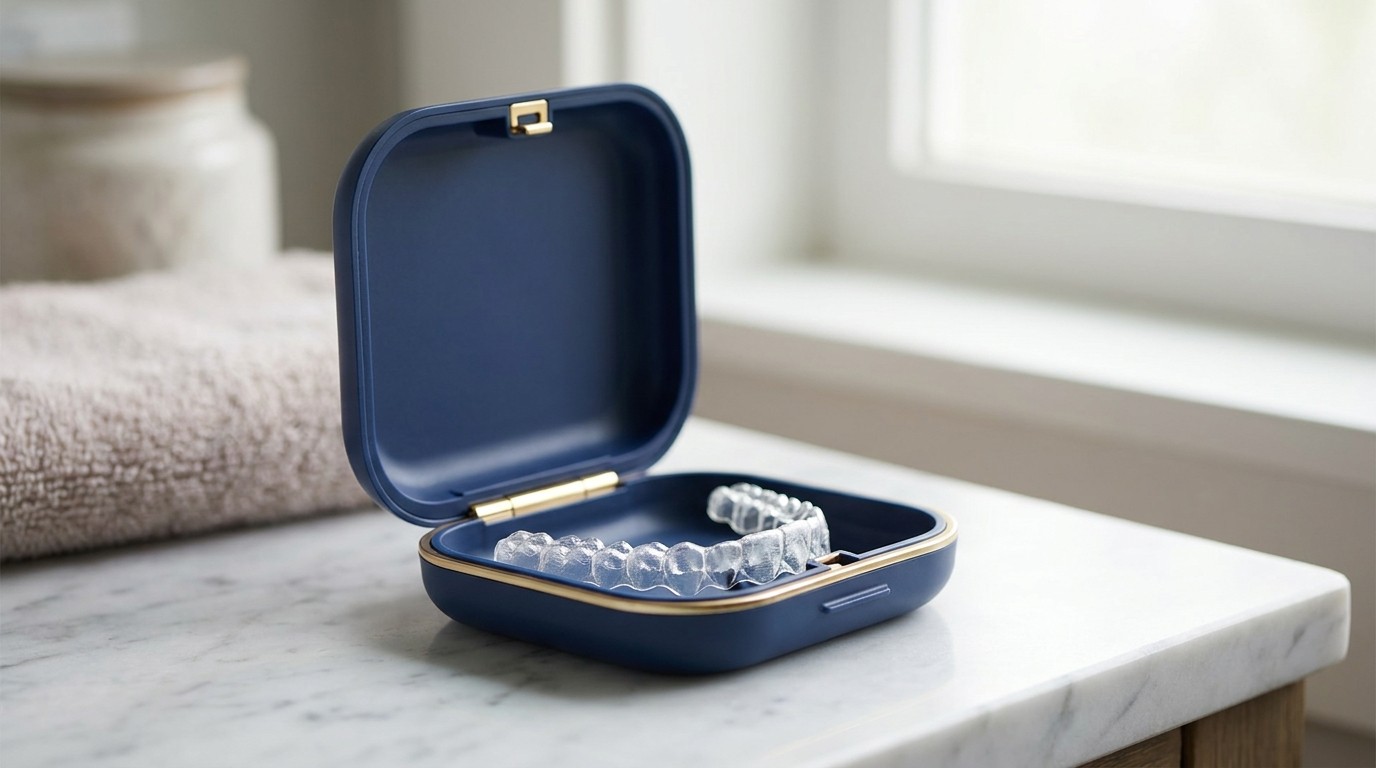
Early signs often include a retainer that feels tighter than usual, teeth that look slightly crowded, or small gaps that were not there before. Cleveland Clinic notes that if a retainer is too snug or no longer fits, your teeth have probably shifted. If you notice this, call the office.
Why do teeth move back after Invisalign?
Teeth can move back because tooth movement is a natural, lifelong process. The American Association of Orthodontists explains that bone remodeling continues throughout life, and the force we apply to teeth when we speak, bite and chew can make them drift. That is why teeth can move even after successful treatment.
What research says about why teeth relapse
A Cochrane review of retention after braces explains that teeth can "relapse," meaning they return toward their starting positions. The authors say the causes are not fully understood, but are felt to relate to recoil of the fibers that hold teeth in the jaw bone, pressure from the lips, cheeks and tongue, further growth and the way the teeth meet. That review studied braces, not aligners, so ask your dentist how it applies to your Invisalign treatment. To see how aligner treatment works here, you can read about our Invisalign treatment in Smyrna.
How do I stop my teeth from shifting?
Wear your retainer exactly as your dentist or orthodontist directs. The AAO says wearing your retainer is the main way to keep your teeth from moving after treatment, and Cleveland Clinic says you will likely need full-time wear at first, then nightly wear for the long term.
What a typical retainer schedule looks like
Cleveland Clinic says you will likely wear a retainer day and night for at least four to six months, then at night. Your own schedule may differ, so follow the plan you were given.
Simple habits that help
Wear it on the schedule your dentist or orthodontist gave you.
Bring it to your checkups so the fit can be checked.
If it feels tight, cracked or different, call the office rather than guessing.
If you want to understand the aligner phase first, our post on whether people really wear Invisalign 22 hours a day covers the habits that carry over.
Want this checked? If your retainer feels tight or your teeth look different, you can book a visit online or call (770) 863-0005 and we will help find the earliest visit available.
What should I do if I lost my retainer or it no longer fits?
If you lost or broke your retainer, or it no longer fits, see your dentist or orthodontist. Cleveland Clinic says a snug retainer, or one that no longer fits, probably means your teeth have shifted, and the longer you wait, the more they can shift back.
What a visit can sort out
A dentist can check your bite and tell you whether a new retainer, or another option, makes sense for your teeth. Cleveland Clinic says there is nothing you can do to make your current retainer fit, and your dental provider will need to adjust it or make a new one.
Where Invisalign fits in
A dentist can look at how far your teeth have moved and talk through your options, which may or may not include another round of aligners. Our guide to why people quit Invisalign shows what makes treatment easier to finish.
Do dentists reshape teeth after Invisalign?
Sometimes, depending on your teeth. Dentists may reshape the contact points between teeth, called interproximal reduction. A Cochrane review of retention after braces lists it as an add-on that is sometimes used to try to improve retention. It does not replace a retainer, and your dentist can tell you whether it makes sense for you.
Reshaping is a decision, not a routine step
The Cochrane review describes reshaping as one of two main add-on procedures used to try to improve retention, and it found very little research on how well these add-ons work. So it is a conversation with your dentist, not a promise. You can read about enamel contouring and shaping to learn more.
Other finishing touches
After aligners, some people also ask about whitening, bonding or veneers for edges and shape. Those are cosmetic choices, and a consultation can sort out which fits.



Frequently asked questions
Can teeth shift years after braces or Invisalign?
Yes, they can. The AAO says tooth movement is a natural, lifelong process, and many patients wear retainers at night long term. Keep wearing your retainer as directed.
Do I have to wear a retainer forever?
Often, yes, at least at night. Cleveland Clinic says you will likely wear it at night for the rest of your life after the first few months. Your dentist can tell you whether a different schedule suits your mouth.
Is a fixed retainer better than a removable one?
Research has not clearly shown that one is better. Cleveland Clinic describes removable retainers, made of wire and acrylic or clear plastic, and fixed retainers bonded to your front upper or lower teeth. A Cochrane review of retention after braces found the evidence was low to very low certainty, so your dentist can help you choose based on your needs.
Can a broken retainer hurt my mouth?
It can. Cleveland Clinic says a broken retainer can poke and irritate your gums or lips, and it advises seeing your dentist or orthodontist if you lose your retainer or it breaks. Please call the office rather than waiting. A dentist can check your teeth and tell you whether the retainer needs adjusting or replacing.
Talk with us about keeping your smile in place
If your retainer feels off, or you want a plan for keeping your results, we would be glad to talk it through at a consultation with our team, including Dr. Natasha Kanchwala. You can book online or call (770) 863-0005, serving Smyrna and nearby Vinings, Mableton, Marietta and Austell. This is general information, not a diagnosis. A dentist needs to examine you to advise on your situation.