Is It Painful to Get a Dental Crown? What to Expect
Quick answer: getting a crown should not hurt
What you will actually feel
Getting a dental crown is not painful for most patients. Your dentist fully numbs the tooth with local anesthetic before any shaping begins, so you feel pressure and vibration but not pain. Mild soreness after the numbing wears off is normal and usually settles within a few days with over-the-counter pain relievers.
The most uncomfortable moment is often the numbing injection itself, and that pinch lasts only a few seconds. A topical gel applied first makes even that easier. If you ever feel sharp pain during the visit, you raise your hand and more anesthetic is added right away.
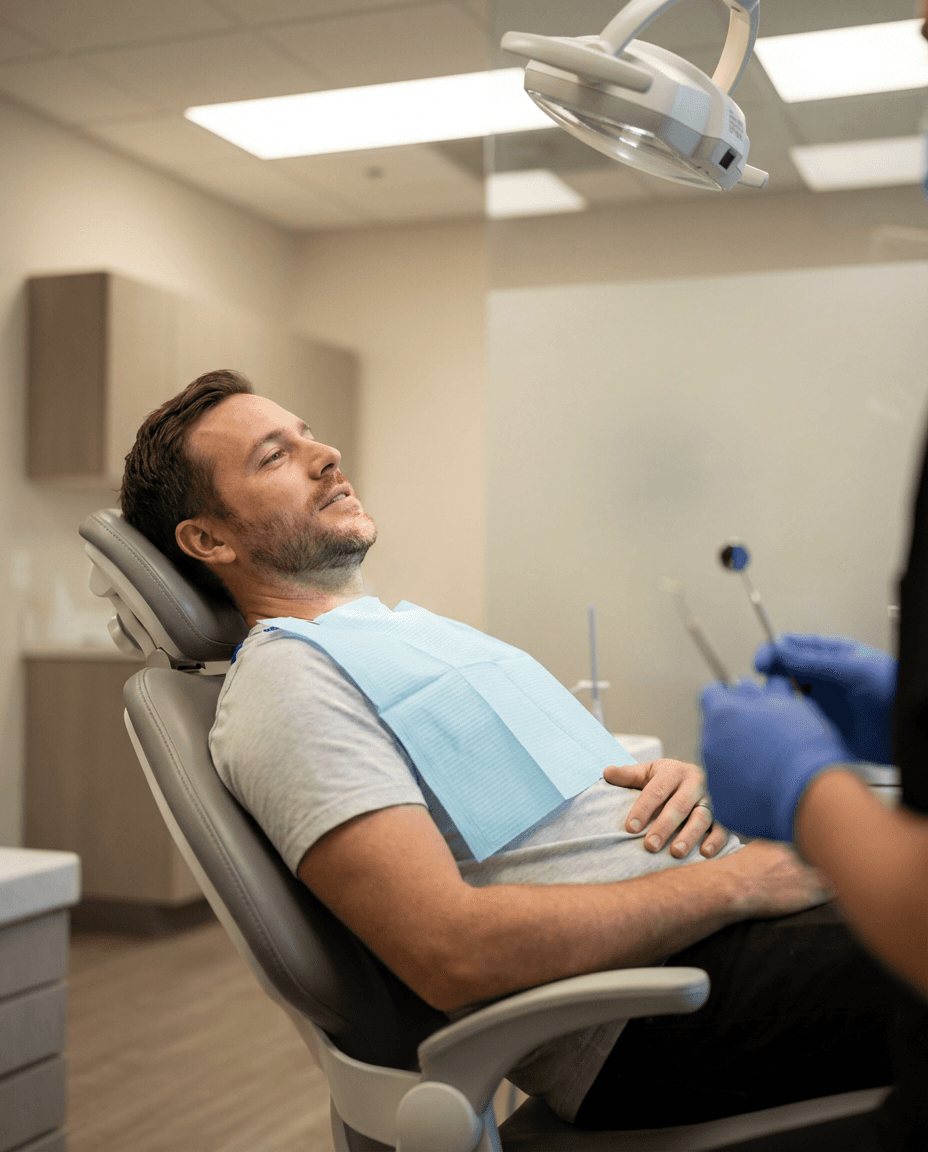
If you have been told you need a crown, your first question is probably whether it will hurt. That worry keeps a lot of people from booking the care they need, and it is one of the most honest questions we hear at Smyrna Dental Studio in Smyrna, GA. The short version is reassuring: modern numbing makes the procedure far more comfortable than its reputation suggests. Here is exactly what to expect, start to finish.

What does getting a crown actually feel like?
Pressure, not pain
The honest answer is mostly pressure, not pain. Before your dentist touches the tooth, the area is numbed with a local anesthetic, and once that takes effect the tooth stops sending pain signals. What you notice during the shaping is vibration and a firm pushing sensation, which feels strange but not painful for the large majority of people.
The trickiest moment for many patients is the very first injection. At Smyrna Dental Studio we often apply a topical numbing gel to the gum before that injection, which softens the brief sting. If at any point you feel a sharper sensation instead of pressure, tell your dentist. Adding more anesthetic is routine, and you are never expected to tough it out.

Does getting a crown hurt afterward?
What recovery soreness is like
Once the local anesthetic wears off, usually two to four hours after your visit, the tooth and gum around it can feel tender. That is a normal reaction to the tooth being shaped, not a sign that something went wrong. For most patients the soreness is mild, peaks within the first day or two, and responds well to ibuprofen or acetaminophen taken as directed.
Soft foods and chewing on the other side help in those first couple of days. If your discomfort climbs instead of fading, or it is still strong after two weeks, that is worth a call. A quick check can rule out a bite that needs adjusting or a tooth that needs a closer look.
Why does my crowned tooth feel sensitive to hot and cold?
Temperature sensitivity after a crown
Some patients notice the crowned tooth reacts to hot or cold drinks for a few days, and occasionally for a week or two. This is more common when the crown sits close to the nerve, and it usually fades on its own. Sensitivity toothpaste can ease it while your tooth settles.
Pay attention to the pattern. A quick zing that disappears is normal healing. Sharp pain that lingers longer than 30 seconds after the hot or cold goes away, or sensitivity that worsens after two weeks, deserves a visit so your dentist can check the tooth.
Why does my new crown feel too high when I bite?
A simple bite adjustment
If your new crown feels like it hits first when you close your teeth, it may be sitting slightly high in your bite. That extra height puts pressure on the tooth and can make chewing sore. It is a common, easily corrected issue, not a failed crown.
The fix is quick. A short follow-up visit lets your dentist polish the crown down a little so your bite feels even and natural again. Most people feel the difference immediately after that adjustment, so do not push through a bite that feels off.
Are same-day crowns more comfortable?
How CEREC changes the experience
Same-day crowns can make the whole process simpler and easier on anxious patients. With CEREC technology, the tooth is scanned digitally instead of with a goopy mold, and the crown is milled and placed in one visit. That means one round of numbing instead of two and no temporary crown to babysit for weeks.
You can read more in our guide to CEREC same-day crowns in Smyrna. The in-chair comfort is similar to a traditional crown, since both rely on the same local anesthesia, but fewer appointments and no second numbing visit is a real plus for many people.
Is a crown more painful than a filling?
How the two compare
A crown appointment is longer and involves more tooth shaping than a simple filling, so afterward you might notice slightly more soreness. During the visit, though, both procedures lean on the same local anesthesia, which means in-chair comfort is comparable when the numbing is done well.
Crowns are usually recommended when a tooth is cracked, heavily decayed, or weakened, including after a root canal. To understand when each is needed, see whether you need a crown after a root canal and our look at crown versus root canal.



Frequently asked questions
Will I feel anything while my tooth is shaped for a crown?
With good local anesthesia in place, you should feel pressure and vibration but not sharp pain. If you do feel pain at any point, let your dentist know right away so more numbing can be added. That is routine and expected.
How long does soreness after a crown last?
For most patients, soreness eases within two to five days, and over-the-counter pain relievers are usually enough. If significant pain or sensitivity is still there after two weeks, call your dentist to rule out a bite that needs adjusting.
I have dental anxiety and fear the injection. What can help?
Tell your dental team before the appointment. Topical numbing gel before the injection, a slower technique, breaks during the visit, and sedation options can all help. An honest conversation up front is the best first step toward a calmer experience.
Can I eat normally after a crown appointment?
Wait until the numbness fully wears off before eating so you do not accidentally bite your cheek or tongue. For the first day or two, softer foods are gentler on a tender tooth. After that, most people return to eating normally.
Does a crowned tooth that hurts mean the crown failed?
Not usually. Short-term soreness and temperature sensitivity are normal parts of healing and do not mean the crown is defective. Pain that lasts beyond two to three weeks, or that keeps getting worse, is the signal to follow up.
Ready to get comfortable about your crown?
A crown is one of the most dependable ways to save a tooth that is cracked, decayed, or weakened, and the procedure is far more comfortable than its reputation suggests. If worry about pain has kept you waiting, an honest conversation usually settles most of it. Call Smyrna Dental Studio at (770) 863-0005 to book an exam or consultation. We serve Smyrna and nearby Vinings, Mableton, and Marietta. This is general information, not a diagnosis, so a dentist should evaluate your situation before any treatment.
Reviewed by Dr. Raheel Thobhani, DMD, at Smyrna Dental Studio in Smyrna, GA. Dr. Thobhani focuses on restorative and surgical care and helps patients understand each step before treatment begins.