What Are the Three Types of Dental Crowns?
TLDR (Too Long; Didn't Read)
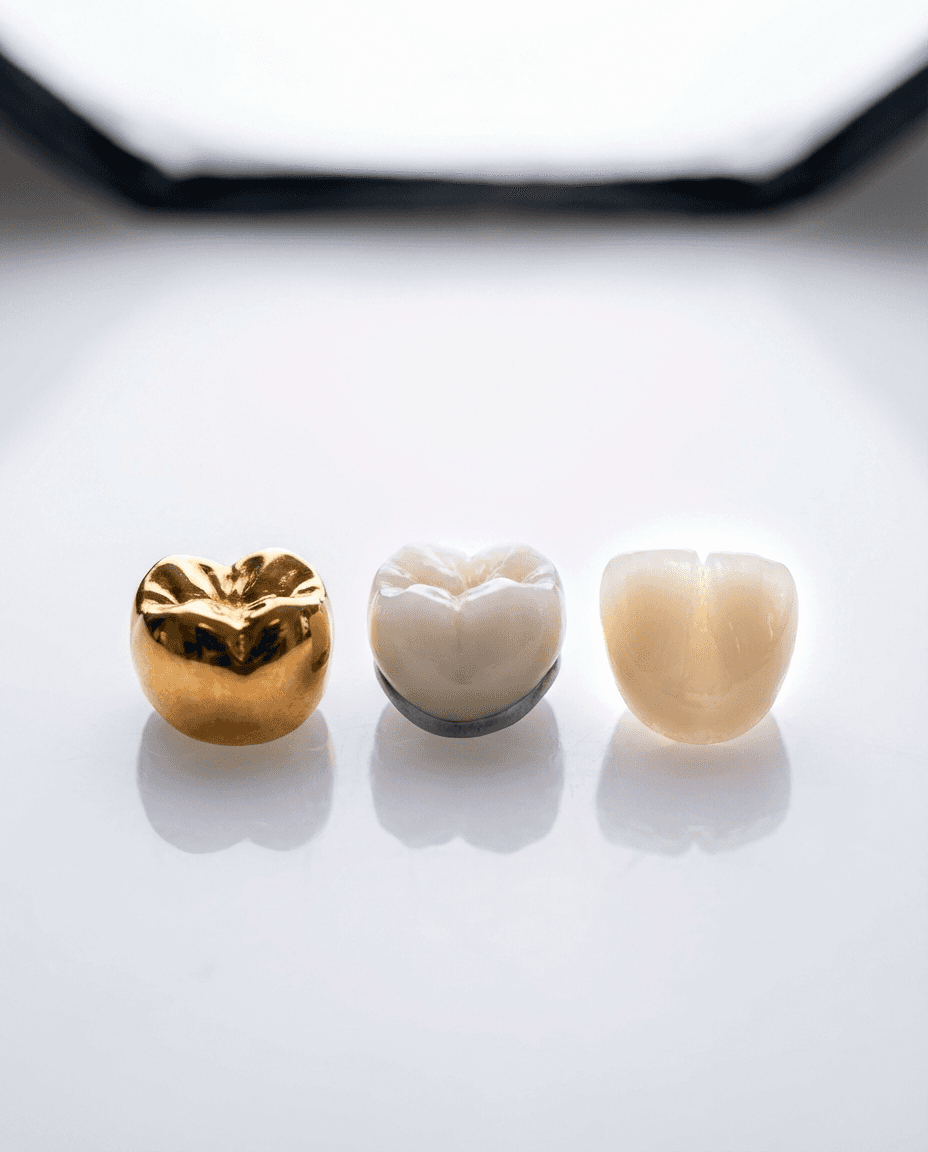
The three main types of dental crowns are all-porcelain (ceramic), metal (gold or base-metal alloy), and porcelain-fused-to-metal (PFM). Each type has distinct advantages: porcelain looks the most natural, metal lasts the longest under heavy bite force, and PFM blends durability with a tooth-colored appearance. The right choice depends on which tooth needs the crown, your bite strength, and your cosmetic goals. Book your appointment online at Smyrna Dental Studio.
Why the Type of Crown You Choose Actually Matters
Not all dental crowns are built the same. The material your crown is made from affects how it looks, how long it lasts, and how it holds up against the daily pressure of chewing. Choosing the wrong type for your situation can mean early wear, cracking, or a crown that stands out every time you smile.
Most dentists classify crowns into three main categories: all-porcelain (ceramic), metal alloy, and porcelain-fused-to-metal. Each solves a different problem. A front tooth crown has completely different demands than a molar crown, and understanding these differences helps you have a smarter conversation with your dentist about what's right for your mouth.

What Are the Three Main Types of Dental Crowns?
Dental crown materials have evolved significantly over the decades, but three core types remain the most widely used. Your dentist's recommendation will depend on the tooth's location, the amount of remaining natural tooth structure, your bite force, and whether aesthetics are a priority.
All-Porcelain (Ceramic) Crowns
All-porcelain crowns are the most natural-looking option available. They're made entirely from dental ceramic, often zirconia or lithium disilicate, and can be color-matched precisely to your surrounding teeth. Because there's no metal underneath, light passes through them similarly to how it passes through natural enamel, which makes them almost indistinguishable to the eye. These crowns are the go-to choice for front teeth, where appearance is the top priority. Modern all-ceramic materials like zirconia are significantly stronger than older porcelain formulations, making them increasingly viable even for back teeth.
Metal Alloy Crowns (Gold and Base-Metal)
Metal crowns are the most durable option by a wide margin. They're typically made from gold alloy, palladium, or base-metal alloys like cobalt-chromium. These crowns rarely chip or break, they withstand the strongest bite forces, and they require less removal of natural tooth structure than other crown types. Metal crowns can last 20 to 30 years or more with proper care. The obvious trade-off is appearance, metal crowns are well-suited for back molars where they're rarely seen.
Porcelain-Fused-to-Metal (PFM) Crowns
Porcelain-fused-to-metal crowns were once the most common crown type in dentistry and remain widely used today. They have a metal inner shell for structural strength, with a layer of tooth-colored porcelain bonded over the outside. PFM crowns work well in both front and back positions. One thing to be aware of: over time, the gum line can recede and reveal a thin dark line at the base of a PFM crown where the metal meets the tooth.
How Do You Choose the Right Crown Type for Your Situation?
There's no single crown type that's best for every patient. The right choice depends on a combination of clinical and personal factors. Front teeth are visible when you talk and smile, so appearance is usually the priority, all-porcelain or PFM are the common choices. Back molars bear most of the force when you chew, making durability the top concern. Metal or high-strength zirconia crowns are often recommended for these teeth.
If you grind or clench your teeth, the forces on your crowns are significantly higher than normal. Heavy grinders may chip or crack ceramic crowns faster than someone with a relaxed bite. In these cases, a metal crown or a high-strength zirconia crown paired with a custom nightguard is often the smarter long-term investment.




Frequently Asked Questions About Dental Crown Types
Q: Which type of dental crown lasts the longest?
A: Metal crowns generally have the longest track record for longevity, often lasting 20 or more years. Modern zirconia crowns are also highly durable. PFM crowns typically last 10 to 15 years. Longevity always depends on oral hygiene habits, diet, and whether you grind your teeth.
Q: Are all-porcelain crowns strong enough for back teeth?
A: Modern zirconia crowns are strong enough for many molar applications and are increasingly used on back teeth. Older, thinner porcelain materials were more prone to chipping under heavy bite forces. Your dentist will assess your bite strength before recommending a ceramic crown for a high-pressure molar position.
Q: Will a dental crown look natural?
A: All-ceramic crowns are virtually indistinguishable from natural teeth when properly color-matched. PFM crowns also look natural in most lighting. Metal crowns are visible but are typically placed on back molars where they aren't seen during normal conversation or smiling.
Q: Do metal crowns contain harmful materials?
A: Metal alloy crowns are biocompatible and have a long safety record in dentistry. Gold alloy crowns in particular are well-tolerated. If you have a known metal sensitivity or allergy, discuss this with your dentist so they can recommend an all-ceramic alternative.
Q: How do I know which crown type is right for me?
A: The best answer comes from a clinical exam. Your dentist will consider the tooth's location, your bite force, how much natural tooth remains, your cosmetic priorities, and your budget.
Common Myths vs. The Truth About Crown Types
Myth: All-porcelain crowns are fragile and will crack easily.
Truth: Today's zirconia and lithium disilicate crowns are engineered to handle significant bite forces. While no crown is indestructible, modern all-ceramic options are far more resilient than their reputation suggests.
Myth: A more expensive crown is always the better crown.
Truth: Price reflects materials and lab costs, not necessarily the best clinical outcome for your specific tooth. The right crown is the one matched to your clinical needs, not the most expensive option available.
Myth: Once you get a crown, that tooth will never have problems again.
Truth: A crown protects the visible part of the tooth, but the root and surrounding gum tissue still require care. Decay can still develop at the margin where the crown meets the tooth if oral hygiene slips.
Choosing the right dental crown comes down to matching the material to your tooth's demands, where it sits in your mouth, how hard you bite, what you want it to look like, and how long you need it to last. Dr. Natasha Kanchwala, Dr. Leslie Patrick, and Dr. Raheel Thobhani at Smyrna Dental Studio take the time to walk through your options clearly so you can make a confident, informed decision. If you have a damaged, cracked, or weakened tooth and want to understand which crown type fits your situation, Book your appointment online at Smyrna Dental Studio today.