5 Signs You Need a Dental Crown (Smyrna, GA)
Quick answer: the main signs you need a dental crown
What pushes a tooth past a simple filling?
The most common signs you need a dental crown are a cracked or fractured tooth, a cavity too large for a filling, a tooth that has had a root canal, an old filling that is breaking down, and a tooth worn flat by grinding. These are not arbitrary thresholds. They mark the point where a filling can no longer protect the tooth reliably under everyday biting force.
If any of these sound familiar, a focused exam can confirm what is going on. This is general information, not a diagnosis, so a dentist should evaluate your specific situation before any treatment.

If a dentist has recommended a crown and your tooth barely hurts, it is fair to wonder whether you really need one. That uncertainty is common, and it is worth working through carefully. A crown reshapes and covers a tooth, so you want to be confident the recommendation is genuinely necessary. This guide from Smyrna Dental Studio in Smyrna, GA walks through the real signs you need a dental crown, so you can evaluate what your dentist is seeing and decide with confidence.
What are the clinical signs that a tooth needs a crown?
It comes down to remaining tooth structure
A crown becomes the right choice when a tooth can no longer hold together on its own under normal chewing force. It is rarely about how the tooth looks or whether it hurts. It is about whether the remaining walls of the tooth can carry the load. The American Dental Association describes crowns as full-coverage restorations used to protect and restore teeth that are cracked, badly decayed, or structurally weakened (ADA MouthHealthy).

Each scenario below has its own mechanical logic. Understanding that logic helps you tell the difference between a tooth that truly needs full coverage and one that a more conservative repair could fix.
Does a cracked tooth always need a crown?
Why a crack behaves like a hinge
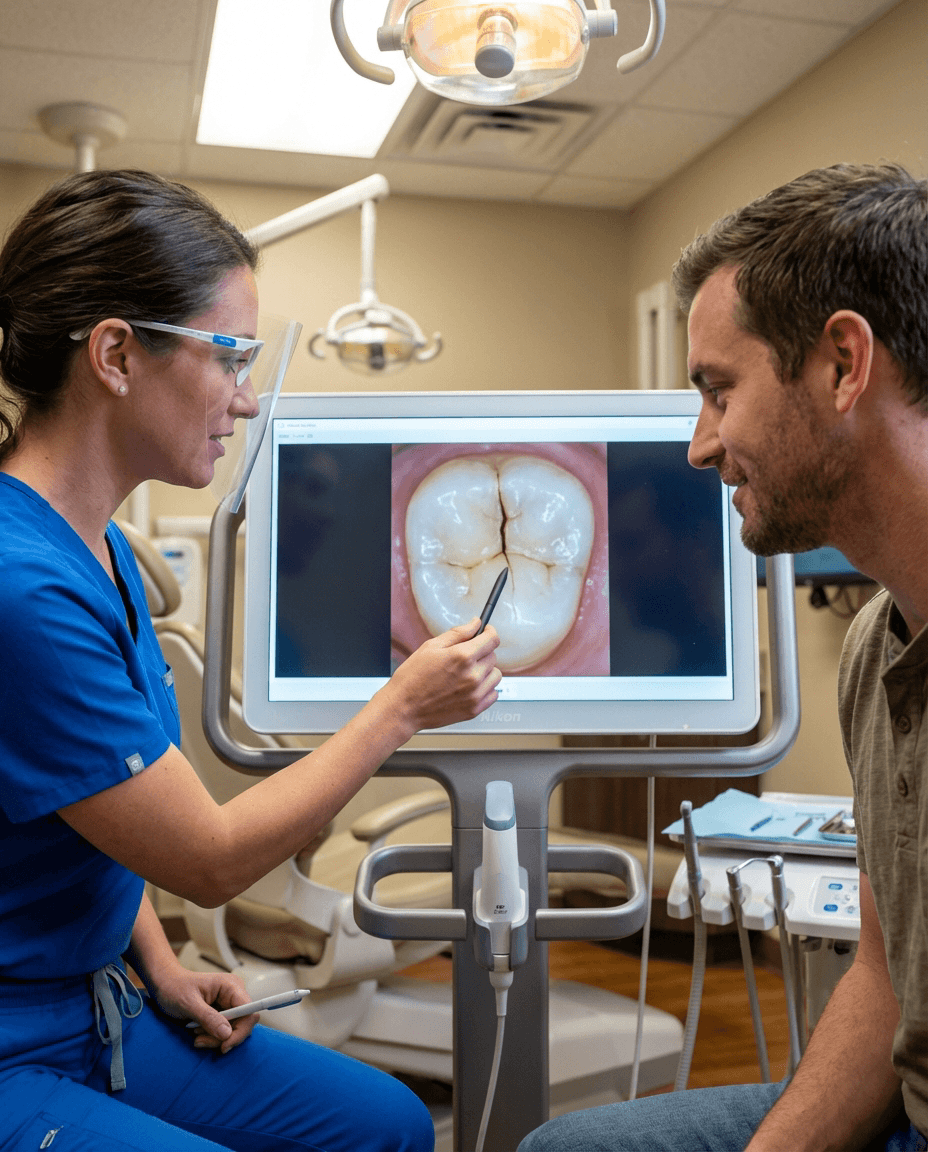
A crack turns a solid tooth into two pieces that flex apart slightly every time you bite. That repeated movement irritates the nerve, causes sharp pain on chewing, and slowly drives the crack deeper. A crown wraps the whole tooth and holds those pieces together so they stop flexing. Left untreated, cracks can spread below the gumline into the root, and at that point the tooth often cannot be saved.
This pattern, often called cracked tooth syndrome, is one of the most common reasons back teeth need crowns. Not every crack needs full coverage, but cracks that flex under bite pressure usually do. A dentist at Smyrna Dental Studio can test the tooth and explain whether your crack is stable or progressing.
When is a cavity too big for a filling?
Thin walls cannot support a large filling
When decay removes a large share of a tooth, the walls left behind become too thin to back a filling reliably. A general clinical rule of thumb is that once a restoration would cover more than about half the biting surface, the remaining structure is at real risk of fracture. A crown spreads biting force across the entire tooth instead of loading those thin walls.
The same logic applies to an old, large filling that is starting to fail. The bond can break down, the edges can lift, and bacteria can seep underneath. Once that happens, the real question is whether enough healthy tooth remains to hold another filling, or whether a crown is the more dependable fix. If you want to compare options, our guide on crowns versus root canals breaks down how the two procedures differ.
Do you need a crown after a root canal?
Back teeth and front teeth are not the same
A root canal saves a tooth by removing infected pulp, but it also leaves the tooth more brittle over time. The American Association of Endodontists notes that a full-coverage restoration like a crown is commonly recommended on back teeth after root canal treatment, because molars and premolars absorb the most chewing force (AAE). Front teeth, which handle less pressure, sometimes do not need one.
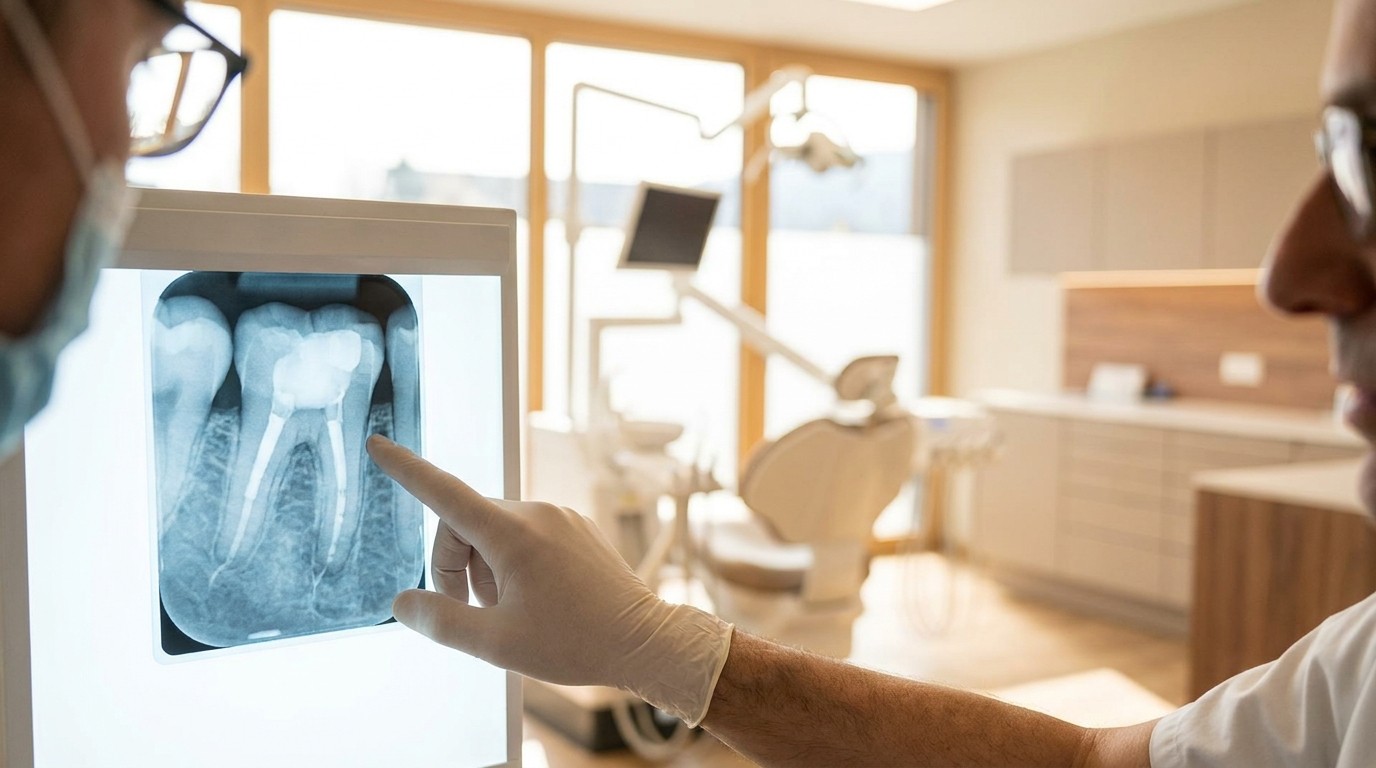
Because the answer depends on which tooth was treated, it is worth confirming with your own dentist. We cover the details in our post on whether you need a crown after a root canal, including why timing matters once a tooth has been treated.
Can grinding wear down a tooth enough to need a crown?
When teeth get shorter and sharper
Chronic grinding and clenching, known as bruxism, can flatten and shorten teeth over years. As the protective enamel wears away, the softer dentin underneath gets exposed and sensitive. Once a tooth has lost a meaningful part of its height or the dentin is showing, a crown can rebuild the original shape and shield what remains.
This is one sign patients often spot themselves. Teeth that look noticeably shorter, feel sharp-edged, or turn sensitive to hot and cold are worth having checked. A night guard may also be recommended alongside any crown to protect your investment from continued grinding.
When do you NOT need a crown?
Conservative care comes first
Knowing when a crown is unnecessary matters just as much. A small or moderate cavity in an otherwise intact tooth is usually the territory of a tooth-colored filling, not a crown. A purely cosmetic concern on a healthy tooth, such as minor chips or discoloration, is often better suited to a veneer, which removes far less tooth structure than a crown.
A healthy tooth with no cracks, no significant decay, and no failing restoration does not need a crown, no matter how old it is. Age alone is not a reason. A good dentist should be able to explain why a more conservative option will not work for your case, and if that explanation is not offered, it is fair to ask.




Frequently asked questions
My tooth does not hurt. Can it really need a crown?
Yes. Cracks, large failing fillings, and hidden decay often cause little or no pain until the problem becomes serious. Pain is usually a late signal, not an early warning. Many teeth that most need a crown feel completely fine right up until they fracture.
Can I get an inlay or onlay instead of a full crown?
Sometimes. Inlays and onlays cover more of the tooth than a filling but less than a full crown, and they work when the surrounding walls are still strong. If a full crown was recommended, it is reasonable to ask whether an onlay was considered and why it was less suitable.
What happens if I put off getting a crown?
It depends on the reason. A cracked tooth can split to the root and need extraction, while a failing filling can let bacteria reach the nerve and trigger a root canal. Waiting rarely saves money or time and often turns a manageable problem into a bigger one.
Is a same-day crown an option?
Often, yes. Same-day technology lets some crowns be designed and placed in one visit instead of two. Whether it fits your tooth depends on the situation. You can learn more in our overview of CEREC same-day crowns in Smyrna.
Is it worth getting a second opinion before a crown?
It can be. A crown is a significant, lasting restoration, and a confident dentist will not be offended by a second look. If two clinicians review the same X-rays and agree, you can move forward with real confidence.
Get a clear answer about your tooth
Many people do not realize a tooth needs a crown until a dentist shows them the crack, the hidden decay, or the worn-down structure on an exam. The signs are real and clinically well defined, but they often stay quiet until the situation is already serious. The most reliable way to catch a tooth while a crown is still the answer, rather than an extraction, is a thorough exam before symptoms force the issue. If you have a tooth you are unsure about, call Smyrna Dental Studio at (770) 863-0005 to book an exam. We serve Smyrna and nearby Vinings, Mableton, and Marietta. This is general information, not a diagnosis, so a dentist should evaluate your situation before any treatment.
Reviewed by Dr. Raheel Thobhani, DMD, at Smyrna Dental Studio in Smyrna, GA. Dr. Thobhani focuses on restorative and emergency care and helps patients understand exactly why a crown is or is not the right call for their tooth.