
Is It Healthier to Get a Root Canal or Extraction?
Quick answer: saving your natural tooth is usually healthier
So is a root canal or extraction better for your health?
In most cases, a root canal is the healthier choice because it keeps your natural tooth in place, which protects your jawbone, your bite, and your neighboring teeth. Saving a natural tooth is almost always the goal when the tooth is restorable.
Extraction becomes the healthier option only when a tooth is cracked below the gum, severely loose from gum disease, or so damaged that it cannot be rebuilt. Even then, replacing a pulled tooth matters for long-term oral health.
When a tooth is badly decayed or infected, patients often ask us a fair question: is it healthier to save it with a root canal or just pull it? At Smyrna Dental Studio in Smyrna, GA, our honest answer for most teeth is that keeping your natural tooth is the healthier path. Here we explain why dentists usually try to save a tooth, when extraction is the better call, and what your options look like if a tooth has to go.

Why do dentists usually try to save a tooth instead of pulling it?
Your natural tooth does jobs a gap cannot
Dentists favor saving teeth because nothing replaces a natural tooth perfectly. A real tooth root keeps stimulating your jawbone every time you chew, holds your nearby teeth in their correct positions, and supports a natural bite. Root canal treatment removes the infected inner pulp, then a crown protects what is left, so the tooth can keep working for years.
Root canals are also reliable when done well. Research summarized by the National Center for Biotechnology Information reports root canal success rates of roughly 86 to 95 percent, and teeth restored with a crown afterward survive far longer than those left without one. That is why we usually pair a root canal with a crown on back teeth.
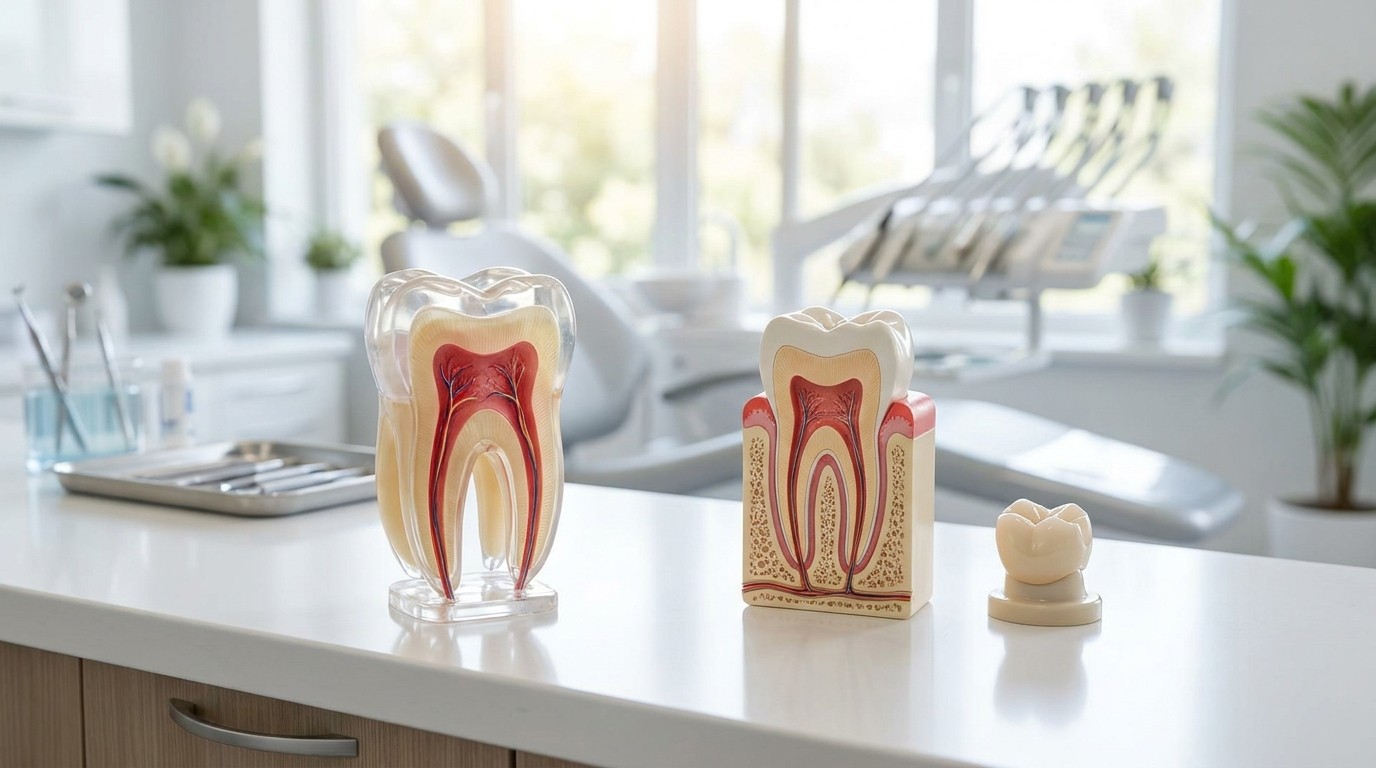
If you are weighing this against simply removing the tooth, our companion guide on root canal versus extraction walks through the trade-offs side by side. The short version is that a tooth you can keep is almost always worth keeping.
What happens to your mouth after a tooth is extracted?
Bone loss and shifting are the hidden costs
Once a tooth is gone, the jawbone that held it starts to shrink because it no longer gets the pressure of chewing. Over time, neighboring teeth can drift, the opposing tooth can over-erupt, and your bite can change. This is why pulling a tooth is rarely the end of the story. To protect your bite and your bone, the gap usually needs to be replaced.
That is also why extraction is not automatically the cheaper or simpler choice. Saving a tooth now can spare you a bridge or implant later, plus the bone grafting that missing teeth sometimes require down the road.
When is extraction actually the healthier choice?
Some teeth truly cannot be saved
A small share of teeth are past saving, and forcing a root canal on them is not healthier. Extraction is the better call when a tooth has a vertical crack running below the gum, when gum disease has destroyed too much of the supporting bone, or when an infection is severe and the tooth cannot be rebuilt afterward. In those cases, removing the source of infection protects the rest of your mouth.
The only way to know which group your tooth falls into is an exam and an X-ray or 3D scan. At our Smyrna Dental Studio office, Dr. Raheel Thobhani evaluates the crack pattern, bone level, and infection before recommending a path, so the decision fits your specific tooth rather than a general rule.
If a tooth has to come out, what are the replacement options?
Implants, bridges, and other ways to fill the gap
If extraction is the right call, replacing the tooth helps protect your bite and jawbone. A single dental implant is a common choice and typically costs around 3,000 to 6,000 dollars per tooth, according to Delta Dental, with implant survival reported near 95 percent at five to ten years in a clinical review on PubMed Central. Bridges and partial dentures are other paths, depending on the tooth and your goals.
Not sure an implant is right for you? Our overview of dental implant alternatives and our comparison of tooth extraction versus an implant can help you weigh the choices before any treatment starts.




Frequently asked questions
Is a root canal safe for your overall health?
Yes. The American Dental Association and the American Association of Endodontists confirm there is no valid link between root canals and disease elsewhere in the body. A root canal removes infection and helps you keep a natural tooth, which supports long-term oral health.
Does a root canal really need a crown afterward?
On most back teeth, yes. A crown protects the treated tooth from cracking under chewing pressure and is one of the biggest factors in long-term success. Our guide on whether you need a crown after a root canal explains when it is recommended.
Is it cheaper to just pull the tooth?
Extraction alone often costs less up front, but replacing a missing tooth with a bridge, implant, or denture usually costs more than saving it would have. Exact figures depend on your case, so an exam gives you the most accurate estimate.
How long does a saved tooth last after a root canal?
Many root canal teeth last for years or decades when restored with a crown and cared for with regular cleanings. The crown may eventually need replacing, but the underlying treated tooth often serves you for a long time.
Does insurance cover root canals and extractions?
Many dental plans help with both, often as basic or major services, though coverage varies by plan. We can review your specific benefits during a visit and give you a clear estimate before you decide anything.
Talk it through with a Smyrna dentist before you decide
For most teeth, saving your natural tooth with a root canal is the healthier, longer-lasting choice, but the right answer depends entirely on your tooth. If you are deciding between a root canal and an extraction, call Smyrna Dental Studio at (770) 863-0005 to schedule an exam. We proudly serve Smyrna and nearby Vinings, Mableton, and Marietta. This article is general information, not a diagnosis. A dentist should evaluate your situation before recommending treatment.
Reviewed by Dr. Raheel Thobhani, DMD, at Smyrna Dental Studio in Smyrna, GA. Dr. Thobhani focuses on restorative care, implants, and oral surgery, and helps patients choose between saving and replacing a tooth.