Best Dentures in 2026: Types, Costs and Research (Smyrna, GA)
The short answer: what the best denture is and what it costs
Delta Dental's 2024 averages put full dentures at about $1,115 to $2,540 per arch, and for a toothless lower jaw experts name a two-implant overdenture the first choice.
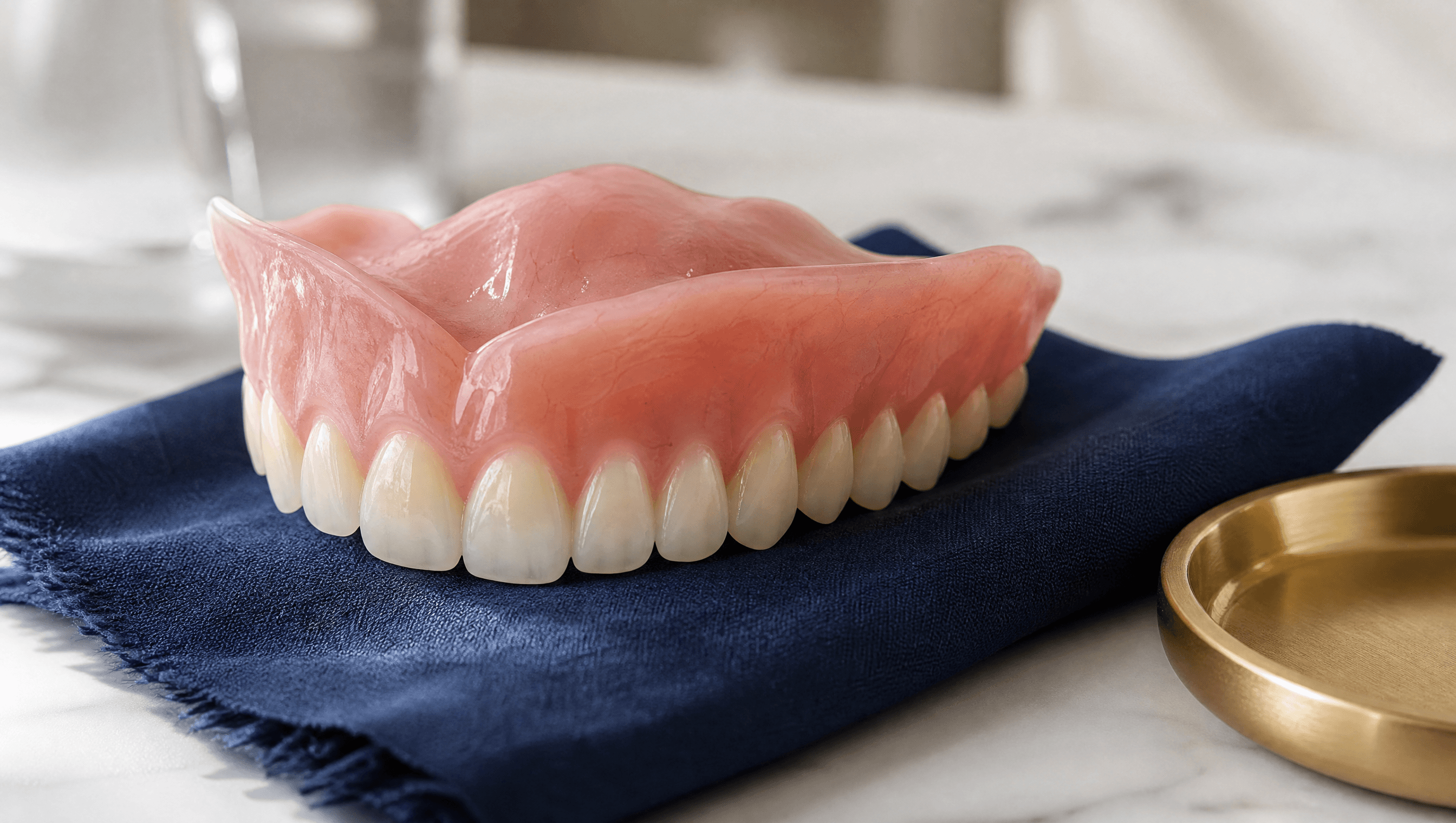
Conventional full denture: made after your gums heal, and the most affordable way to replace a full arch.
Immediate denture: teeth on extraction day, but expect a reline or remake after about six months.
Partial denture: replaces some teeth and clips to the natural teeth you keep.
Snap-in (implant-retained) denture: the strongest evidence for lower-jaw chewing and satisfaction, but it needs surgery and enough bone.
Lifespan: roughly 5 to 10 years before a replacement or major reline, depending on fit and care.
Prices here are published national averages from third-party sources, not Smyrna Dental Studio's fees.

Choosing a denture is easier when you know what actually separates them
Most people searching for the best dentures are really asking three things: what will fit, what will it cost, and will I be able to eat and smile without worrying. The honest answer is that no single denture wins for everyone, because bone, remaining teeth, budget and goals differ from person to person. We see patients from Smyrna, Vinings, Mableton, Marietta and Austell weighing the same choices. This guide walks through the main types, the published price ranges, and what research says about comfort and chewing, so you can walk into a consultation with clear questions.

Dentures come in five main types, and the right one depends on your bone and teeth
The American Dental Association classifies dentures as nonimplant-retained, either complete or partial, or implant-retained (ADA). Within those groups you will hear about conventional full dentures, immediate dentures, partial dentures and implant overdentures, and Cleveland Clinic describes the same five types (Cleveland Clinic). A conventional denture is made after your remaining teeth are removed and the tissue heals, which can take months. An immediate denture goes in the same day, so you are never without teeth, but the University of Iowa College of Dentistry notes soft tissues need roughly six months to settle, which usually means a reline or a new denture afterward (University of Iowa).
Partial dentures suit patients who still have healthy teeth to hold them. Flexible, Valplast-style partials can look more natural, but a November 2025 Canadian rapid review of eight studies found they may be inferior for retention, and no cost-effectiveness studies qualified (CJHT). Digital milling and 3D printing are newer: a 2024 systematic review found milled and 3D-printed dentures offered better retention and fewer appointments, with no meaningful difference in patient satisfaction (Zandinejad et al., 2024).
At Smyrna Dental Studio we make custom full dentures and partial dentures, and we also place implant-supported dentures, so we can talk through all three options with you. Our full denture process starts with an exam of your gums and bone, then precise impressions, a wax try-in so you can approve the look and bite, and a final fitting. Our guide to implants versus dentures compares them side by side.
Full dentures typically cost $1,115 to $2,540 per arch, and implant-retained designs cost more
Delta Dental's 2024 published averages put a full lower denture at $1,115 to $2,425 and a full upper at $1,220 to $2,540, with partial lowers at $1,425 to $2,490 and partial uppers at $1,435 to $2,785 (Delta Dental). AARP gives a similar $1,500 to $3,000 for a removable upper or lower (AARP). These are national figures, not Smyrna Dental Studio's fees, and extractions, bone smoothing and relines are often billed separately, which is why two quotes can look far apart.
Original Medicare does not cover dentures, but many Medicare Advantage plans include limited denture coverage, so check your plan's dental benefits before you pay out of pocket. Implant-retained dentures cost more because they add surgery and implants. Published snap-in quotes run roughly $3,500 to $12,000 per arch depending on the number of implants, and our Smyrna implant cost guide lists implant-supported dentures at $7,000 to $20,000 depending on complexity and materials. Ranges differ by source and design, and only an exam gives your number. See how much an implant-supported denture costs and whether insurance pays for implant-supported dentures.
We accept most major PPO dental insurance plans and file claims on your behalf, and your plan makes the final payment decision. Cherry financing is available too. Checking your options uses a soft credit check that, per Cherry, does not affect your score, but accepting a plan is a loan, so ask for the APR, total repayment cost and any fees before you sign.
For a toothless lower jaw, research favors a two-implant overdenture
The McGill consensus (Feine et al., Gerodontology, 2002) and the York consensus (Thomason et al., British Dental Journal, 2009) both name a two-implant mandibular overdenture as the first-choice standard of care for edentulous patients. Those are expert consensus statements about the lower jaw, not a promise for every patient. A 2020 meta-analysis of eight randomized trials of lower-jaw dentures found implant overdentures gave significantly better overall satisfaction and better final chewing scores than conventional dentures, although the before-to-after improvement in chewing did not differ significantly and cleaning was harder (Clinical and Experimental Dental Research).
A 2025 review adds a useful caution: overdentures improved chewing, but the evidence does not show a consistent nutritional advantage (Journal of Oral Rehabilitation). An overdenture also means surgery, healing time, enough healthy bone, good general health and ongoing maintenance, and a conventional denture remains a reasonable choice for many people.
Fit also changes with time. After a tooth is removed, the ridge keeps shrinking: a systematic review reported about 3.79 mm of horizontal and roughly 0.8 to 1.2 mm of vertical loss at six months, most of it in the first three to six months (Tan et al.). That shrinkage is why dentures loosen, and why relines are normal, not a sign something went wrong. Our guide to snap-in dentures explains how the implant version works.
How to tell which denture fits you, and when yours needs replacing
Every denture consultation begins with an exam of your gums and the bone underneath, and implant overdenture planning at our practice starts with a 3D CBCT scan so we can see how much bone you have before recommending anything. Dr. Raheel Thobhani, DMD, leads implant and reconstruction work at our practice, and you can meet the full team on our team page. If bone is limited, a conventional full denture may be the better first step, and we will tell you so. Weighing a full arch of fixed teeth instead? See All-on-4 versus traditional dentures.
Already wearing dentures? The American College of Prosthodontists, quoted on the ADA's patient page, recommends evaluating a denture that is more than five years old. Our full denture page says full dentures last 5 to 7 years on average, and some last longer with regular relines. Denture adhesive is not a fix for a poor fit: the FDA warns that excess zinc can cause nerve damage and that prolonged use of ill-fitting dentures may increase bone loss (FDA). If you are reaching for more and more adhesive, it is time for an exam.



Denture questions answered: types, costs, lifespan and care
What is the best type of denture?
There is no single best type of denture. The right choice depends on how many teeth are missing, jawbone health, budget and eating goals. For a fully toothless lower jaw, the McGill (2002) and York (2009) consensus statements name a two-implant overdenture as the first-choice standard of care. Conventional, immediate and partial dentures suit other situations.
What are the main types of dentures?
The main types of dentures are conventional full dentures, immediate dentures, partial dentures and implant-retained overdentures. The American Dental Association classifies them as nonimplant-retained, either complete or partial, or implant-retained. Cleveland Clinic lists the same five types, and your dentist chooses based on tooth condition, bone and budget.
What is the difference between conventional and immediate dentures?
A conventional denture is placed after your remaining teeth are removed and the tissues heal, which can take months. An immediate denture goes in on extraction day, so you are never without teeth. An immediate denture typically needs a reline or remake after healing, with soft tissues taking about six months to settle.
Are snap-in (implant-retained) dentures better than regular dentures?
For the lower jaw, the evidence favors snap-in dentures. A 2020 meta-analysis of eight randomized trials of lower-jaw dentures found significantly better overall satisfaction and better final chewing scores with implant overdentures, though cleaning was harder. They cost more because implants require surgery, healing time and enough healthy bone.
What type of denture is best for eating?
Implant-retained overdentures have the strongest research support for chewing, especially on the lower jaw. A 2025 meta-analysis, however, found no consistent nutritional advantage, so food choices still matter. Any new denture takes practice. Start with softer, smaller bites, chew on both sides, and call your dentist if a spot becomes sore.
How long do dentures last?
Dentures last roughly 5 to 10 years, depending on fit, care and how your mouth changes. Cleveland Clinic gives an average of seven to ten years, while our full denture page says 5 to 7 years on average. A loose fit, cracks, wear or discoloration can shorten that, and regular checks show whether a reline or replacement is due.
How much do dentures cost in 2026?
Delta Dental's 2024 published averages show full lower dentures at $1,115 to $2,425, full upper at $1,220 to $2,540, partial lowers at $1,425 to $2,490 and partial uppers at $1,435 to $2,785. These are national averages, not our fees. Implant-supported options cost more, extractions are often billed separately, and Original Medicare does not cover dentures.
Are flexible (Valplast-style) dentures worth it?
Flexible dentures have mixed and limited evidence. A November 2025 Canadian rapid review of eight studies found they may improve aesthetics and satisfaction and are comparable for speech and pain while eating, but may be inferior for retention. They suit some partial denture cases, not all, so ask your dentist whether your situation fits.
What is the difference between a partial and a full denture?
A full denture replaces every tooth in an arch, while a partial denture replaces several missing teeth and is supported by your remaining natural teeth. Partial dentures suit people who still have healthy teeth. Your dentist decides between them based on tooth condition, jawbone density and your preferences after an exam and X-rays.
Are digital or 3D-printed dentures better?
Digital dentures are not clearly better for comfort. A 2024 systematic review found milled and 3D-printed dentures had increased retention, fewer appointments and shorter working time than conventional dentures, while oral-health quality of life and patient satisfaction were not meaningfully different. Digital fabrication is mainly about precision and speed.
Do denture adhesives help, and are they safe?
Denture adhesives can help, but they are not a fix for poorly fitting dentures. The ADA says ill-fitting dentures may need a reline or replacement, and the FDA warns that excess zinc can cause nerve damage. Use adhesive only as directed, and tell your dentist if you need more and more of it.
Why do dentures get loose over time?
Dentures get loose because bone and gum shrink after teeth are removed. A systematic review reported about 3.79 mm of horizontal ridge loss and roughly 0.8 to 1.2 mm of vertical loss at six months, with most of it in the first three to six months. That is why immediate dentures need relining and older dentures lose fit.
Who is a good candidate for dentures?
Dentures suit people who are missing many or all of their teeth. Dentists weigh the number of missing teeth, jawbone density and personal preferences. An implant overdenture also needs enough healthy bone and good general health. A consultation, exam and X-rays confirm which denture option fits you.
How do I clean and care for dentures?
Clean dentures daily by soaking and brushing with a nonabrasive denture cleanser, as the ADA advises. When you are not wearing them, keep them covered in water so they do not warp. See your dentist regularly so the fit and the tissue underneath are checked, and handle them over a towel in case they slip.
Why are my dentures causing sores or infections?
Sores under dentures are often denture stomatitis, which affects 15% to over 70% of wearers in published studies (Gendreau and Loewy). Poor hygiene, continuous wear and ill-fitting dentures are key factors. See your dentist if redness or soreness lasts more than a few days. Any sore, white or red patch that has not healed within two weeks needs an exam promptly, and fever, facial swelling or trouble swallowing needs urgent care.
The best denture is the one that fits your mouth and your budget
A good denture is not about the most expensive option or the newest technology. It is about a precise fit, a plan for how your gums will change, and honest numbers up front. If you are in Smyrna, Vinings, Mableton, Marietta or Austell and weighing your options, we would rather show you the full picture than rush you into one.
Ready to compare your denture options in Smyrna?
Book a consultation online or call (770) 863-0005. We will examine your gums and bone and talk through the options that fit. We accept most major PPO dental insurance plans and file claims on your behalf. Not sure how you will pay? See Cherry financing for monthly options.
This guide is general information, not a substitute for a dental exam. Costs are ranges and vary by case.
Written by Blake Hundley. Last updated October 2026.